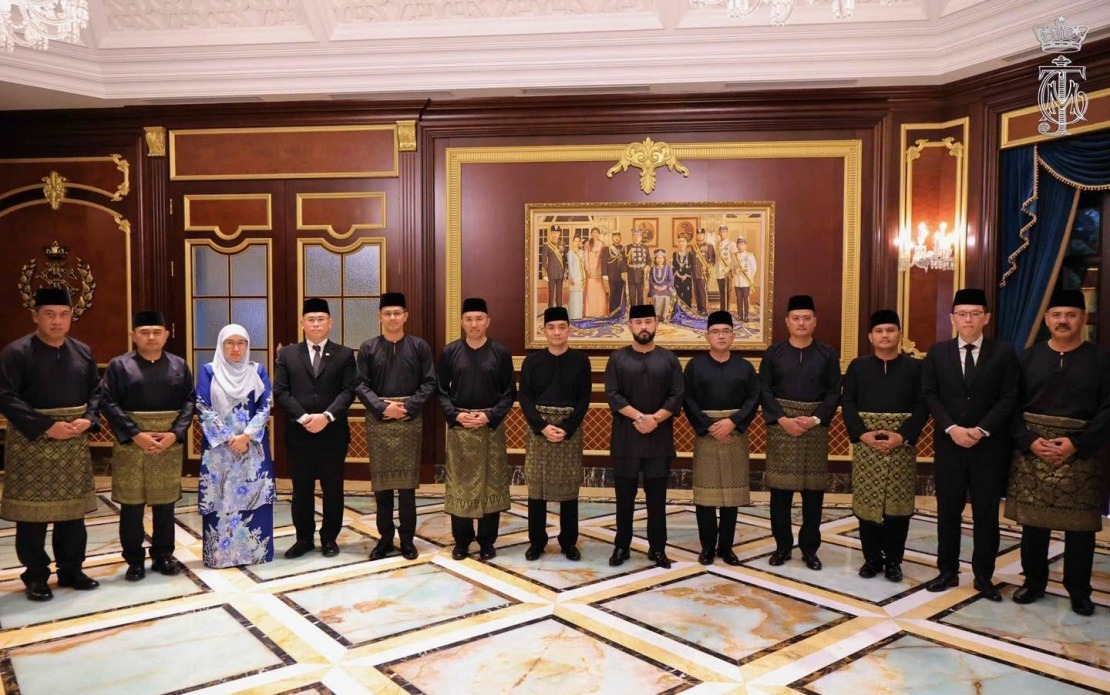
Ten newly appointed members of the Johor State Executive Council took their oaths of office on July 18 in a formal ceremony held at Istana Bukit Serene, the royal residence, administered by Tunku Mahkota Ismail, the Regent of Johor. The swearing-in represents the final piece in forming the state administration following the coalition's commanding performance in the latest electoral contest and marks the crystallisation of political control across the state's executive apparatus.
The appointments encompass a mixture of experienced assemblymen and fresh political entrants to the executive structure. Seasoned lawmakers taking positions include Mohd Hairi Mad Shah representing the Larkin constituency, Datuk Mohd Jafni Md Shukor from Bukit Permai, Mohd Fared Mohd Khalid from Semerah, Ling Tian Soon from Yong Peng, Lee Ting Han from Paloh, and Mohamad Fazli Mohamad Salleh from Bukit Pasir. These individuals bring established legislative credentials and prior experience in state-level governance to their new responsibilities.
Four maiden appointees to the executive council reflect the coalition's intention to integrate emerging political talent into decision-making structures. Md Israk Abdullah from Kukup, P. Pannir Selvam from Perling, Hasrunizah Hassan from Pulai Sebatang, and Muhammad Naqib Md Ghazali from Panti represent a generational transition within Johor's ruling administration. The inclusion of these newcomers suggests a deliberate strategy to balance continuity with fresh perspectives as the state government charts its course over the coming term.
The formality of the ceremony underscored the significance of the moment within Johor's constitutional framework. The presence of Menteri Besar Datuk Onn Hafiz Ghazi, Royal Court Council Yang Dipertua Datuk Dr Abdul Rahim Ramli, and State Secretary Datuk Mohammed Ridha Abd Kadir at Istana Bukit Serene confirmed the solemnity of the occasion and the institutional weight behind these appointments. Such protocols reflect Malaysia's Westminster-influenced governance traditions, where the swearing-in before royal authority carries constitutional importance beyond mere formality.
The appointment process follows directly from Datuk Onn Hafiz Ghazi's own reconfirmation as Menteri Besar just days earlier. On July 16, the Machap assemblyman received his oath of office for a consecutive second term in the chief minister position, validating his continued leadership following his party's electoral success. Onn Hafiz's return to the helm had already been anticipated given the election results, but his formal reinstatement initiated the subsequent appointments of other executive council members.
The electoral mandate underpinning these administrative arrangements was substantial. In the 16th Johor state election, Barisan Nasional captured 48 of the 56 available seats in the state assembly, a commanding supermajority that extends well beyond the minimum required for government formation. This decisive result granted the coalition not merely the constitutional authority to govern but also considerable policy latitude and legislative room for manoeuvre during the term ahead.
Onn Hafiz's personal electoral performance reinforced the broader coalition success at the state level. The Menteri Besar secured his Machap seat with a margin of 15,375 votes, a substantial plurality that reflected voter confidence in his continued stewardship. His strong individual performance mirrored the coalition's broader appeal across the state and suggested public endorsement of the direction his administration had pursued during its previous term.
The composition of the new executive council carries implications for how Johor will prioritise its developmental agenda. The breadth of geographic representation across constituencies ranging from urban areas like Larkin and Bukit Permai to more peripheral seats such as Kukup and Yong Peng suggests an intention to ensure that executive decision-making reflects diverse regional interests. This geographic spread may influence resource allocation and policy emphasis across different parts of the state in coming years.
For Malaysian observers tracking state-level politics, Johor's administrative formation represents an important data point in understanding broader coalition dynamics. The state has historically served as a political bellwether, and the decisive nature of Barisan Nasional's victory there carries implications for the coalition's trajectory nationally. The appointment of both established and new talent to executive positions signals confidence within the coalition's Johor machinery and suggests continuity in governance philosophy while simultaneously signalling openness to generational change.
The inclusion of individuals from diverse demographic backgrounds within the appointments—including representation that reflects the state's multicultural composition—reflects contemporary expectations regarding inclusive governance at the state level in Malaysia. The executive council's makeup attempts to project a government that recognises the diversity of Johor's population and seeks to ensure that multiple perspectives inform decision-making at the highest administrative levels.
These appointments now position the Menteri Besar to implement his administration's policy programme with a full complement of executive support. The swearing-in ceremony, while ceremonial in appearance, represents the operational commencement of the state government's substantive work across portfolios ranging from economic development to public services to infrastructure. The next phase involves translating electoral mandate into concrete governance outcomes across the state's diverse economic and social landscape.

