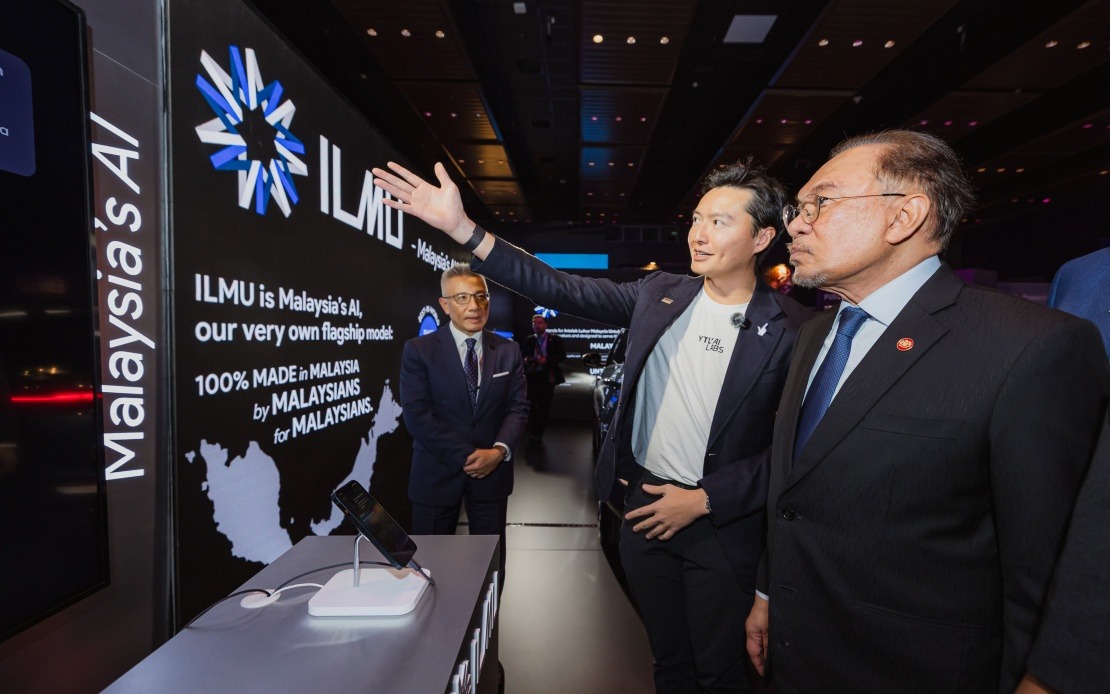
Malaysia's push to position itself as a regional artificial intelligence leader gained momentum with the launch of a significant access initiative targeting young citizens. Beginning today, an estimated 100,000 Malaysians between ages 18 and 30 can claim three months of complimentary access to ILMUchat Pro, a sophisticated AI assistant developed locally by YTL AI Labs. The scheme forms part of the wider AI Untuk Rakyat programme operated jointly by the Ministry of Digital, YTL AI Labs and MyDIGITAL Corporation through the Rakyat Digital platform, marking an effort to democratize cutting-edge technology among Malaysia's youth during the nation's 69th Independence Day celebrations.
The free access tier represents substantial value, as ILMUchat Pro normally commands a monthly subscription of RM50. Participants who meet eligibility criteria must first complete designated artificial intelligence learning modules available on the Rakyat Digital platform before they can redeem their vouchers. This requirement ensures that users approach the technology with foundational understanding, while simultaneously building digital competency across a wider cohort of young Malaysians. The gatekeeping mechanism also allows government and tech stakeholders to gather data on how younger demographics engage with AI-powered tools, informing future policy decisions around technology adoption and digital literacy.
What distinguishes ILMUchat Pro from international alternatives is its deliberate calibration to how Malaysians actually communicate and work. The system seamlessly navigates code-switching between Bahasa Malaysia, English, Chinese languages and Manglish—the colloquial blend of Malay and English common in urban Malaysia. This linguistic flexibility reflects a sophisticated understanding that Malaysian users do not operate within monolingual frameworks. The design philosophy acknowledges that a finance professional might draft a formal report in English, discuss project details in Malay with colleagues, and exchange updates with family in Cantonese or Hokkien, sometimes within the same working day.
The practical applications built into ILMUchat Pro extend across multiple dimensions of daily Malaysian life. Users can leverage the assistant for conventional professional functions such as composing emails and formal correspondence, creating visual materials like posters and graphics, and assembling presentation decks for academic or business contexts. Beyond these conventional productivity tasks, the platform addresses distinctly Malaysian needs: queries about PTPTN (Perbadanan Tabung Pendidikan Tinggi Nasional) student loan repayment schedules, guidance on SME grant applications through government schemes, and support navigating job application processes. These localized features transform the tool from a generic AI chatbot into something calibrated to the specific institutional and economic landscape Malaysian users encounter.
Technical capabilities also cater to emerging skill demands. The system enables users to prototype functional applications without requiring coding expertise, democratizing software development capabilities beyond those who have undergone formal computer science training. For students exploring technology careers, freelancers seeking to expand service offerings, and small business owners innovating their operations, this removes barriers that traditionally required specialized technical knowledge or expensive developer hiring.
The initiative reflects broader strategic thinking evident at the highest levels of Malaysian governance. Prime Minister Datuk Seri Anwar Ibrahim announced the underlying AI Malaysia framework in July during an event in Cyberjaya, launching it alongside the comprehensive National AI Action Plan 2026-2030. That roadmap signals serious governmental commitment to positioning Malaysia within Asia's AI ecosystem, competing with Singapore, South Korea and emerging Chinese capabilities. By distributing access to a domestically produced AI tool among 100,000 young citizens, the administration creates both a user base for local innovation and a generation with hands-on familiarity with Malaysian-built technology.
YTL AI Labs CEO Foong Chee Mun articulated this vision explicitly, stating that the company sought not merely to enable passive consumption of AI technology but to cultivate a generation capable of building and shaping Malaysia's artificial intelligence trajectory. This distinction carries significance: rather than positioning young Malaysians as end-users of foreign technology platforms, the framing emphasizes agency and creation. For a nation competing with regional tech giants, developing indigenous technical talent and fostering entrepreneurial ambition represents strategic necessity.
The redemption process itself has been streamlined for maximum accessibility. Participants log into Rakyat Digital, complete the prerequisite AI learning modules, locate ILMUchat Pro on their personalized dashboard, and authenticate using MyDigital ID to activate the three-month complimentary period. This integration with existing digital identity infrastructure reflects Malaysia's broader digital governance architecture and reduces friction that might otherwise prevent younger users from participation.
The significance of this initiative extends beyond immediate beneficiaries. For Malaysia's technology sector, it provides valuable data on AI adoption patterns among young demographics and generates feedback loops that can inform product development. For the broader economy, it builds a pipeline of citizens comfortable deploying AI tools across professional and educational contexts, potentially enhancing productivity across multiple sectors. For policymakers, it tests mechanisms for technology distribution at scale, generating lessons applicable to future digital inclusion initiatives.
Within Southeast Asia's competitive landscape, Malaysia's strategy carries implications. Thailand, Vietnam and Indonesia pursue various artificial intelligence development pathways, yet few have distributed access to locally developed tools with this scope and subsidization. The programme demonstrates how government resources, private sector innovation and digital platform infrastructure can align to create meaningful technology access. Whether this translates into sustainable competitive advantage depends partly on whether young Malaysians who access ILMUchat Pro transition from users to builders and entrepreneurs developing subsequent generations of AI capability.
The three-month window also creates natural momentum toward conversion. Users who benefit from free access and integrate ILMUchat Pro into study or work routines may subsequently become paying subscribers when promotional periods conclude. Alternatively, the exposure might inspire some participants toward technical careers or entrepreneurial ventures leveraging AI capabilities. Either outcome advances Malaysia's digital transformation objectives, suggesting this initiative functions simultaneously as accessibility programme, user acquisition mechanism and talent pipeline development.
As the scheme commences, the true measure of success will extend beyond participation numbers. Tracking how participants engage with the platform, which capabilities prove most valuable, and whether usage patterns differ meaningfully by geography, education level or professional sector will provide government and technology stakeholders with intelligence for refining subsequent interventions. Malaysia's stated ambition to become a leading AI nation rests substantially on such foundational work—ensuring emerging cohorts possess both literacy and practical facility with the technology that increasingly mediates economic opportunity.

