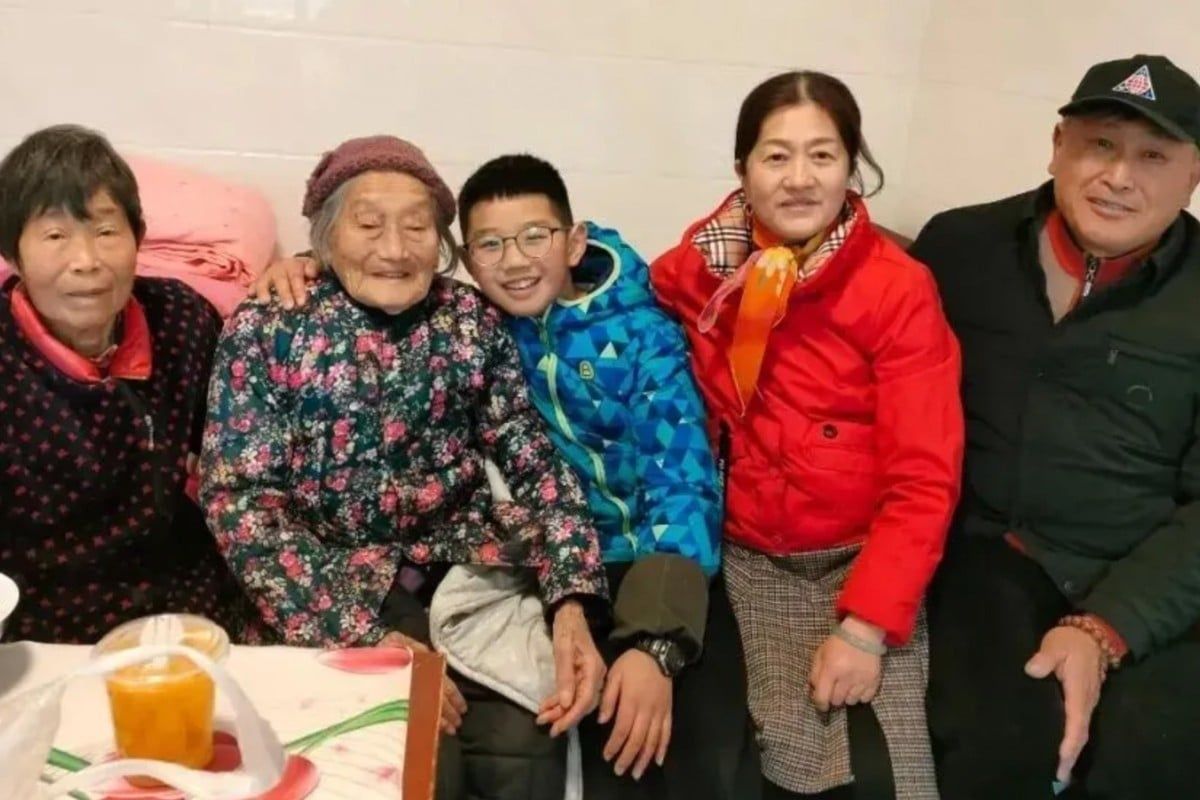
Wang Gaiying, a 111-year-old resident of Rugao in Jiangsu province, has become a focal point of social media discussion for her seemingly uncomplicated approach to achieving exceptional longevity. Living within a multi-generational household that spans five generations, Wang embodies a lifestyle philosophy that prioritises movement, mental peace, and communal living—factors that researchers and observers increasingly recognise as central to healthy ageing across East Asian populations.
Rugao itself has earned recognition as one of China's premier "longevity capitals," a designation rooted in documented demographic patterns rather than casual observation. As of February, the municipality was home to 672 individuals who had reached the century mark, a concentration that has drawn scientific scrutiny and public fascination alike. This clustering of centenarians in a single geographic area suggests that environmental, dietary, and cultural factors beyond individual genetics contribute meaningfully to extended lifespans within the region.
Scientific investigation into Rugao's exceptional demographic profile has pointed toward a specific environmental advantage. Researchers affiliated with the Chinese Academy of Sciences' Institute of Soil Science in Nanjing have identified the region's mineral-rich soil composition as a significant contributor to the health outcomes observed among residents. The soil's abundance of trace elements translates into crops with elevated nutritional profiles, creating a natural dietary advantage for those consuming locally-grown produce throughout their lives. This finding underscores how geography and agriculture interact to shape population health outcomes—a dynamic particularly relevant to Southeast Asian contexts where soil quality and agricultural practices similarly influence community wellness.
Wang's own lifestyle reflects practical implementation of longevity principles rather than adherence to restrictive dietary regimens or exhausting exercise protocols. Despite her advanced age, she continues to engage in physical labour, having worked in agricultural fields harvesting peanuts and watermelons well into her centennial years. While the pace of such activity has necessarily moderated with age, Wang maintains that consistent movement, even at reduced intensity, preserves physical capability and mental acuity. Her philosophy reframes housework—typically characterised as tedious obligation—into purposeful physical activity that maintains joint mobility and cardiovascular function without requiring formal exercise programs.
The conceptual shift Wang embodies regarding household labour holds particular relevance for ageing populations across Southeast Asia, where economic constraints and cultural norms often necessitate that elderly family members remain engaged in domestic responsibilities. Rather than viewing such participation as burden, Wang's approach recognises it as opportunity for maintained functionality. She continues wiping tables, folding clothes, and attending to household tasks, viewing these actions as deliberate exercise rather than necessitated chores. When family members suggest rest, Wang resists, explaining that movement itself—particularly when purposeful—keeps her limbs supple and circulation robust.
Nutrition in Wang's household follows principles of simplicity and variety rather than sophisticated dietary interventions. Her family deliberately alternates between different staple foods and meal compositions, rotating between dumplings, steamed buns, and other traditional preparations. This approach mirrors contemporary nutritional science emphasising dietary diversity and micronutrient completeness. Wang demonstrates particular fondness for fish, appreciating both its palatability and digestibility at advanced age. Her consumption patterns reveal conscious moderation; she values the importance of variety over quantity, deliberately avoiding overeating despite the availability of abundant family meals. Notably, her family discontinued a previous habit of rice soaked in baijiu—a traditional Chinese liquor—approximately five years ago, recognising the elevated fall risk and potential intoxication concerns that alcohol consumption posed for someone her age.
Beyond physical and dietary practices, Wang attributes meaningful weight to psychological and emotional factors in her longevity. She maintains a personal discipline requiring at least one small act of kindness daily, whether this involves complimenting a family member or greeting an acquaintance. This deliberate cultivation of prosocial behaviour aligns with emerging gerontological research suggesting that purposeful engagement with others and maintenance of social utility correlate with improved health outcomes among elderly populations. Wang's calm demeanour—a quality observers note consistently—appears inseparable from her emotional resilience approach. Rather than internalising frustrations or worries, she consciously disengages from stressful thoughts through sleep, noting that morning perspective frequently renders yesterday's troubles insignificant.
Sleep itself occupies central importance in Wang's daily structure, with a disciplined routine extending from 7pm through 7am each evening, supplemented by one or two daytime naps. This sleep architecture provides the neural consolidation and metabolic restoration increasingly understood as essential to healthy ageing. The combination of adequate nocturnal sleep and strategic daytime rest prevents the chronic sleep deprivation that correlates with accelerated cognitive decline and increased mortality risk among elderly populations. Wang's refusal to carry anxieties to bed represents a practical application of sleep hygiene principles that facilitate restorative sleep rather than fragmented, worry-interrupted rest.
The phenomenon of Wang's prominence across social media reflects broader human fascination with mortality transcendence and the search for longevity principles applicable across populations. Observers note that Rugao's residents possess not merely genetic predisposition but rather a convergence of favourable environmental conditions, established dietary patterns, cultural values emphasising multigenerational cohabitation, and individual lifestyle choices. Wang's longevity thus emerges not as individual anomaly but as product of systemic factors—soil minerals, agricultural tradition, family structure, and personal philosophy—that collectively support extended healthspan. For Malaysian and Southeast Asian readers confronting rapid ageing populations and rising elderly care demands, Wang's example offers instructive lessons regarding how environmental stewardship, dietary wisdom, and emotional resilience might be systematically cultivated rather than pursued through expensive interventions or pharmaceutical solutions alone.

