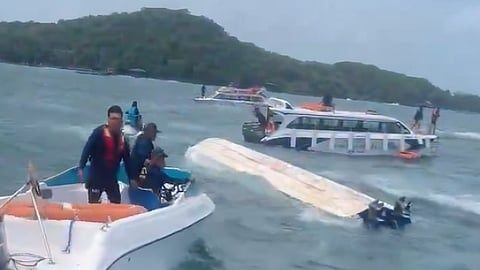
A tragic maritime incident unfolded in southern Vietnam on Saturday when a tourist speedboat overturned near Phu Quoc, claiming the lives of 15 Indian holidaymakers. The vessel, which had been conducting an island excursion, capsized approximately 400 metres from Hon May Rut Ngoai Island, a popular destination situated south of Phu Quoc itself. Aboard the ill-fated craft were 32 Indian tourists and four crew members, bringing the total passenger complement to 36 people, according to accounts carried by state media outlets in Hanoi.
The incident highlighted both the responsiveness of maritime personnel in the region and the inherent dangers of tourist operations in busy waterways. Eyewitnesses present at the scene immediately conveyed accounts to VN Express indicating that nearby vessels responded swiftly to the emergency, with crew members already engaged in rescue efforts by the time official maritime authorities could mobilise. Border guards, naval personnel, coast guard operatives, and other rescue agencies subsequently converged on the location to coordinate the broader response. The recovery operation proved arduous, particularly because numerous passengers remained trapped within the vessel's hull, complicating extraction efforts.
Rescuers managed to extract 21 individuals from the water, whilst all those who perished were subsequently recovered from the scene. The survivors received medical attention at nearby hospital facilities. The disparity between the total number aboard—36 people—and those accounted for through rescue and recovery operations underscores both the scale of the tragedy and the effectiveness of the coordinated emergency response that materialised following the capsizing.
Phu Quoc and its surrounding waters occupy a significant position within Vietnam's tourism landscape. Situated in the Gulf of Thailand, Phu Quoc functions as the nation's largest island and maintains status as one of its most visited coastal destinations, attracting millions of domestic and international travellers annually. Hon May Rut Island, located roughly ten kilometres south of Phu Quoc proper, forms part of an archipelago renowned for distinctive white-sand beaches and crystalline waters that appeal strongly to leisure tourists. The region's prominence in regional tourism circuits means that incidents of this magnitude carry implications extending beyond immediate casualties to questions regarding safety protocols and operational standards across the tourist industry.
For Indian travellers and their families, the Phu Quoc region has become an increasingly accessible destination, particularly given competitive pricing and proximity to Indian source markets through regional air hubs. The incident will likely prompt renewed scrutiny of safety certifications, vessel maintenance standards, and crew training requirements applicable to tourist operators throughout the area. Vietnamese authorities have indicated that investigations into the accident's underlying causes remain ongoing, though preliminary details had not yet emerged at the time of initial reporting.
The capsizing occurred during peak tourism season in Southeast Asia, when numerous Indian and South Asian tourists undertake leisure travels to beach destinations throughout the region. Phu Quoc's popularity with Indian visitors reflects broader patterns whereby middle-class Indians increasingly venture to Southeast Asian countries for affordable holidays, generating substantial economic activity for tourism operators and associated service providers. The tragedy therefore carries ramifications for both the Indian tourism community and Vietnamese operators who depend on sustained visitation from this demographic.
Maritime safety in Southeast Asian waters represents an ongoing concern for regulatory authorities and industry stakeholders. While commercial shipping and international ferries operate under comparatively stringent oversight regimes, smaller tourist operators frequently navigate a more ambiguous regulatory environment. The incident raises questions about whether speedboat operators conducting excursions from popular beach destinations maintain comparable safety standards, training protocols, and equipment maintenance schedules to larger maritime enterprises. Vessel inspections, passenger capacity certification, weather monitoring, and crew competency requirements all factor into operational safety profiles.
The recovery and investigation operations that unfolded following the capsizing demonstrated coordination capabilities among Vietnamese maritime and civilian authorities. Such responses require functional communication networks, adequate equipment resources, and trained personnel positioned appropriately to respond within critical timeframes. The relatively high survival rate among those aboard—21 rescued from 36 aboard—suggests that immediate intervention by both civilian bystanders and subsequently arriving authorities proved consequential for saving lives, though the overall toll remains substantial.
For the families of those who perished, the incident constitutes an overwhelming loss occurring during what was intended as a recreational family or group experience. Consular authorities from India will likely engage with Vietnamese counterparts regarding victim identification, repatriation procedures, and investigation details. Such processes typically involve extended administrative procedures alongside the immediate grief confronting bereaved families.
As investigations proceed, findings may ultimately determine whether the capsizing resulted from environmental factors such as sudden weather deterioration, mechanical failure within the vessel itself, or operational decisions made by crew members. Understanding causation proves essential not only for legal accountability purposes but for identifying systemic improvements that might prevent comparable incidents in future tourist operations throughout the region. The incident serves as a sobering reminder of the inherent risks associated with maritime activities, regardless of their commercial categorisation or perceived routine nature.

