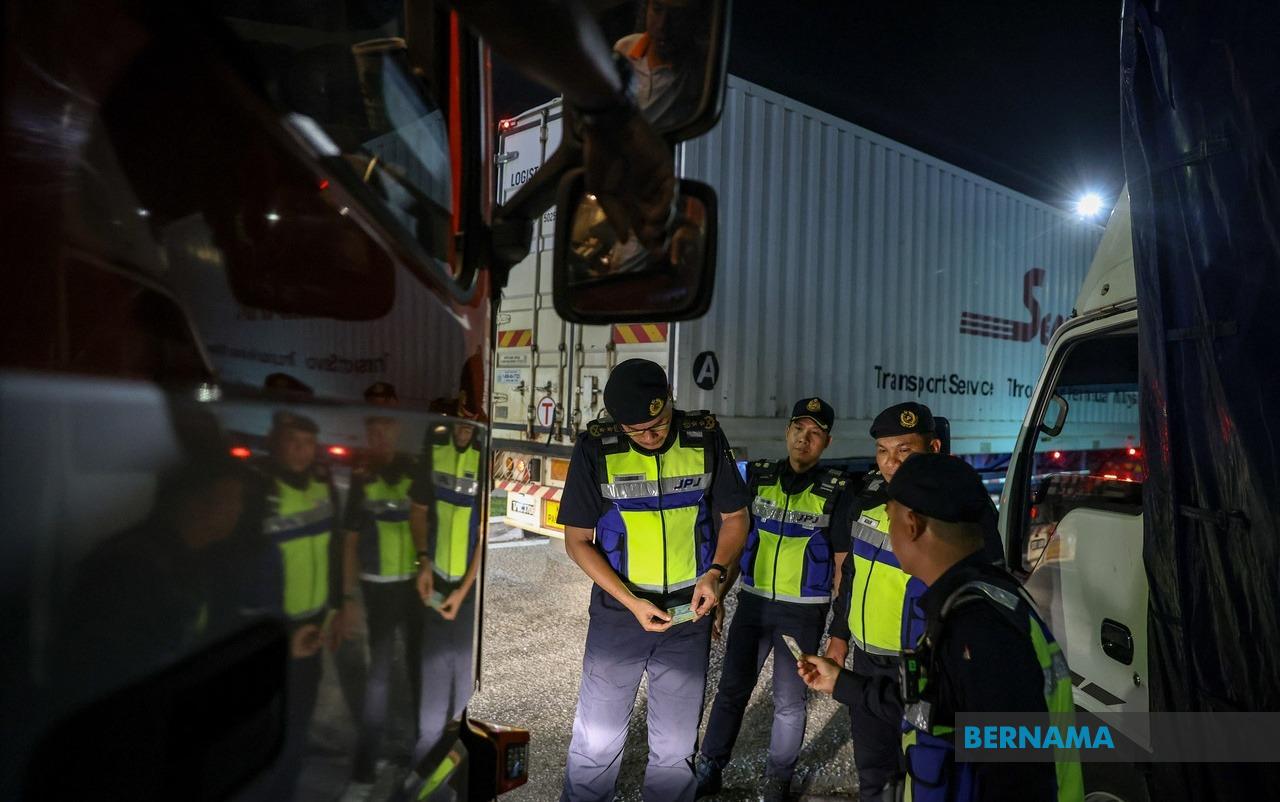
Highway safety authorities in Johor have intensified enforcement measures against impaired driving, with a coordinated operation uncovering a troubling number of drivers under the influence of drugs. Between July 1 and 10, the state's Road Transport Department discovered 16 drivers with positive drug screening results during comprehensive checks conducted at strategic locations throughout Johor. The findings underscore growing concerns about substance abuse among commercial and public transport operators, who bear responsibility for passenger safety on Malaysian roads.
The operation represented a collaborative effort between multiple enforcement agencies, demonstrating the integrated approach authorities have adopted to combat road safety hazards. The Johor Road Transport Department (JPJ) partnered with the Royal Malaysia Police, the National Anti-Drug Agency, and PLUS Malaysia Berhad to conduct screenings at high-traffic areas including highway rest stops, enforcement stations, and bus terminals. Zulkarnain Yasin, the JPJ director, emphasised that such joint operations allow authorities to cast a wider net across the state's transport network, reaching drivers who might otherwise avoid detection through single-agency enforcement.
Among the 164 drivers subjected to urine screening, the breakdown of positive results reveals the prevalence of specific substances. Methamphetamine emerged as the most commonly detected drug, with 10 drivers testing positive. Crystal methamphetamine, commonly known as "ice," accounted for three cases, while cannabis and morphine rounded out the findings with two and one positive result respectively. These substances represent different categories of drug abuse, from stimulants frequently associated with long-haul driving to opioids and natural narcotics. The diversity of drugs detected suggests that substance abuse among transport workers spans multiple problem areas rather than representing a single epidemic.
The consequences for affected drivers are substantial and designed to protect public welfare. The JPJ has announced its intention to suspend or revoke the vocational licences of all drivers who tested positive, operating under provisions of Section 56(4) of the Road Transport Act 1987. This enforcement mechanism effectively removes impaired operators from commercial driving roles, preventing them from transporting goods or passengers while under the influence. For professional drivers whose livelihoods depend on maintaining valid vocational credentials, such penalties represent serious career consequences that underscore the severity with which authorities treat drug-related violations.
Beyond the drug-related findings, the operation exposed a systemic problem affecting road safety across a broader spectrum. Authorities recorded 707 drivers operating without valid licences, representing a fundamental breach of driving requirements. Additionally, 626 vehicles carried expired road tax documentation, while 574 failed to maintain current insurance coverage—gaps that leave both drivers and innocent road users vulnerable in case of accidents. These numbers suggest that enforcement gaps permit widespread non-compliance with basic regulatory requirements, potentially indicating insufficient routine monitoring or awareness among transport operators regarding their renewal obligations.
Vocational licensing violations added another dimension to the enforcement findings. One hundred twenty-eight vehicles lacked proper Goods Vehicle Licences, a critical document for commercial transport operations. Fourteen drivers were operating with expired vocational licences despite holding the necessary documentation category. These breaches indicate that some operators may be unaware of renewal requirements or deliberately continue operating beyond their licensing period. The discovery of 113 overloaded vehicles suggests that even when properly licensed, some drivers circumvent weight regulations, potentially compromising vehicle safety systems and road integrity.
Technical violations discovered during the operation pointed to maintenance and safety standard deficiencies. Authorities identified 39 cases of unauthorised vehicle modifications that could compromise structural integrity or safety features. Thirty additional cases involved tyres that failed to meet specification requirements, a particularly concerning finding given that tyre quality directly affects braking performance and stability. The additional 928 technical violations encompassed various other safety-related issues, collectively indicating that vehicle maintenance standards among commercial operators may be inadequately enforced or monitored.
Documentation irregularities formed a substantial portion of the violations discovered. Beyond road tax and insurance lapses, 30 drivers presented expired personal driving licences, a condition that technically invalidates their authority to operate any motor vehicle. Fifty-one vehicles displayed expired PUSPAKOM inspection discs, suggesting that mandatory vehicle inspections had lapsed. These administrative violations, while sometimes appearing routine, collectively represent a failure of basic regulatory compliance that compounds public safety risks when combined with other violations.
The broader context of these findings reveals systemic vulnerabilities in Malaysia's transport sector that extend beyond Johor. Commercial transport operators—both goods and passenger service providers—operate within a complex regulatory framework requiring maintenance of multiple documents, vehicle standards, and personal qualifications. When enforcement occurs sporadically rather than continuously, operators may perceive non-compliance as a manageable risk. The concentration of violations uncovered during this single operation suggests that routine compliance monitoring may be insufficient, allowing problematic practices to persist until periodic enforcement sweeps occur.
For Malaysian road users, the implications are significant. Passengers boarding buses or sharing roads with goods vehicles have limited ability to verify driver credentials or vehicle safety status independently. They depend on regulatory authorities to ensure that commercial operators meet minimum standards. The discovery of 16 drug-positive drivers among a sample of 164 tested suggests a prevalence rate of nearly 10 percent, a figure that would prove alarming if representative of the broader driving population. Even if this particular operation captured a disproportionate number of violators, the baseline finding indicates that impaired driving represents a genuine hazard requiring sustained attention.
The operation's findings underscore the necessity for enhanced enforcement frequency and driver awareness campaigns. Transport operators require clear communication about renewal deadlines and regulatory requirements, particularly regarding licence and documentation expiry dates. Professional driver training programs should emphasise the legal and safety consequences of substance abuse, while employer accountability mechanisms could incentivise companies to ensure their workforce maintains compliance. Regional governments throughout Southeast Asia face similar challenges as commercial transport expands, making Malaysia's experience with integrated enforcement operations potentially instructive for neighbouring countries seeking to improve road safety outcomes.
Moving forward, authorities must balance enforcement with education and support systems that help operators achieve compliance. The JPJ's commitment to suspending licences represents necessary deterrence, but sustained reduction in violations requires addressing underlying factors that contribute to non-compliance. Transport companies operating with expired documentation or employing drug-positive drivers face reputational and legal liability. By highlighting the comprehensive nature of current enforcement activities, authorities signal that compliance will be verified and violations will carry consequences, potentially encouraging proactive self-correction throughout the industry.

