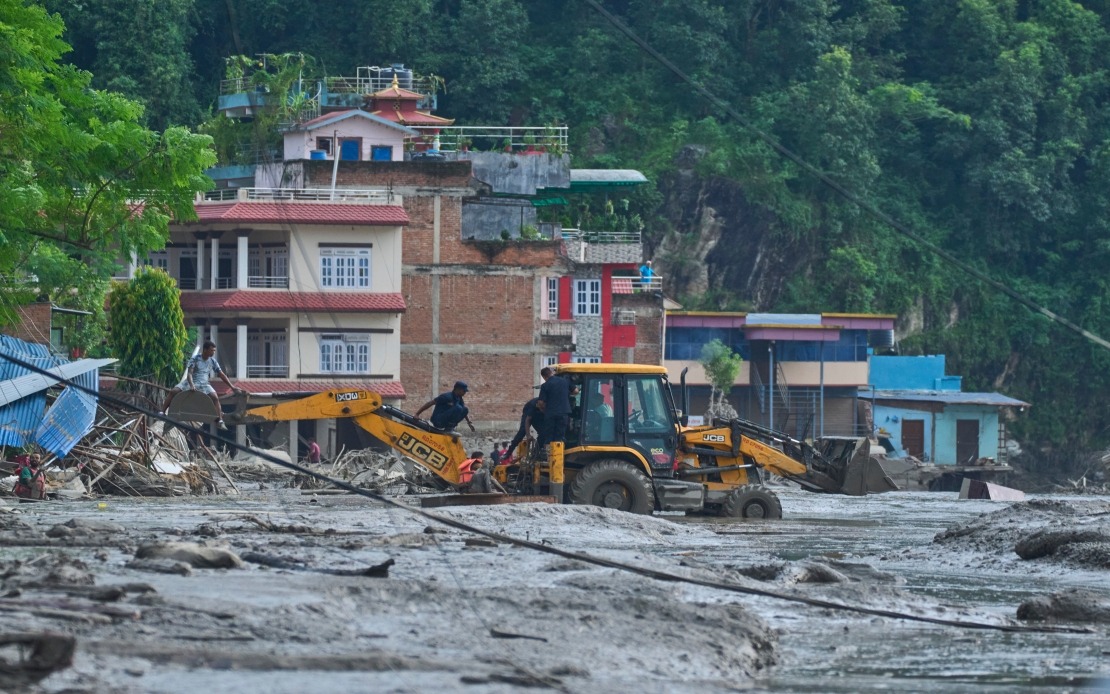
A humanitarian catastrophe has unfolded along the Nepal-China border following devastating flash floods and mudslides that have claimed at least 160 lives, with authorities reporting more than 680 individuals missing as of Wednesday. The scale of the disaster has prompted emergency responses from both countries and neighbouring nations, drawing international attention to the vulnerability of this remote mountainous region.
Nepalese rescue personnel have so far recovered 157 bodies while successfully extracting 54 survivors from the affected zones, according to police statements. Chinese state media reports indicate three confirmed deaths on the Tibetan side, with 265 additional people unaccounted for in the southern Tibet region. The disparity in numbers reflects the scale of destruction across both territories and the ongoing difficulties in locating and accounting for those caught in the floods.
The missing persons encompass a diverse cross-section of people working and travelling in the region. According to the Nepalese Prime Minister's Office, at least 44 army personnel, 28 police officers, 13 armed police personnel and 60 civilian workers engaged on hydropower projects remain unaccounted for. The office initially reported 484 missing tourists and travellers, comprising 391 foreign nationals and 93 Nepali citizens. The roster of nationalities affected—including individuals from Nepal, India, the United Kingdom, South Africa, Malaysia, Australia and the Netherlands—underscores the international dimensions of this crisis. South Korean authorities confirmed eight nationals are unaccounted for, with ten others stranded in Nepal following the disaster.
The Rasuwagadhi crossing, a crucial transport hub in the Rasuwa district, serves as a gateway for thousands of trekkers annually heading into the Langtang region, one of Nepal's premier mountaineering destinations. Beyond recreation, the area functions as a transit point for pilgrims en route to Mount Kailash and Lake Mansarovar in China, making it a vital corridor for regional tourism and religious journeys. The vulnerability of this gateway became starkly apparent when the mudslide struck near Gyirong Port, a major border crossing on the Chinese side in Xizang Autonomous Region, cutting off all road access, severing communication networks and destroying power infrastructure.
The physical destruction inflicted by the disaster reveals the intensity of the natural forces at play. Nepalese authorities documented the loss of at least 19 bridges and extensive damage to 40 kilometres of road infrastructure. Critically, 13 hydropower projects sustained significant damage, representing a setback to Nepal's energy development priorities. Speaking before parliament, Nepalese Foreign Minister Sishir Khanal described widespread erasure of hydropower installations, government facilities and road networks across the Rasuwa, Dhading and Chitwan districts. Such destruction will inevitably disrupt regional development timelines and impose substantial reconstruction burdens on Nepal's government.
Rescue operations mobilised rapidly across both nations, with authorities deploying helicopters, drones and rafting equipment to navigate treacherous terrain and raging waters. Nepal's coordinated deployment of Nepal Police, Armed Police and Nepal Army personnel reflected the scale of institutional mobilisation required. Chinese President Xi Jinping ordered an all-encompassing search and rescue campaign, explicitly directing authorities to prioritise evacuation of at-risk residents and delivery of emergency medical care to minimise further casualties. State media reported that authorities in Xizang had committed forces to active rescue operations, with all relevant agencies engaged in the response.
Nepalese capital Kathmandu responded to the crisis by clearing government-run hospitals and security agency medical facilities to receive injured survivors. This logistical shift underscores the anticipated volume of casualties requiring hospitalisation and indicates the extent of injuries sustained by those rescued. Medical infrastructure across Nepal, already stretched in many regions, faces considerable pressure from this sudden influx of trauma cases.
International solidarity mobilised swiftly in response to the disaster. Indian Prime Minister Narendra Modi conveyed condolences to his Nepalese counterpart Balendra Shah and pledged comprehensive humanitarian assistance. India dispatched ten tonnes of disaster relief supplies, humanitarian aid and essential medicines to support Nepal's emergency response. Bihar Chief Minister Samrat Choudhary announced heightened surveillance protocols, including round-the-clock embankment monitoring and intensified night patrolling in sensitive districts, reflecting Indian anxiety regarding potential secondary impacts on its own territories given the border region's geographic proximity.
The disaster exposes fundamental vulnerabilities in this border region's infrastructure and disaster preparedness capacity. Mountainous terrain, seasonal monsoon patterns and rapid hydrological changes create inherent hazards that are difficult to predict and manage. The concentration of hydropower projects in flood-prone areas, while economically important, introduces additional risk factors. The presence of substantial tourism flows through relatively narrow transport corridors amplifies human exposure to such catastrophic events.
For Malaysia and other Southeast Asian nations with citizens affected, this disaster underscores the importance of travel advisories and emergency coordination mechanisms. Regional tourism communities rely heavily on cross-border infrastructure in Himalayan regions, and such incidents have ripple effects throughout South Asia's tourism networks. Insurance and repatriation procedures will likely face strain as authorities work to identify and return victims' remains across international borders.
The long-term implications extend beyond immediate casualty figures. Reconstruction of 40 kilometres of damaged roads and restoration of 13 hydropower projects represent multi-year commitments requiring substantial financial investment. The loss of this crucial border crossing disrupts trade flows and pilgrimage routes serving millions. For Nepal, already grappling with infrastructure development challenges, this disaster represents both a humanitarian crisis and a significant economic setback that will demand sustained international support and regional cooperation during recovery phases.

