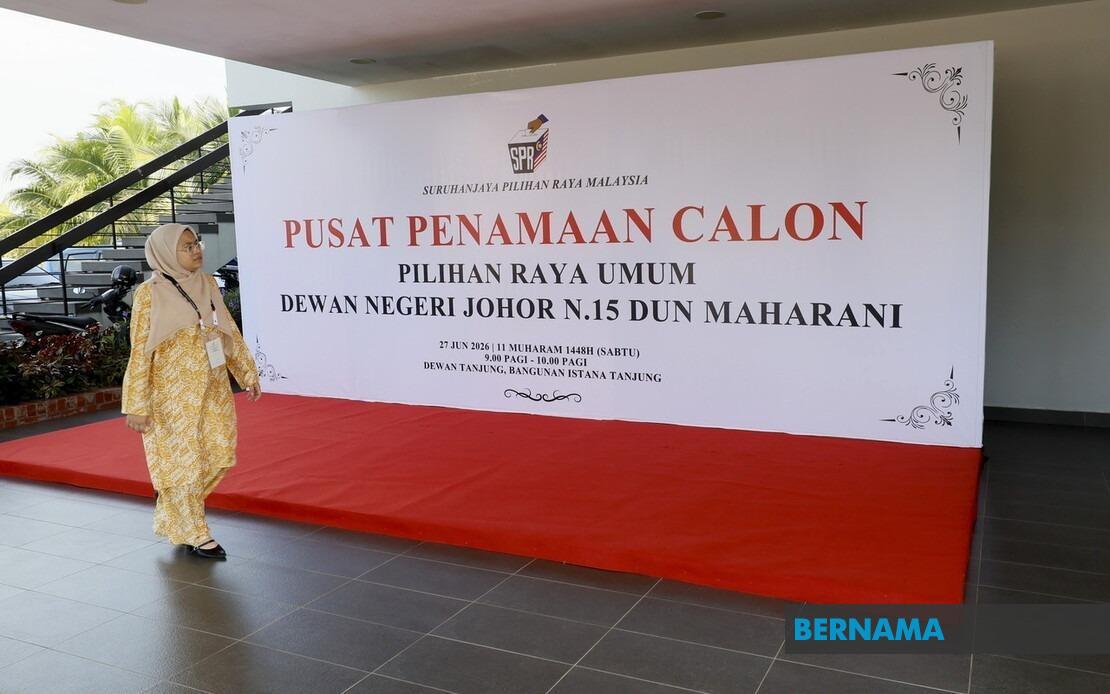
The 16th Johor State Election entered its formal phase today as nomination centres opened their doors across all 56 state constituencies, marking the official beginning of a pivotal electoral contest that will shape the southern state's political direction for the next term. The Election Commission coordinated simultaneous proceedings at nomination centres throughout Johor from 9 am, providing prospective candidates a one-hour window until 10 am to lodge their nomination documents with respective Returning Officers. This compressed timeframe reflects the EC's standardised procedures designed to expedite the candidacy verification process while maintaining administrative rigour.
The momentum building towards today's proceedings had already demonstrated considerable interest in parliamentary representation, with 593 nomination forms distributed to potential candidates as of yesterday morning and 133 aspirants formally confirming their candidacies by submitting the mandatory election deposits. The diversity of candidates—encompassing newcomers, sitting legislators seeking re-election, and former representatives attempting political comebacks—signals competitive multi-cornered contests across numerous constituencies. This heterogeneous mix of candidatures typically generates complex electoral dynamics, particularly in constituencies where faction divisions within ruling coalitions or strong independent personalities fragment voter bases.
With the nomination process now formally concluded, the Election Commission has initiated a 14-day intensive campaign period that will extend until 11:59 pm on July 10, permitting all eligible candidates to mount their electoral appeals across traditional and digital platforms. The compressed campaign timeline necessitates efficient resource deployment and strategic messaging prioritisation, challenging candidates and campaign teams to maximise voter engagement despite abbreviated preparation periods. Early voting opportunities on July 7 precede the main polling day on July 11, providing eligible voters—particularly those with mobility constraints or scheduling conflicts—alternative casting mechanisms.
The electoral landscape encompasses nearly 2.73 million registered voters distributed across ordinary voters, military personnel and spouses, and police personnel with family members. This substantial electorate reflects Johor's demographic weight within Malaysia's federal structure and the state's economic and social significance as a major industrial and commercial hub. Voter participation rates in this election will carry implications extending beyond Johor's borders, given the state's traditional position as a political bellwether influencing national electoral trends and coalition calculations.
The party lineup reveals a fragmented political ecosystem characterised by competing coalitions and independent actors. Pakatan Harapan fields candidates across all 56 seats through its three component parties—PKR contributing 20 candidates, Amanah 19, and DAP 17—presenting a united opposition bloc challenging incumbent governance. Barisan Nasional maintains comprehensive coverage through UMNO's 36 nominees, MCA's 16 candidates, and MIC's four contenders, leveraging its historical organisational infrastructure and incumbent advantage derived from controlling 40 seats in the previous assembly. Perikatan Nasional contests through multiple vehicles: PAS in 11 seats, Bersatu in 16, Malaysian Indian People's Party in five, and Pejuang in a single seat, demonstrating coalition coordination despite historical tensions among constituent parties.
Emerging political entities and smaller parties add complexity to Johor's electoral calculus. Parti Ikatan Demokratik Malaysia contests four seats, Parti Sosialis Malaysia fields a single candidate, and Parti Bersama Malaysia makes its electoral debut with expected participation across 15 constituencies. Bersama's entry into the Johor contest represents noteworthy political development, potentially fragmenting opposition consolidation if positioned as alternative centre-left option or absorbing disaffected voters from established coalitions. The proliferation of candidacy options creates scenarios where winning margins may compress significantly, elevating the importance of ground-level campaign effectiveness and voter mobilisation precision.
Logistical and administrative preparations underscore the scale of today's nomination proceedings. The EC deployed standardised procedures across all nomination centres while coordinating with local authorities regarding venue arrangements, documentation processing, and nomination verification protocols. Security arrangements reflect election management priorities, with 4,832 police personnel strategically positioned throughout Johor to maintain public order, facilitate traffic management around nomination centres, and prevent potential disruptions affecting electoral integrity. Road closure and diversion arrangements involving 19 major routes throughout the state demonstrate traffic coordination complexity necessitated by anticipated nomination day congestion.
Weather forecasting indicated rain across several Johor regions this morning with afternoon thunderstorm possibilities, factors potentially affecting voter attendance and nomination centre accessibility. While meteorological conditions typically exert minimal influence on nomination proceedings themselves, adverse weather may affect public enthusiasm during subsequent campaign activities, particularly outdoor rally attendance and grassroots engagement events scheduled throughout the two-week campaign period. The EC and political parties monitor such environmental variables when scheduling campaign activities maximising voter participation opportunities.
The election's timing and context deserve analytical attention, occurring approximately one year following the previous state assembly dissolution on June 1. This interval reflects constitutional requirements and political positioning calculations among competing coalitions regarding optimal electoral timing. Johor's historical significance as a political battleground where coalition calculations frequently pivoted federal outcomes lends particular importance to this contest's results, potentially signalling voter sentiment regarding governance performance, economic management, and political stability affecting broader Malaysian political direction.
Compliance reminders issued by the EC emphasise the Election Offences Act 1954 and local authority regulations, particularly restrictions on loudspeaker use and musical instruments mounted on campaign vehicles. These directives seek balancing public order maintenance with candidates' legitimate campaign communication needs, reflecting accumulated experience with nomination day proceedings generating enthusiastic but occasionally disorderly supporter gatherings. Historical nomination day scenes across Malaysian elections typically feature animated party supporter aggregations demonstrating commitment to respective candidates, activities now subject to contemporary electoral regulation frameworks.
The formal commencement of Johor's 16th state election reflects Malaysia's democratic institutional resilience and electoral management capacity, whereby complex procedures involving nearly 2.73 million voters across 56 constituencies proceed with administrative coordination and procedural consistency. The election's competitive intensity, demonstrated through comprehensive candidate fielding across multiple political organisations and coalitions, indicates sustained engagement with democratic participation mechanisms despite contemporary political polarisation. Johor voters face consequential choices between competing governance visions and policy approaches, with results potentially reverberating through Malaysian politics beyond the state's immediate boundaries.
As campaigns accelerate through July, political messaging will intensify across traditional media, digital platforms, and direct voter engagement activities. The fortnight separating today's nomination proceedings from July 11 polling day permits candidates and parties to articulate their respective platforms, respond to opponent critiques, and mobilise supporter bases. Johor's electoral dynamics will unfold within this compressed timeframe, with results ultimately reflecting voter preferences regarding incumbent performance, opposition alternatives, and emerging political actors contesting representation across the state's 56 constituencies.

