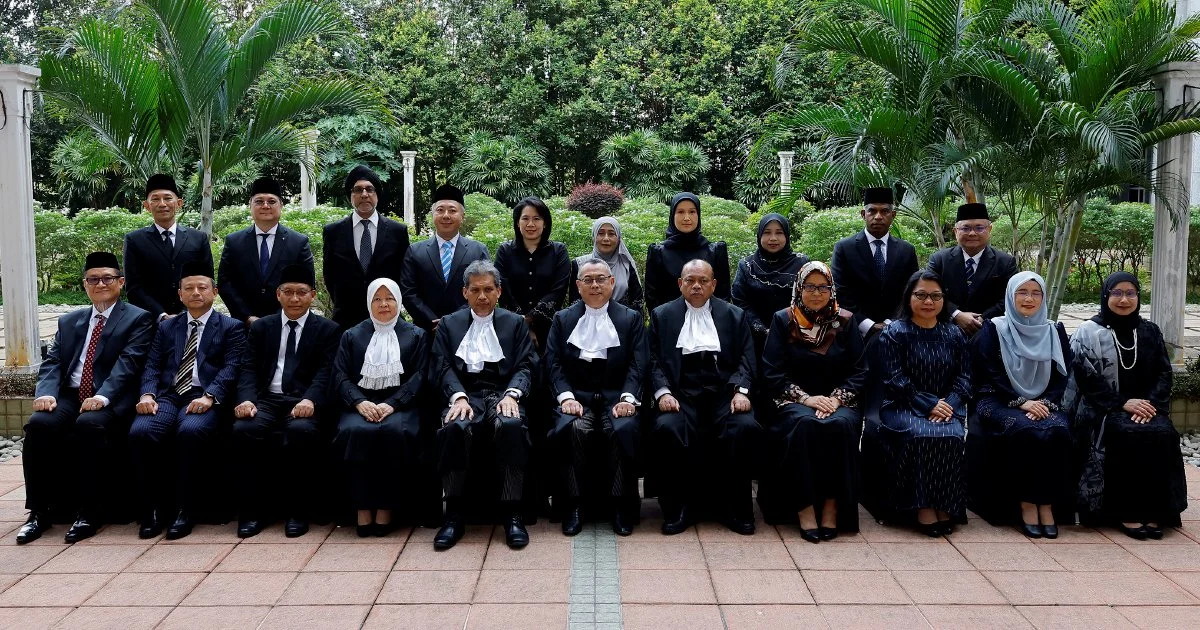
The Malaysian judiciary has expanded its ranks with the appointment of 17 new judicial commissioners, a significant addition to the High Court bench announced in Putrajaya. The cohort of newly appointed judges brings a mix of experienced legal practitioners and established judicial service officers, signalling the government's ongoing effort to reinforce the court system's capacity. Among the appointees is a prominent lawyer whose father previously served as president of the Court of Appeal, continuing a notable professional legacy within the Malaysian legal establishment.
The appointment represents an important institutional moment for the judiciary at a time when court backlogs and caseload pressures remain persistent challenges across Malaysian courts. Adding 17 fresh judicial appointments in a single round demonstrates the government's commitment to addressing delays in the justice system, which has long been a concern for legal practitioners, litigants, and civil society observers. The timing of such bulk appointments typically reflects either specific vacancies that have accumulated or a strategic plan to modernise and strengthen the bench across different divisions and subject areas of law.
The inclusion of the daughter of a former Court of Appeal president draws particular attention to questions of judicial continuity and family involvement in Malaysia's legal hierarchy. This appointment illustrates a pattern sometimes observed in Asian judiciaries where established legal families maintain prominent positions across generations. Her appointment presumably reflects her own credentials and experience as a lawyer or judicial officer, yet it inevitably invites broader reflection on how the judiciary recruits and develops talent, and whether career pathways offer equal opportunities across different professional backgrounds and social networks.
Judicial commissioners typically serve for fixed terms and handle cases at the High Court level, making this tier of appointment crucial to the functioning of Malaysia's court system. These new commissioners will be responsible for hearing civil and commercial matters, family law disputes, constitutional questions, and other categories of cases that form the backbone of the High Court's docket. Their appointment comes as the judiciary continues to navigate post-pandemic case management challenges and emerging areas of law requiring judicial expertise, including digital crimes, data protection, and evolving corporate governance disputes.
The broader recruitment of lawyers and legal service officers reflects the judiciary's dual strategy of promoting internal talent—judicial service officers with years of court experience—alongside external practitioners who bring specialist knowledge from private practice or government legal departments. This mixed approach helps ensure the bench combines institutional knowledge with fresh perspectives and technical expertise across diverse legal fields. The combination of career paths also maintains healthy circulation between the bench and the broader legal profession, allowing judges to understand current practice while enhancing practitioners' respect for judicial decision-making.
Malaysia's High Court bench composition remains a matter of ongoing discussion in legal circles, particularly regarding diversity, representation of different legal specialties, and the balance between seniority and fresh thinking. Each round of appointments offers an opportunity to address these concerns, whether through gender balance, geographic representation, or ensuring expertise in emerging practice areas. The current cohort of 17 provides space for such considerations, though official statements typically emphasize merit-based selection without detailed public commentary on specific diversity metrics.
The appointment process for judicial commissioners in Malaysia involves careful vetting by the judiciary's leadership and consultation with relevant institutional bodies, ensuring that candidates meet stringent professional and ethical standards. The public announcement of appointments affirms the transparency element of this process, allowing the legal profession and public to understand who is joining the bench and contributing to judicial decisions that shape Malaysian law. This transparency, however limited in detail, distinguishes Malaysia's appointments from some regional systems where judicial selection processes operate with minimal public visibility.
For the Malaysian legal profession and business community, these appointments have practical implications for case management and court scheduling. The addition of 17 judges should theoretically reduce waiting times for hearings and judgments, a persistent source of frustration for litigants and their lawyers. In commercial disputes particularly, delays in judicial resolution can impose significant costs on businesses and may deter some from pursuing legitimate claims through courts. Faster case disposal rates strengthen the rule of law by making justice more accessible and timely.
Regionally, Malaysia's approach to judicial appointments draws interest from other Southeast Asian countries grappling with similar questions about court capacity, judicial reform, and the relationship between merit and representation. While different countries employ varying appointment mechanisms—ranging from judicial commissions to political nomination—Malaysia's approach sits within a broader commonwealth legal tradition emphasizing professional credentials. These regional peers watch how countries like Malaysia handle judicial appointments, particularly when they involve high-profile candidates whose family background raises questions about institutional independence and equal opportunity.
The appointment also reflects Malaysia's ongoing efforts to modernise its judicial infrastructure and professional standards. Regular appointments of new commissioners signal that the judiciary is not static but evolving to meet contemporary legal demands. This includes developing expertise in areas like technology law, international commercial arbitration, and environmental law—domains where specialist judges can enhance judicial quality and Malaysia's standing as a regional legal hub. The new commissioners will eventually contribute to shaping how Malaysian courts approach emerging legal challenges.
Looking forward, the integration of these 17 new commissioners into the court system will be observed closely by the legal profession and those engaged with the courts regularly. Their decisions, efficiency, and approach to case management will become benchmarks for evaluating whether bulk appointments successfully improve judicial system performance. The presence among them of a lawyer with family connections to the highest judiciary adds a human-interest dimension to broader structural questions about how Malaysia's legal system continues to evolve and whether it maintains public confidence in impartial justice.

