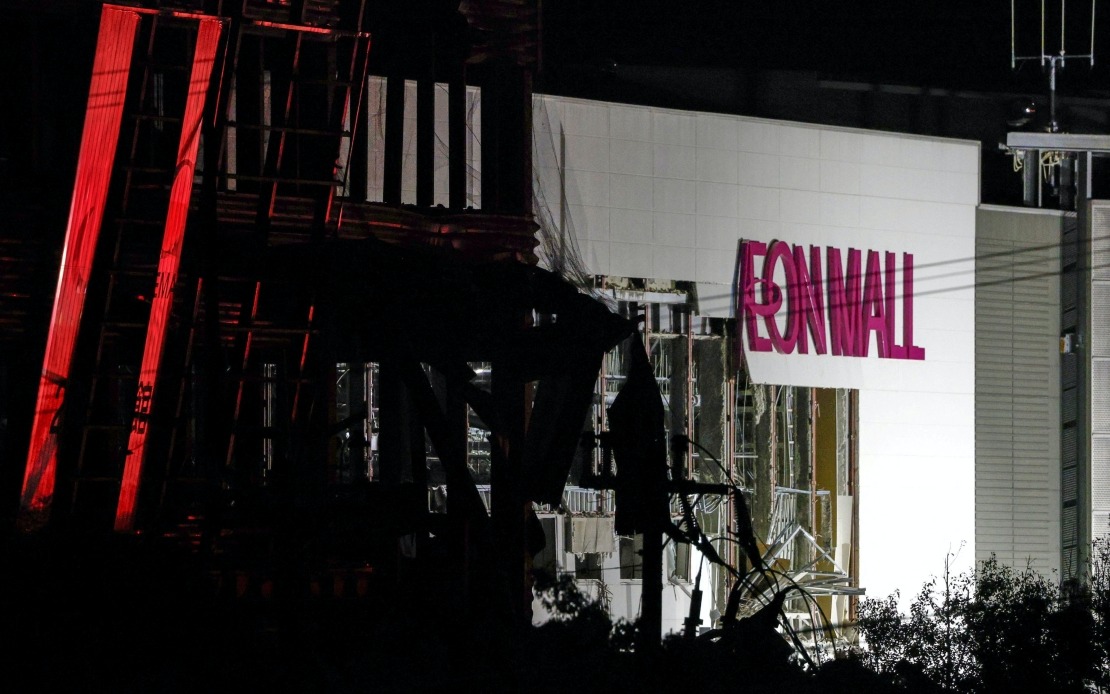
An explosion at one of Japan's major shopping complexes has triggered a large-scale search operation in Kumamoto Prefecture, with between 20 and 30 employees of Aeon Mall Kumamoto reported missing in the aftermath. The blast, which struck the retail facility in Kashima Town on Tuesday evening, has prompted fears of significant casualties as rescue workers comb through the damaged building searching for those who may still be trapped inside.
Authorities became aware of the missing employees after the explosion, which occurred around 6 pm local time. The National Police Agency confirmed that multiple staff members of the shopping mall could not be reached following the incident, though the exact circumstances surrounding their disappearance remained unclear. Kumamoto Prefectural Police have indicated that the explosion is believed to have caused numerous deaths, with officials suggesting that authorities should prepare for "many fatalities" in the coming hours as confirmation processes continue.
The incident unfolded within hours of a major natural disaster striking the same region. A powerful magnitude-7.1 earthquake had hit southwestern Japan earlier that afternoon at 4.27 pm local time, directly affecting Kumamoto Prefecture and its surrounding areas. This combination of events—a major seismic shock followed by a catastrophic explosion—has created an exceptionally challenging emergency response scenario for local authorities managing multiple simultaneous crises.
While most customers and visitors to the sprawling Aeon Mall Kumamoto had already been evacuated to outdoor areas when the explosion occurred, the precise status of all patrons remains uncertain. Authorities have not yet confirmed whether any of the missing individuals counted among the shopping public or if the disappearances are limited to employees working within the complex. The evacuation of customers before or immediately after the blast likely prevented a far larger casualty toll, highlighting the critical importance of rapid emergency response in such incidents.
Beyond the shopping mall itself, the wider disaster has also claimed victims. Authorities reported that fewer than ten additional people remain unaccounted for across the Kumamoto Prefecture due to the earlier earthquake, indicating that the seismic event caused significant disruption across a broader geographic area. The compounding nature of these emergencies—first the earthquake triggering widespread damage, then the explosion occurring at a major commercial facility—has stretched local emergency services and heightened public concern about the overall safety situation in the region.
Rescue and recovery operations are now concentrated on three primary objectives: locating the missing employees at Aeon Mall Kumamoto, assessing structural integrity of the building to determine the safest access routes for emergency personnel, and establishing a comprehensive accounting of all individuals affected. Police and firefighter teams have deployed substantial resources to the site, conducting systematic searches of the damaged facility while simultaneously treating wounded persons and gathering information from witnesses.
For Malaysian observers and regional readers, this incident underscores several crucial aspects of urban planning and emergency preparedness in developed economies. Japan's infrastructure and disaster management systems, despite being among the world's most advanced, demonstrate that even highly prepared nations face extraordinary challenges when multiple disaster scenarios intersect. The combination of seismic activity and secondary explosions—potentially triggered by ruptured gas lines or other infrastructure damage from the earthquake—represents a scenario that urban planners across Southeast Asia should consider as they design and maintain public facilities.
The Kumamoto Prefecture region, located in southwestern Honshu, is a significant commercial and industrial hub in Japan. The Aeon Mall represents not merely a shopping destination but a major employment center and gathering place for the local population. An incident of this magnitude at such a facility carries implications beyond the immediate human toll, affecting the regional economy, public confidence in safety infrastructure, and municipal planning priorities for emergency preparedness.
As of the time of reporting, authorities were still working to establish the precise death toll and account for all missing persons. The process of identifying victims, notifying families, and conducting thorough investigations into the explosion's cause remained ongoing. Preliminary indications suggest that the blast may have resulted from infrastructure failure triggered by the earthquake, though investigators were continuing to examine the site thoroughly before releasing definitive conclusions about causation.

