Two hundred alumni from the National Service Training Programme (PLKN) 3.0 have been selected to participate in the National Day parade scheduled for August 31 in Putrajaya, representing a symbolic milestone for Malaysia's reconstituted mandatory service initiative. This inaugural appearance by PLKN 3.0 trainees at the nation's premier patriotic celebration will see them marching past the King, Prime Minister, Cabinet ministers, and assembled public—a platform that underscores the government's confidence in the programme's effectiveness and the calibre of young citizens it is producing.
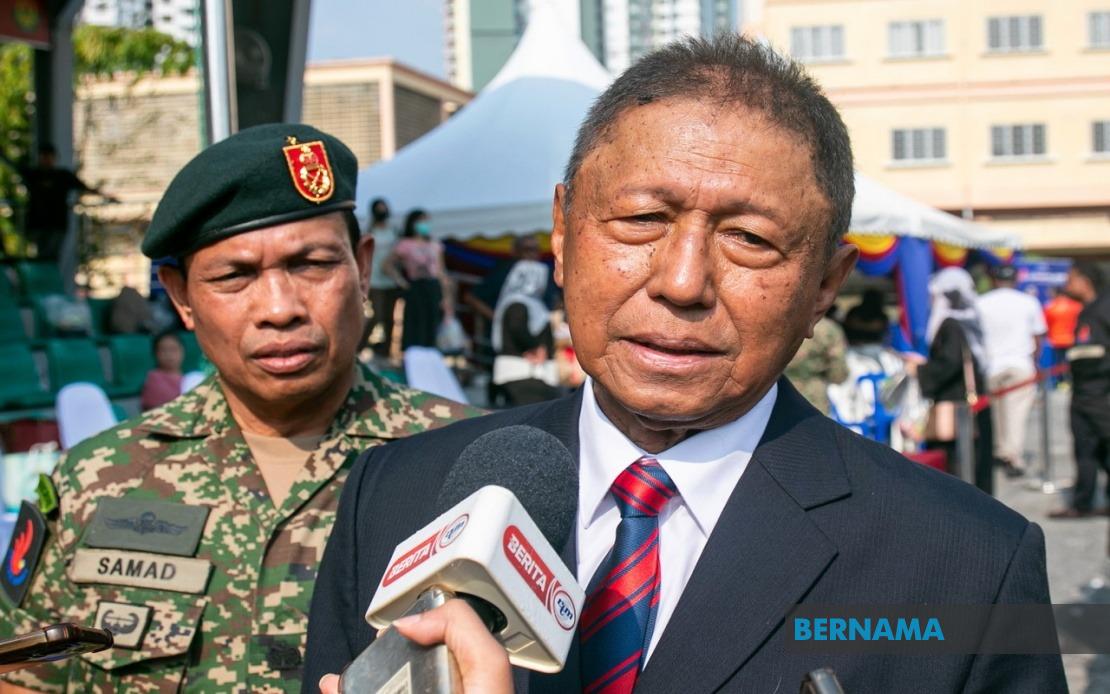
General (Rtd) Tan Sri Dr Abdul Aziz Zainal, chairman of the National Service Training Council (MLKN), announced the development following a passing-out ceremony at the National Service Training Branch's 515 Territorial Army Camp in Kuala Lumpur. The selected participants commenced rehearsals in Putrajaya on August 25 to prepare for the high-profile event. According to Abdul Aziz, this participation serves dual purposes: it offers the broader public a tangible demonstration of the programme's reach and effectiveness, and it positions the young trainees as embodiments of the nation's commitment to developing patriotic, disciplined youth who will contribute meaningfully to society.
The latest cohort, designated PLKN 3.0 Series 3/2026, concluded its 45-day training cycle with 795 trainees successfully completing the programme across three established training camps. The intake was distributed across gender lines and geographic locations: Camp 504 Wataniah in Bukit Keteri, Perlis accommodated 106 female participants; Camp 505 Wataniah in Pekan, Pahang hosted 442 male trainees; and Camp 515 Wataniah in Kuala Lumpur enrolled 247 female participants. This distribution strategy reflects the MLKN's effort to ensure representative recruitment from different regions while maintaining balanced gender participation—a notable departure from previous iterations of the programme that faced criticism over their demographic composition.
Academic and disciplinary excellence was recognised at each facility, with three standout performers emerging. An'nur Najiha Muhammad, an 18-year-old from Ipoh, Perak, topped the rankings at Camp 504. Muhammad Firdaus Muhammad Said, also 18 and hailing from Kuantan, Pahang, achieved the highest honours at Camp 505. Cheyenne Alessandra Michael, likewise 18 and based in Kuala Lumpur, secured the top position at Camp 515. These designations typically reflect not only academic achievement in the training curriculum but also demonstrations of leadership, physical fitness, discipline, and embodiment of the programme's values throughout their service period.
The MLKN has unveiled ambitious expansion plans for subsequent training cycles, with PLKN 3.0 Series 4/2026 projected to accommodate significantly increased participant numbers through infrastructure expansion and institutional partnerships. Abdul Aziz indicated that the programme intends to leverage Malaysian Volunteer Corps Department (RELA) training facilities in conjunction with existing military camps, a move that could potentially double training capacity to over 1,000 trainees per cycle. This horizontal scaling strategy addresses previous logistical constraints that had limited throughput at dedicated military installations.
The expansion blueprint incorporates five newly activated training camps that will enter operational service for the upcoming cohort. Camp 503 in Hutan Melintang, Perak; Camp 506 in Sungai Durian, Kelantan; and Camp 513 in Bukit Pinang, Kedah represent purpose-built facilities. Two additional venues—Public Training Institute centres situated in Sungai Petani, Kedah and Tuaran, Sabah—will function as supplementary capacity during peak training periods. This geographically dispersed network should enhance accessibility for recruits from eastern and northern peninsular Malaysia, regions that may have experienced enrollment challenges due to distance from previous centralised facilities.
The integration of RELA training infrastructure represents a pragmatic institutional solution that extends beyond merely adding capacity. RELA possesses established infrastructure, trained personnel, and operational experience in structured civic and security training, making it a logical partner for scaling PLKN 3.0. This collaborative framework also signals the MLKN's willingness to work across government agencies—a necessary approach given the substantial logistical requirements of training thousands of young Malaysians annually. Such coordination could provide template lessons for other large-scale youth development initiatives across Southeast Asia.
Cheyenne Alessandra Michael's personal account of her training experience illuminates the programme's transformative dimension beyond formal instruction. She volunteered for PLKN 3.0 motivated by aspirations toward military service, and her 45-day immersion in the Territorial Army environment catalysed profound shifts in her patriotic consciousness. Living and training alongside professional soldiers provided daily exposure to military discipline, sacrifice, and service ethos—dimensions that classroom instruction alone cannot replicate. She explicitly attributed heightened patriotism and deeper appreciation for independence-era sacrifices to this experiential learning component, reflecting the MLKN's philosophy that structured national service cultivates intangible civic virtues alongside measurable competencies.
Michael's reflections also underscore an often-underemphasised outcome of such programmes: the younger generation's reconnection with national historical narratives and the material costs of sovereignty. Her recognition that maintaining peace represents a generational responsibility—not merely a state duty—suggests the programme achieves one of its core objectives: fostering in young Malaysians a sense of custodianship over the nation's stability and prosperity. This psychological shift has significant implications for social cohesion, particularly in an era when national unity faces pressures from polarisation, misinformation, and transnational cultural influences that can fragment collective identity.
The PLKN 3.0 framework represents a substantial reconceptualisation compared to earlier national service iterations that generated considerable public debate regarding voluntariness, safety protocols, and ideological balance. The current version emphasises rigorous training standards, transparent outcome measurement, and integration with professional military establishments like the Territorial Army. The inclusion of both male and female participants in proportionate numbers, the geographic diversification of training sites, and the demonstrated enthusiasm of participants like Michael suggest the programme has achieved greater public legitimacy than its predecessors.
For Malaysian policymakers and regional observers, PLKN 3.0's expanding footprint raises broader questions about youth development strategy in Southeast Asia. As economic pressures and social fragmentation create vulnerabilities among young populations, structured national service programmes—when properly resourced and ethically administered—can provide stabilising institutional frameworks, civic education, and professional skill development simultaneously. The MLKN's intention to scale to 1,000+ annual participants positions Malaysia as a regional leader in this policy space, potentially influencing neighbouring countries considering similar youth integration initiatives.
The National Day parade appearance symbolises more than ceremonial patriotism; it represents public validation of the PLKN 3.0 experiment. By featuring these trainees before the nation's highest political and ceremonial figures, the MLKN broadcasts confidence in the programme's trajectory and implicitly invites public scrutiny of its outcomes. Sustained success will require maintaining training quality even as scale increases—a well-documented challenge in large institutional programmes. The coming cycles will reveal whether the MLKN can expand participant numbers without compromising the disciplinary rigour and transformative experiences that appear central to the programme's appeal and effectiveness.

