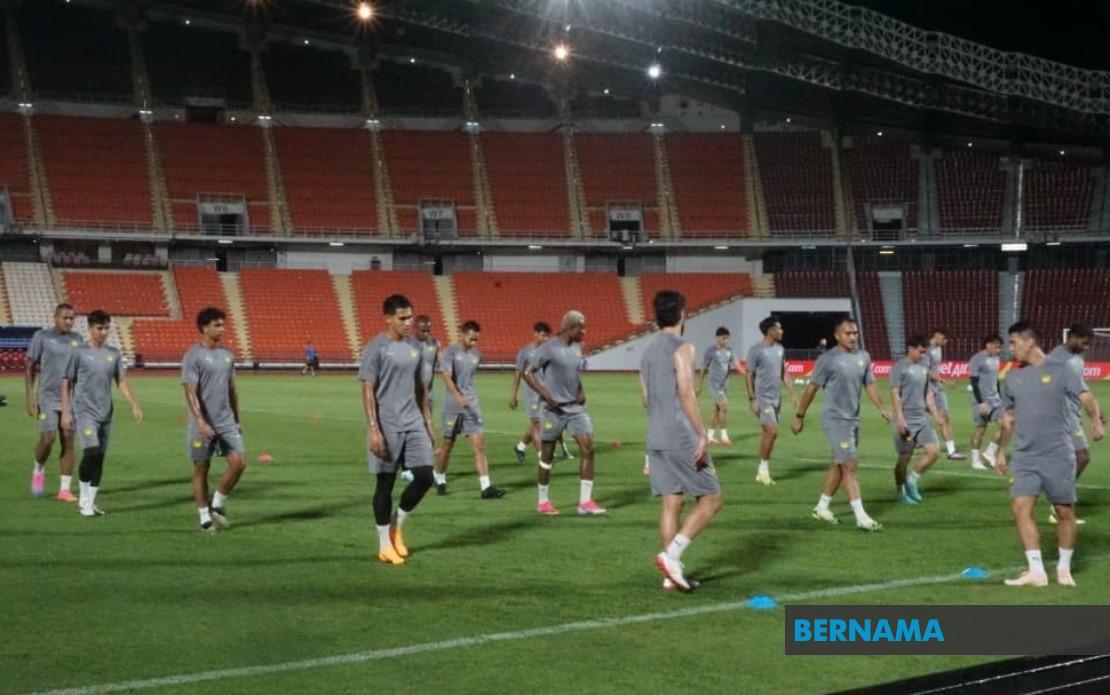
Malaysia's participation in the 2026 ASEAN FIFA Cup, scheduled for late September through early October in Indonesia, represents a pivotal moment for Harimau Malaya to reclaim national sporting pride after a turbulent period that has shaken the country's football establishment. The tournament provides the Malaysian squad with a platform to demonstrate resilience and restore the faith of supporters who have grown disillusioned with the Football Association of Malaysia (FAM) amid institutional failures and leadership crises.
The national team has been drawn into Division 1 Group A alongside Indonesia, Singapore and India — a grouping that presents formidable obstacles yet offers meaningful redemption through high-profile victories. According to local football analyst Zakaria Rahim, the roster assembled for the tournament must embody the determination to revive supporter confidence, particularly through a potential breakthrough against Indonesia, one of the region's strongest footballing nations. Zakaria emphasised that FAM's obligation extends beyond simply fielding competitive players; the governing body must prioritise deploying the strongest available squad capable of mounting a genuine title challenge in this inaugural competition.
Zakaria stressed that although Malaysian supporters have expressed frustration with FAM's governance and institutional dysfunction, their underlying desire to witness national success remains intact. A decisive victory, particularly against Indonesia, could prove transformative in reconnecting fans with Malaysian football. The analyst argued that the contest transcends the binary of winning or losing, instead representing an opportunity to reconstruct the honour and reputation of the national game through tangible sporting achievement.
The context for this tournament emerges from a humiliating scandal that has fundamentally damaged Malaysian football's credibility. FIFA imposed severe sanctions after uncovering forged documentation involving seven ineligible heritage players: Facundo Garces, Rodrigo Holgado, Imanol Machuca, Joao Figueiredo, Gabriel Palmero, Jon Irazabal and Hector Hevel. The international football governing body annulled results from three friendly matches against Cape Verde, Singapore and Palestine, retroactively awarding 3-0 victories to the opposing teams and invalidating Malaysia's performance records.
The situation deteriorated when the Asian Football Confederation (AFC) applied complementary sanctions concerning two Group F fixtures in the 2027 AFC Asian Cup Qualifiers against Vietnam and Nepal where identical players had featured. The AFC's decision to assign 3-0 defeats to Malaysia for those matches inflicted dual consequences: a precipitous decline in FIFA ranking and confirmation of the nation's elimination from qualifying for the 2027 AFC Asian Cup in Saudi Arabia. These cascading sanctions have undermined not only Malaysia's competitive standing but also the credibility of FAM's administrative structures.
The institutional consequences of this scandal prompted dramatic action in January when all FAM Executive Committee members serving their 2025-2029 term announced collective voluntary resignation. The unanimous decision reflected a recognition that organisational responsibility supersedes personal ambitions or positional retention. Committee members framed their departure as a principled response to mounting public scrutiny surrounding the heritage player affair and as a necessary mechanism to preserve FAM's integrity and institutional legitimacy during a period of profound reputational damage.
The timing of the 2026 ASEAN FIFA Cup carries symbolic significance within this narrative of institutional renewal. The tournament occurs shortly after FAM's scheduled leadership elections on September 17, creating an opportunity for the association to initiate a new chapter with fresh administrative direction. Zakaria contended that the trajectory of Malaysian football depends not exclusively upon player determination or coaching competence; FAM's incoming leadership bears equivalent responsibility in charting the organisation's strategic future and establishing governance frameworks that prevent recurrence of such scandals.
Interim head coach Tan Cheng Hoe possesses an expanded player assessment window that could prove advantageous if his tenure extends through the 2026 ASEAN FIFA Cup campaign. Experienced coach Irfan Bakti Abu Salim highlighted that the commencement of the 2026/2027 Malaysia League season on August 21 permits Cheng Hoe to evaluate a comprehensive player pool after domestic competitors regain competitive sharpness through league participation. This alignment between the domestic season's opening and the tournament provides pragmatic scheduling that allows the coaching staff to identify and integrate the most match-sharp contingent.
The tournament's structure creates genuine competitive incentives for group advancement. Division 1 Group B comprises Vietnam, Pakistan, Thailand and the Philippines, establishing a two-tier system where group winners advance directly to the championship match whilst runners-up contest the third-place playoff. The ultimate prize represents substantial financial incentive: USD1 million (RM4.09 million) awaits the tournament victor, a sum that could financially benefit Malaysian football's development infrastructure.
Malaysia's challenge remains formidable yet surmountable within the context of regional competition. The nation's footballing capabilities, when uncompromised by administrative dysfunction, remain competitive within Southeast Asian parameters. Victory against Indonesia would symbolically transcend mere sporting achievement, instead functioning as a public statement regarding Malaysian football's capacity for institutional reform and renewed competitiveness. The tournament therefore functions simultaneously as athletic competition and as narrative opportunity through which Malaysia might reconstruct a sporting identity damaged by recent institutional failures.
The responsibility now extends across multiple stakeholders. Players must demonstrate commitment that transcends typical competitive motivation, understanding that their performances carry consequences extending beyond match outcomes into broader questions of national football credibility. Coaches must optimise tactical and strategic preparation against a compressed preparation timeline. FAM's incoming leadership must simultaneously manage immediate tournament expectations whilst establishing governance protocols that prevent replication of the heritage player scandal. Supporters, whose confidence has been fractured by recent events, must be given genuine grounds for renewed faith through both institutional accountability and competitive success.

