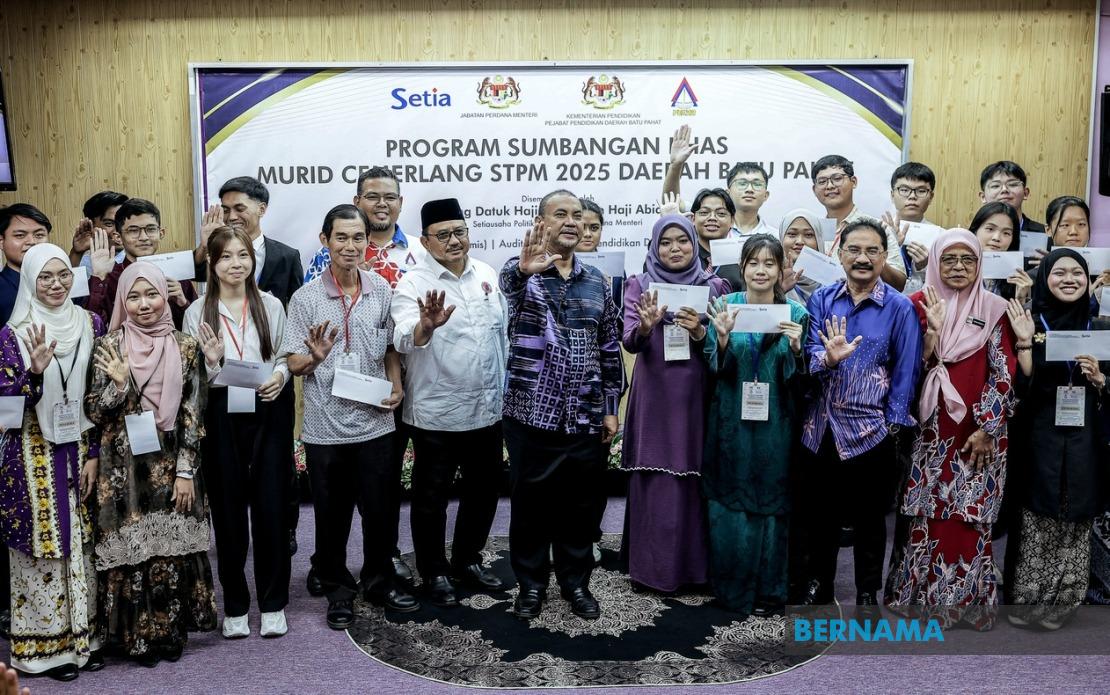
The Prime Minister's Office has distributed special financial contributions to 214 high-performing 2025 STPM students throughout Batu Pahat district, marking a significant recognition of academic achievement at the pre-university level. The awards ceremony, held at the Batu Pahat District Education Office, represents part of the government's broader initiative to support and incentivise educational excellence among Malaysian youth preparing for tertiary education.
Datak Azman Abidin, Political Secretary to the Prime Minister, presided over the recognition event and explained that the contribution programme targets outstanding students from 16 secondary schools across the district. The initiative reflects the government's commitment to identifying and nurturing top academic performers at a critical juncture in their educational journey, when decisions about university applications and course selection become paramount.
According to Datuk Azman, the underlying purpose of the scheme extends beyond simply rewarding past accomplishments. Instead, the contributions are strategically designed to motivate recipients to maintain their scholastic standards and use their positions as role models within their schools and communities. By publicly recognising excellence, the government aims to create a positive culture around academic achievement that influences peer behaviour and encourages broader student engagement with their studies.
The programme's sustainability depends on budgetary availability, Datuk Azman noted, though the government has indicated intentions to expand the initiative to additional districts beyond Batu Pahat in future years. This phased approach suggests recognition of both fiscal constraints and the administrative complexity involved in identifying and distributing awards across multiple locations. The expansion plan signals confidence in the scheme's effectiveness and suggests it may eventually become a nationwide recognition system for top STPM performers.
For Malaysian families, such government support carries particular significance. Tertiary education represents a substantial financial commitment, and direct contributions from federal authorities help reduce the burden on households already stretching budgets across schooling, accommodation, and living expenses. The award amounts, while not specified in the announcement, provide meaningful assistance during the transition from secondary to university study when many students face costs for accommodation, course materials, and registration fees.
Afida Auni Airulnizam, a 20-year-old former student at Sekolah Menengah Kebangsaan Tun Sardon in Rengit, exemplifies the typical recipient profile. As the younger sibling in her family, she draws inspiration from her brother's university experience and harbours ambitions to pursue sports science at tertiary level. For students like Afida, government recognition validates years of academic effort and reinforces confidence in their educational trajectory during a period when self-doubt about university admission prospects often peaks.
The psychological impact of such awards extends beyond immediate financial benefit. Recipients frequently describe formal recognition as profoundly motivating, particularly when it comes from the highest levels of government. For high-achieving students considering demanding fields like science, engineering, and medicine, knowing that authorities actively acknowledge and value their accomplishments can prove instrumental in their decision to pursue ambitious tertiary programmes rather than settling for less rigorous alternatives.
Muhd Ammar Firdaus Mohd Fadzil, another recipient from SMK Tun Ismail, articulated the practical dimension of the contribution. He highlighted how the financial assistance directly alleviates pressures on families preparing for university entry, enabling students to concentrate on academic work and university applications rather than worrying about funding gaps. This practical support proves especially valuable for middle-income families who exceed scholarship thresholds yet still struggle with educational costs.
The selection of students from 16 different secondary schools across Batu Pahat suggests a geographically inclusive approach, ensuring that excellent performers from both urban and more rural schools receive recognition. This distribution prevents concentration of rewards in a handful of traditionally high-performing institutions and signals to all schools that excellence receives acknowledgment regardless of institutional setting. Such broad recognition strengthens educational equity messaging and encourages all schools to invest in supporting their brightest students.
The government's framing of these awards as demonstrating "care and commitment toward empowering education" reflects a deliberate narrative strategy. In Malaysian education discourse, where funding debates and policy disagreements frequently dominate headlines, such positive recognition initiatives offer opportunity for government messaging about educational investment. The programme aligns with broader policy objectives promoting meritocracy and positioning Malaysia as a nation investing in human capital development necessary for economic competitiveness.
For Southeast Asian context, Malaysia's approach to recognising top STPM performers sits within broader regional trends emphasising academic excellence and preparation of talent for increasingly competitive knowledge economies. Similar schemes operate across neighbouring countries, though specific mechanisms and funding levels vary. Malaysian students competing for international scholarships and regional university places benefit from such domestic recognition, which enhances their profiles when applying to prestigious institutions throughout Asia and globally.
The continuation and expansion prospects of this programme depend significantly on sustained political commitment and budgetary availability. Educational funding frequently faces pressure during economic downturns, making long-term programme sustainability uncertain. However, the government's explicit mention of expansion plans suggests serious intent, potentially reflecting calculations that the scheme's visibility and positive impact on public perception justify ongoing investment.
Looking forward, such recognition initiatives work most effectively when integrated with broader educational reform addressing quality improvement, curriculum development, and equitable access to resources across all schools. Awards celebrating existing excellence represent necessary positive reinforcement, yet must complement parallel efforts strengthening foundational education and supporting struggling schools. The challenge for policymakers involves maintaining such programmes while ensuring that recognition of top performers does not distract from systemic improvements needed throughout Malaysia's education system.

