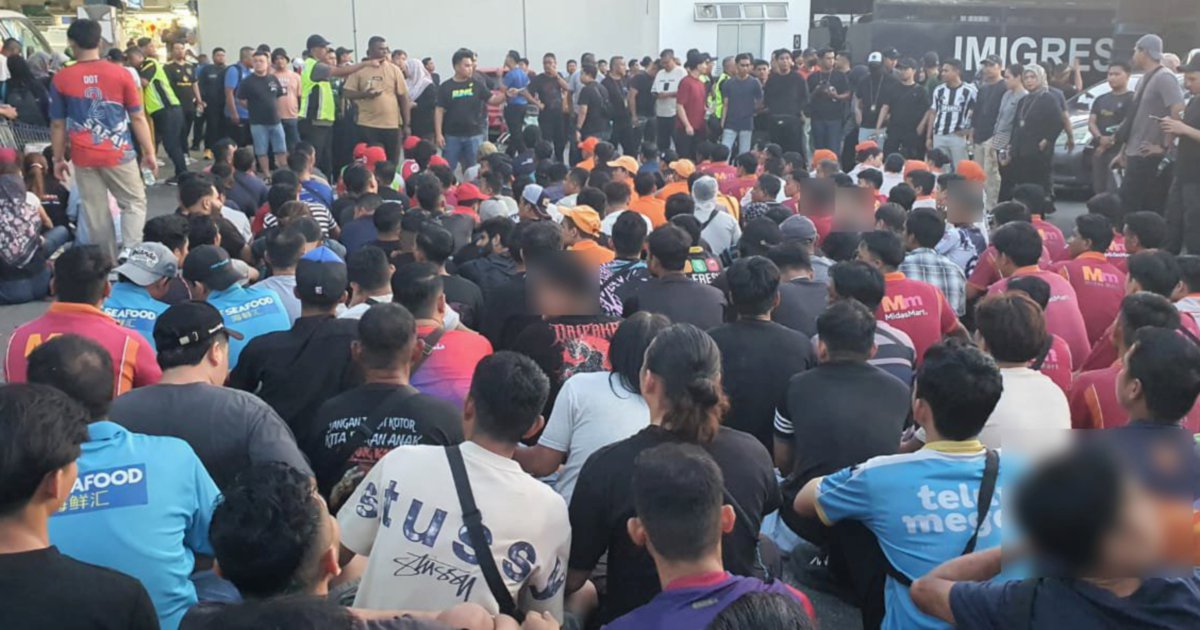
Immigration enforcement teams descended on Johor Baru this week to execute a sweeping raid that netted 226 migrant workers found to be residing and working in Malaysia without proper authorisation. The operation marks one of the most significant apprehensions in the state in recent months and has exposed an organised system through which foreign nationals circumvented legal employment requirements. Among those detained was an Indonesian fishmonger who had operated within this illicit framework for approximately four years, making regular monthly border crossings to obtain passport stamps that created the false impression of legitimate travel while he continued undocumented work throughout the period.
The scheme's mechanics reveal concerning gaps in border control and employment verification systems across the region. Migrants participating in the arrangement would cross into neighbouring jurisdictions periodically—ostensibly to refresh their travel documents—then immediately return to Malaysia and resume unlawful employment. This cyclical pattern allowed participants to maintain technical compliance with entry protocols while systematically violating residency and work permit regulations. The passport stamps served as documentary cover, creating a veneer of legitimacy during routine checks by authorities who might not scrutinise the actual validity of employment status beyond the presence of recent entry records.
The operation conducted by immigration authorities uncovered evidence suggesting the scheme benefited from institutional knowledge and coordination. Workers engaged in the fraud appeared to share a common understanding of the system's mechanisms, indicating either organised guidance or established networks of information-sharing among the migrant workforce. The fishmonger's four-year participation suggests the arrangement had developed sufficient stability to persist across an extended period, raising questions about how enforcement mechanisms failed to detect the pattern earlier despite the regularity of border crossings and the documented nature of the deception.
Indonesian nationals comprised a significant portion of those apprehended, reflecting established migration patterns between Indonesia and Malaysia. The fishing industry connection evident in the fishmonger case points toward specific employment sectors where undocumented workers concentrate—typically lower-wage positions in agriculture, construction, domestic work, and maritime industries where labour demand remains high and documentation requirements are sometimes less rigorously enforced. These sectors sustain substantial informal workforces that operate beyond regulatory frameworks, creating structural vulnerabilities that schemes like the exposed passport arrangement exploit.
The detention of 226 individuals simultaneously creates immediate logistical challenges for immigration authorities, who must process, verify identities, and determine appropriate enforcement actions across a large cohort. Processing such numbers requires coordination between federal and state-level agencies, consular involvement for deported individuals, and coordination with detention facilities already operating at capacity in many jurisdictions. The scale of the single operation suggests authorities likely concentrated resources specifically on dismantling the identified network rather than conducting routine patrols, indicating that intelligence gathering or informant information prompted the targeted enforcement action.
For Malaysia's labour market, the case illustrates persistent complications in workforce regulation despite longstanding efforts to formalise employment across various industries. Undocumented workers typically earn substantially below minimum wage thresholds, undercut legitimate workers' bargaining power, and contribute minimally to tax and social security systems. Yet their availability addresses genuine labour shortages in sectors where citizens show limited willingness to work, creating economic incentives that partly explain the continued existence of informal employment arrangements despite enforcement risks.
The passport-stamping arrangement reflects broader regional migration dynamics where formal employment channels often prove inaccessible or prohibitively expensive for workers lacking educational credentials or professional qualifications. The legitimate process for obtaining work permits in Malaysia involves employer sponsorship, government approvals, and administrative costs that exceed what many workers can afford or what some employers wish to bear. Faced with these barriers, vulnerable migrants resort to informal alternatives, accepting lower wages and precarious conditions in exchange for income opportunities unavailable in home countries.
Cross-border coordination challenges feature prominently in migration enforcement across Southeast Asia, where individual jurisdictions sometimes pursue divergent approaches. If the scheme involved border officials in multiple countries—whether through corruption, negligence, or systemic inconsistency—addressing it would require diplomatic engagement and standardised protocols that often develop slowly across the region. The Indonesian fishmonger's monthly pattern depended on border integrity in at least two jurisdictions, and the scheme's longevity suggests compliance from relevant personnel or indifference born of insufficient oversight capacity.
The raid's timing and scope indicate immigration authorities are elevating enforcement priority in Johor, possibly responding to public concern about undocumented populations or political pressure from state-level officials. Johor's position as Malaysia's gateway to Riau Islands in Indonesia makes it a natural concentration point for irregular migration, and controlling entry from this principal crossing point receives consistent attention from enforcement agencies. However, apprehending 226 workers addresses symptoms rather than underlying causes driving migration patterns and employer demand for undocumented labour.
Moving forward, the exposed scheme presents opportunities for authorities to strengthen inter-agency intelligence sharing and border control systems. Patterns of repeated borderline crossings by individuals with temporary immigration statuses warrant automated flagging and investigation protocols. Sector-specific employment inspections targeting industries with high undocumented worker concentrations could disrupt networks like the passport-stamping arrangement before they become established. Ultimately, sustainable solutions require both enforcement enhancements and structural reforms addressing why employers and workers persistently engage informal arrangements despite legal frameworks explicitly prohibiting such practices.
For the 226 detained individuals, the immediate consequence involves deportation procedures and associated administrative processing. The fishmonger and his cohort face repatriation to Indonesia and possible future immigration restrictions. However, economic pressures in source countries and labour shortages in receiving countries suggest many will eventually attempt return migration through formal or informal channels, potentially perpetuating cycles of undocumented employment unless underlying economic incentives shift fundamentally across the region.

