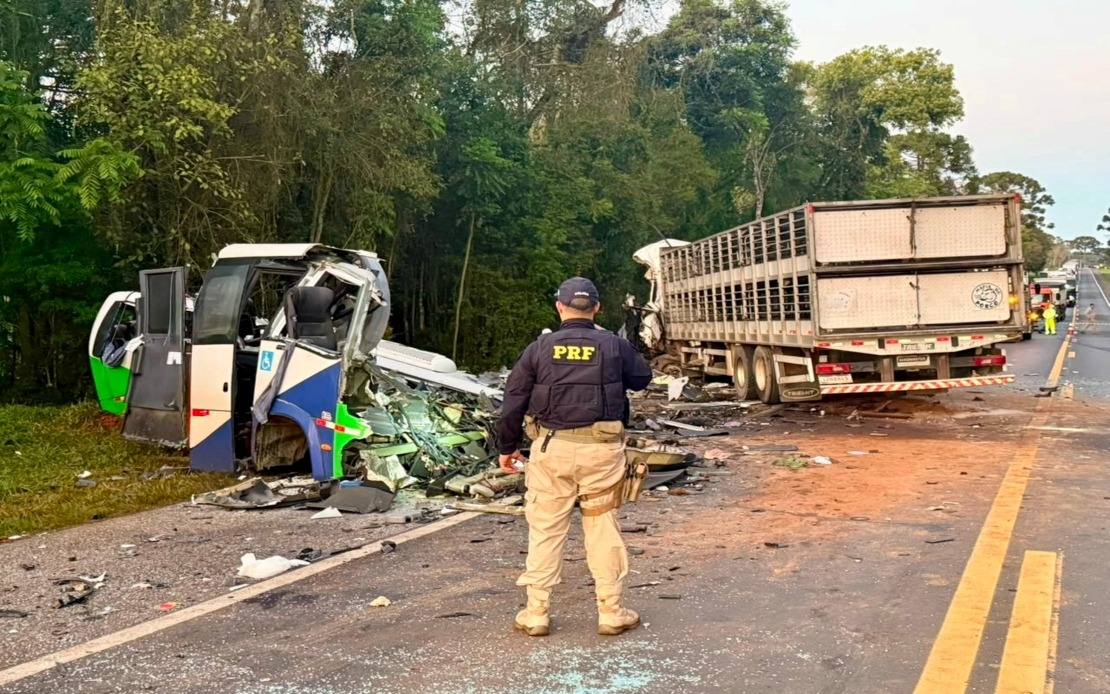
A devastating collision between a minibus and a lorry on a national highway in southern Brazil has left 23 people dead, marking one of the region's deadliest recent traffic accidents. The incident unfolded early Wednesday morning on a two-lane road near Ipiranga in the Campos Gerais region of Paraná state, when the vehicles met in a catastrophic head-on crash that authorities say may have involved the lorry crossing into the oncoming lane.
Among the deceased are 13 women, eight men, and two children, along with the driver of the lorry itself. The composition of the fatalities underscores the particular vulnerability of those being transported: the minibus was operated by the health service and carried patients who were being transferred to hospitals in the greater Curitiba metropolitan area, roughly 200 kilometres from the accident site. This detail raises concerns about patient safety protocols during medical transport operations and whether additional safeguards are necessary for moving vulnerable populations across long distances on highways.
The exact mechanics of how the collision occurred remain the subject of ongoing investigation, though initial assessments from authorities suggest the lorry may have drifted across the centre line without warning. Such scenarios are not uncommon on regional highways where fatigue, vehicle maintenance issues, or inadequate road markings can contribute to tragic outcomes. The circumstances warrant scrutiny from transportation and road safety regulators, particularly given that the national highway connecting several regions in southern Brazil operates with only two lanes in certain stretches, leaving minimal margin for error when vehicles drift from their intended paths.
Emergency response teams found five additional survivors among the passengers, who were transported to medical facilities for treatment of injuries sustained in the impact. The scale of the casualty toll reflects the severe nature of the collision, with the confined space of the minibus offering little protection to those inside during the head-on impact with a heavy commercial vehicle. The accident site was cordoned off completely for several hours as investigators documented evidence and rescue workers attended to the scene.
For Malaysian readers familiar with road transport challenges in Southeast Asia, this incident echoes recurring concerns about highway safety standards and enforcement in developing nations. While Brazil's federal highway system differs from Malaysian roads, the fundamental issues of vehicle maintenance, driver fatigue, and inadequate infrastructure improvements persist across many regions. The minibus operated by Brazil's health service, like similar operations in Malaysia and other regional nations, represents a critical lifeline for patients requiring specialist care in distant urban centres.
The Paraná state government's declaration of three days of mourning reflects the profound shock felt throughout the region. Such formal gestures acknowledge both the scale of loss and the need for community reflection on transportation safety. In the context of Brazilian state governance, this response signals potential pressure on authorities to examine whether current regulations governing both passenger transport and heavy vehicle operations are sufficiently robust.
The involvement of a health service minibus carrying patients to hospitals in Curitiba raises questions about the adequacy of transport protocols and whether medical escorts accompanied the journey. Patients being transferred between facilities are typically among the most vulnerable road users, and any accident involving them demands heightened attention to preventative measures. This could include requirements for escort vehicles, restrictions on journey times, or mandatory safety briefings for drivers handling patient transport.
The national highway's limited lanes in certain sections create inherent bottlenecks and increase collision risks, particularly when vehicles must navigate curves or elevation changes without adequate sight lines. Highway authorities across the region might consider whether investment in road improvements, including lane expansions, better signage, and improved surface conditions, could reduce the likelihood of similar disasters. The two-lane configuration, while economical, leaves little room for recovery when driver error occurs.
Investigators will likely focus on whether the lorry driver fell asleep at the wheel, suffered a medical event, or encountered mechanical failure that precipitated the lane crossing. Commercial vehicle regulation and driver rest period enforcement become critical factors in determining whether systemic failures contributed to the tragedy. The preliminary findings suggesting the lorry veered into the oncoming lane will be crucial to establishing liability and informing future safety recommendations.
This incident serves as a sobering reminder of the continuing challenges road safety presents in Brazil and across Latin America, where highway fatalities remain a persistent public health concern. For Malaysian transport authorities and safety advocates, the accident reinforces the importance of continuous investment in infrastructure, enforcement of driving standards, and special protections for vulnerable passenger groups. The loss of life—particularly the two children and numerous women in what appears to have been a routine medical transport operation—underscores how quickly ordinary journeys can become tragic on roads where safety margins remain inadequate.

