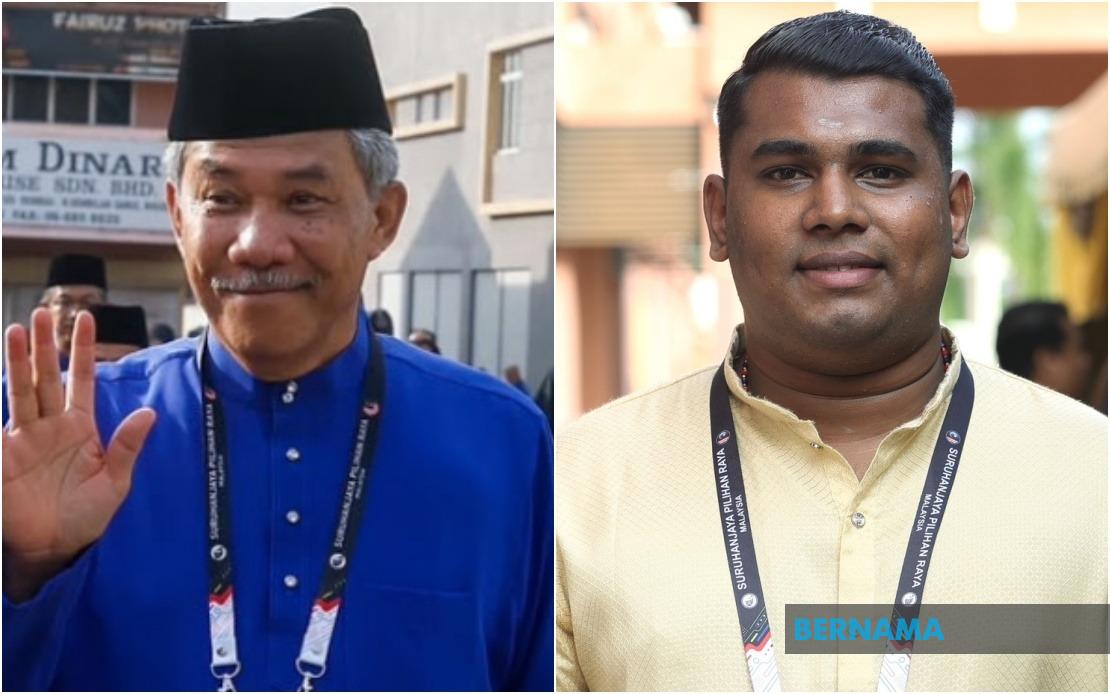
The 16th Negeri Sembilan state election has introduced a fresh demographic face to the political arena with M. Leevineshwaraan, a 23-year-old Bersatu representative, emerging as the youngest candidate contesting in the polls. His candidacy marks a generational shift in the contest for the Sri Tanjung state seat, where he will navigate a crowded five-way race in pursuit of the voters' confidence.
Leevineshwaraan's path to the ballot represents a deliberate strategy by Bersatu to inject youthful energy into its electoral campaign in the central state. The candidacy demonstrates the party's effort to appeal to younger voters and diversify its representation beyond established political figures. However, his youth also presents vulnerabilities in an intensely competitive electoral environment where experience and ground networks traditionally hold considerable sway.
The Sri Tanjung contest appears formidable for the young challenger, given that the incumbent, Datuk Dr G. Rajasekaran of Pakatan Harapan, secured a commanding victory margin of 3,996 votes in the previous election. This substantial cushion suggests an entrenched political stronghold that will require sustained organisational effort and innovative campaigning strategies to dislodge. The five-candidate field further fragments the anti-incumbent vote, potentially favoring the seasoned incumbent unless significant shifts occur in voter sentiment.
The constituency itself encompasses one of five state seats within the Port Dickson parliamentary area, where approximately 19,590 registered voters comprise the electoral base. This voter population will determine whether Leevineshwaraan can overcome both his limited political tenure and the challenging three-dimensional contest format. His candidacy nevertheless signals broader generational tensions within Malaysian politics, where traditional hierarchies increasingly confront demands for younger representation.
At the opposite end of the age spectrum, two 70-year-old candidates are mounting competitive challenges that underscore the persistence of senior political figures in the Malaysian electoral system. Barisan Nasional deputy chairman Datuk Seri Mohamad Hasan defends the Rantau seat while Pakatan Harapan's Abd Latif A Tambi contests Gemencheh, with each facing two-way races in constituencies with substantial voter bases—34,831 in Rantau and 24,916 in Gemencheh respectively.
The emergence of these septuagenarian contestants reflects a continuation of established political trajectories within Malaysian democracy, where senior figures retain organisational resources and electoral machinery. Mohamad Hasan's position as a senior Barisan Nasional leader provides particular leverage in the Rantau contest, affording him institutional backing and recognition. This juxtaposition between Leevineshwaraan's youthful idealism and the seasoned experience of Mohamad and Abd Latif encapsulates contemporary tensions within Malaysia's competitive political environment.
The 16th election notably surpasses the 15th state polls in 2023, when Muhammad Syakir Fitri Sadri held the youngest candidate distinction at 25 years old, contesting Paroi as an Independent. Leevineshwaraan's candidacy therefore represents a compression of the age threshold for entry into competitive state-level politics. This progression suggests political parties are increasingly pursuing younger candidates as part of broader electoral rejuvenation strategies, though success rates remain variable and dependent on local political dynamics.
Women's representation demonstrates incremental progression, with nine female candidates among the 103 total contestants compared to eight among 83 in the previous election. Pakatan Harapan leads female candidate deployment with four nominations, signaling strategic prioritisation of gender diversity within coalition messaging. Nevertheless, women constitute merely 8.7 percent of the candidate pool, indicating substantial structural barriers persist in Malaysian electoral politics. This modest improvement suggests both slow institutional change and ongoing resistance to gender parity in candidate selection processes.
The electoral timeline compressed campaign periods into an intensive schedule, with early voting designated for July 28 and the primary polling day scheduled for August 1. This condensed timeframe proves particularly challenging for newer candidates like Leevineshwaraan, who must rapidly establish voter recognition and campaign infrastructure within abbreviated windows. Established incumbents and senior figures retain inherent advantages in such compressed schedules, leveraging existing networks and media familiarity.
The comparative youth of this Negeri Sembilan field—particularly Leevineshwaraan's emergence as the youngest contestant—reflects evolving pressures within Malaysian political parties to appeal to younger voters whilst maintaining electoral competitiveness. However, the simultaneous fielding of septuagenarian candidates demonstrates the enduring institutional power of senior figures across ideological divides. This combination suggests Malaysian politics remains transitional, with generational change occurring gradually rather than through decisive shifts in demographic representation.
For Malaysian observers and regional analysts monitoring democratic processes in Southeast Asia, the Negeri Sembilan election provides instructive lessons about generational dynamics within established two-party systems. The contest between youth-oriented insurgency and experience-based incumbency reflects broader global tensions between democratic innovation and institutional continuity. Leevineshwaraan's candidacy, regardless of electoral outcome, signals that younger Malaysians increasingly view state-level politics as viable avenues for political participation rather than pathways requiring years of preliminary organisational service.

