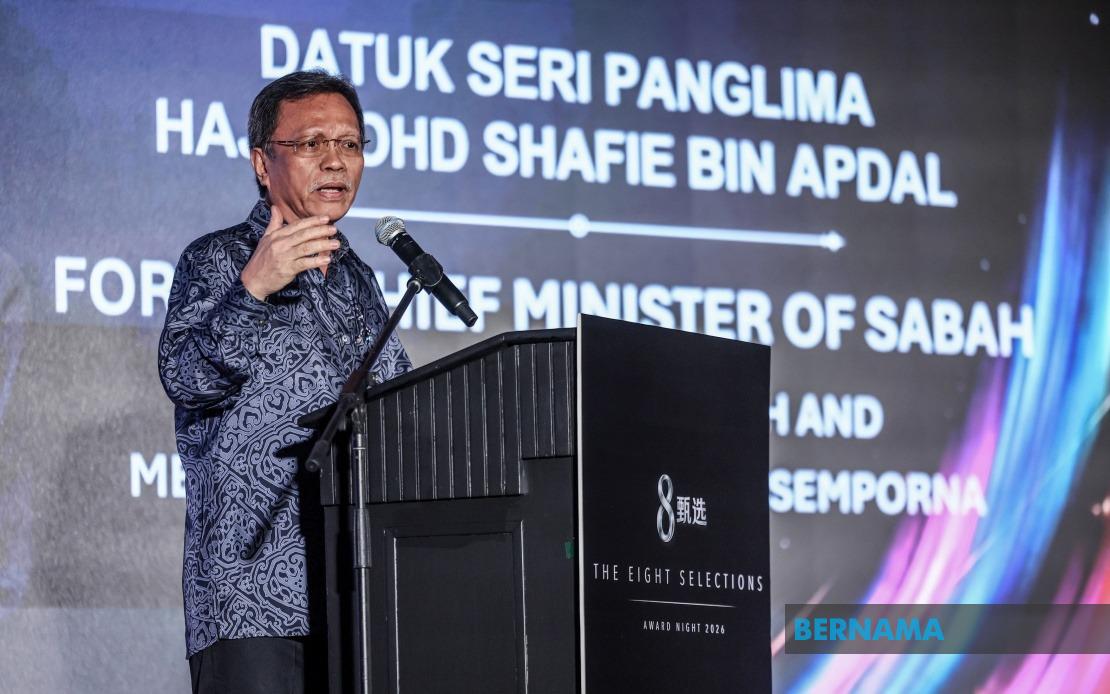
The Malaysian entrepreneurial community gathered in Kuala Lumpur last night to witness the recognition of 28 outstanding business leaders and brand founders at the G Forty Top 40 The Eight Selections Award 2026. Organised by G Media Asia and supported strategically by Media Prima OMNiA, the ceremony drew approximately 300 attendees representing diverse sectors and industries across the country, from established corporate figures to emerging business professionals seeking inspiration from their peers' achievements.
Former Sabah Chief Minister Datuk Seri Mohd Shafie Apdal officiated the event, lending considerable prominence to the proceedings. The occasion also featured G Media Asia chairman Datuk Wira Dr Calvin Khiu and Stephanie Wong, Chief Operating Officer of Media Prima OMNiA's Agency Solutions division, underscoring the collaborative nature of this year's awards initiative. The gathering reflected a broader recognition within Malaysia's business community that celebrating entrepreneurial success serves purposes beyond mere trophy presentation, functioning instead as a validation mechanism for those driving economic growth and innovation.
According to G Media Asia Chief Executive Officer Cathy Ooi, the awards programme operates on a philosophy that extends beyond traditional metrics of success. Her remarks challenged the notion that accolades alone define an entrepreneur's or organisation's true impact on society and the economy. Instead, she emphasised that the documentation, dissemination and validation of business narratives through trusted media platforms create lasting value that reverberates through generations. This perspective distinguishes the G Forty Top 40 Awards from purely commercially-driven recognition schemes, positioning it within a framework that views entrepreneurial storytelling as integral to national economic discourse.
The contemporary business environment has shifted substantially from what Ooi characterised as product-and-service-centric competition towards a landscape where brand perception, consumer confidence and societal influence determine competitive advantage. Malaysian enterprises increasingly recognise that differentiation depends less on functional product attributes and more on the narrative a company constructs around its values, heritage and contributions to community wellbeing. This evolution reflects global trends wherein consumers, particularly younger demographics, factor corporate social responsibility and authentic brand values into purchasing decisions. The awards framework accommodates this reality by recognising both traditional entrepreneurial achievement and the softer dimensions of business influence that shape market behaviour.
G Media Asia's strategic positioning as a documenter and curator of Malaysian business achievement assumes particular relevance in a regional context where entrepreneurial narratives often remain fragmented across multiple platforms with limited cohesion. By aggregating and validating these stories, the organisation contributes to a consolidated understanding of Malaysia's entrepreneurial identity. This function extends beyond national borders; Southeast Asian business professionals and investors monitoring Malaysian market developments benefit from authoritative, media-vetted accounts of emerging leaders and innovative enterprises. The regional significance intensifies as Malaysia competes regionally for entrepreneurial talent and investment capital.
The eight core award categories reflect a sophisticated categorisation of entrepreneurial achievement. The Young Entrepreneur of the Year, Male Entrepreneur of the Year and Female Entrepreneur of the Year distinctions acknowledge that entrepreneurial pathways vary according to career stage and demographic factors. Including gender-specific recognition signals institutional awareness that female entrepreneurs often navigate distinct structural barriers and deserve targeted acknowledgement of their accomplishments. The Era Influence Representative of the Year category recognises individuals whose impact transcends their immediate business operations, extending into broader cultural or societal contexts. This category particularly values thought leaders and industry shapers whose influence extends beyond their organisations' formal boundaries.
Brand-focused categories acknowledge that entrepreneurship increasingly operates through formal brand entities rather than individual personalities alone. The Brand Heritage of the Year award celebrates enterprises demonstrating longevity and evolutionary adaptation across extended periods, a recognition that building enduring institutions demands different capabilities than launching innovative ventures. Conversely, Brand Innovation of the Year spotlights newer entrants or established companies pursuing transformative approaches within their sectors. The Brand Influence of the Year and Brand Social Value of the Year categories reflect contemporary expectations that corporations should demonstrate measurable positive externalities. In a Malaysian context increasingly attuned to stakeholder capitalism and environmental, social and governance considerations, these recognition categories validate that profitability and societal contribution operate as complementary rather than competing objectives.
The Icons of the Era Honours category, encompassing the G Icon Legacy Award and G Icon Award, represents an apex tier of recognition reserved for brands demonstrating sustained excellence across multiple dimensions. These designations carry particular weight given their rarity and the rigorous standards presumably applied to their selection. For recipients, Icon status becomes a marker of establishment legitimacy and enduring relevance, particularly valuable for Malaysian brands seeking regional or international expansion. The emphasis on long-term sustainability within this category sends a signal that durability and adaptive capacity matter as much as momentary market disruption or growth explosiveness.
For the broader Malaysian entrepreneurial ecosystem, awards ceremonies like the G Forty Top 40 serve functions extending well beyond ceremonial celebration. They establish benchmarks and exemplars that influence aspiring entrepreneurs' strategies and aspirations. Younger business leaders observe the characteristics, narratives and trajectories of award recipients, internalising lessons about what achievements appear valued by informed observers of the business landscape. Media coverage surrounding the awards amplifies these demonstration effects, reaching audiences beyond the ceremony's physical attendees. The recognition framework thus operates as a subtle steering mechanism through which business culture evolves, with media institutions helping to define what entrepreneurial success looks like and which dimensions of business achievement merit elevation and celebration.
The involvement of prominent political figures such as former Chief Minister Mohd Shafie Apdal reflects recognition within governmental circles that private sector entrepreneurship constitutes a critical economic driver deserving public affirmation. This political endorsement carries implications for business confidence and policy direction. When senior officials lend ceremonial presence to entrepreneurship celebrations, they signal governmental commitment to creating enabling environments for business growth and innovation. For Malaysian entrepreneurs, particularly those operating in sectors requiring regulatory approval or government cooperation, such visible political support provides reassurance regarding the broader policy climate.
G Media Asia's framing of media's role as a guardian of business narratives and trusted information source addresses growing concerns within Malaysia regarding media reliability and the proliferation of misinformation. By positioning itself as documenting authentic entrepreneurial achievement with rigour and transparency, the organisation contributes to rebuilding institutional credibility within information ecosystems. This function gains particular importance in an era where social media and unvetted online platforms often drown out carefully researched journalistic accounts. The awards programme thus becomes not merely a commercial networking occasion but a statement about institutional commitment to truthful, verified business reporting.
The approximately 300 attendees representing Malaysia's business elite constitute an invaluable network for cross-sector collaboration and knowledge exchange. Such gatherings facilitate informal connections that often lead to subsequent business partnerships, investment opportunities and mentorship relationships. The value generated through such networking effects frequently exceeds the direct impact of the awards themselves, as introduced parties pursue collaborative initiatives addressing market gaps or scaling successful business models. For Malaysia's entrepreneurial ecosystem, these connective functions may ultimately matter more than the trophies distributed.
Looking forward, the G Forty Top 40 Awards 2026 represents one component within Malaysia's evolving system for recognising and validating entrepreneurial achievement. As the nation pursues positioning itself as a regional innovation hub and attracting high-growth ventures, the quality and credibility of entrepreneurship recognition mechanisms assume increasing importance. Awards and recognition frameworks influence global perceptions of Malaysian business dynamism and create narratives that either attract or repel international talent, capital and partnerships seeking Southeast Asian bases for operations.

