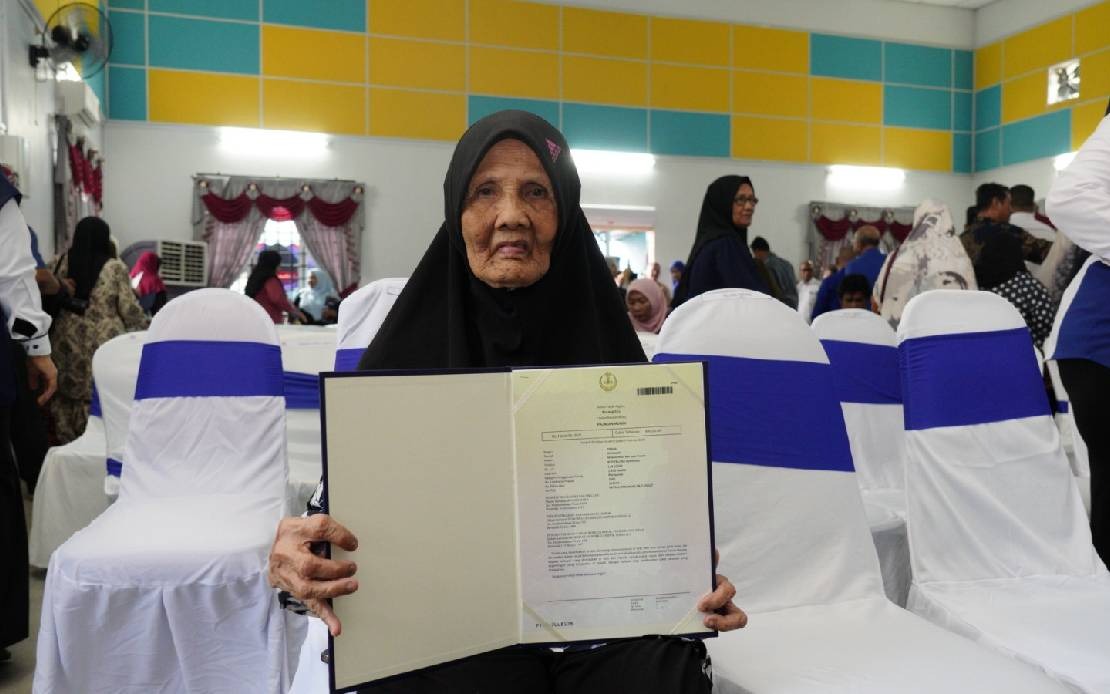
Forty-seven rural participants in Perak have been formally granted land ownership through the FELCRA Berhad Seri Gala Area Village Rearrangement Programme, underscoring the effectiveness of a development model designed to transform unproductive land into economically viable family assets. The grant handover ceremony, held in Ipoh on July 14, represents a significant milestone for the participants and reflects the continuing push by federal authorities to reshape rural development across Malaysia through structured consolidation and rehabilitation initiatives.
Perak Menteri Besar Datuk Seri Saarani Mohamad emphasised during the ceremony that the land transfer was far more than a bureaucratic formality. Instead, he characterised the grants as a pathway to restoring the economic dignity of rural communities by establishing legitimate, long-term asset ownership that provides families with tangible financial security and developmental prospects. This framing places land ownership at the centre of rural welfare policy, positioning real estate security as fundamental to breaking cycles of rural poverty and marginalisation.
The FELCRA Consolidation and Rehabilitation Programme has earned recognition as one of Malaysia's most productive rural development frameworks, according to the Menteri Besar. Beyond the purely economic gains, the scheme has proven instrumental in revitalising community cohesion, generating employment pathways, encouraging small-scale entrepreneurship, and rebuilding villagers' confidence in the genuine potential of agricultural and land-based livelihoods. These outcomes are particularly significant in Perak, where traditional reliance on mining and plantation labour left many communities economically vulnerable as those sectors declined.
The consolidation model operates by taking previously underutilised or fragmented agricultural land and reorganising it into coherent, manageable plots supported by modern infrastructure and extension services. This systematic approach yields multiple benefits: the formerly dormant land becomes economically productive, participants receive higher and more stable returns from their holdings, landowners gain clearer title and marketable assets, and the regional economy experiences strengthened backward and forward linkages through agricultural supply chains and rural commerce.
Zainal Abidin Alias, FELCRA Berhad's director of participant affairs, provided comprehensive data illustrating the organisation's operational footprint. FELCRA Berhad currently manages nearly 32,000 hectares across Malaysia, encompassing the livelihoods and development projects of almost 20,000 participants. Within this national context, Perak represents the second-largest operational jurisdiction for FELCRA, trailing only Pahang. This concentration of activity in Peninsular Malaysia's interior states reflects historical land availability patterns and the persistence of subsistence-level agricultural communities in these regions.
The Seri Gala initiative also coincided with the inaugural ceremony of the new FELCRA Seri Gala PPSK Grand Hall, a facility intended to serve as a community hub for administrative functions, skills training, and social activities. Such infrastructure investments signal a commitment to permanence and integrated service delivery beyond simple land redistribution. Officials present included State Rural Development, Plantation, Agriculture and Food Industry Committee chairman Datuk Mohd Zolkafly Harun and FELCRA Berhad chairman Datuk Seri Ahmad Jazlan Yaakub, reflecting the multi-level governmental coordination required for successful rural development programming.
Zainal Abidin invoked recent remarks by Deputy Prime Minister and Minister of Rural and Regional Development Datuk Seri Dr Ahmad Zahid Hamidi, made during the World Rural Development Day 2026 celebration in Jengka, Pahang. The deputy premier's comments stressed that contemporary rural development cannot remain narrowly focused on physical infrastructure alone. Instead, effective rural strategy demands a holistic approach encompassing human capital development, community economic strengthening, entrepreneurship support, welfare enhancement, and critically, mechanisms enabling rural populations to exercise agency over their own futures rather than remaining passive recipients of top-down initiatives.
This conceptual reframing carries implications for how Malaysia calibrates its rural policy trajectory in coming years. The emphasis on human agency and comprehensive development suggests potential shifts toward greater focus on rural education, digital access, cooperative governance structures, and market linkages for small-scale producers. For participants like those at Seri Gala, land ownership alone represents a necessary but insufficient condition for sustainable prosperity without accompanying investments in skills, market information, credit access, and institutional support systems.
The Perak initiative intersects with broader Southeast Asian patterns of rural-urban demographic imbalance and agricultural sector challenges. As younger generations migrate cityward and commodity prices fluctuate globally, programmes that genuinely enhance rural asset quality and economic viability become strategically important for social stability and regional equity. FELCRA's model, by combining land consolidation with community infrastructure and presumably extension services, addresses multiple constraints simultaneously rather than treating land redistribution as an isolated intervention.
For Malaysian policymakers evaluating rural development effectiveness, the Seri Gala results offer measurable indicators worth monitoring: whether participants' incomes actually increase sustained over multi-year periods, whether participants retain ownership or subsequently sell to external investors, whether younger family members choose to remain engaged in the land-based enterprises, and whether the community facilities generate meaningful utilisation rates. These implementation realities ultimately determine whether ceremonial grant transfers translate into genuine livelihood transformation.
The land ownership grants also carry symbolic significance beyond individual family welfare. In Malaysian discourse emphasising Bumiputera protections and rural Malay-Muslim economic advancement, visible programmes demonstrating asset transfer to rural participants reinforce narratives of inclusive development. However, sustainability requires that grants translate into durable income generation, not merely ceremonial ownership of marginal assets. The Seri Gala case will merit periodic reassessment to establish whether the model's theoretical promise matches long-term participant outcomes across economic cycles.

