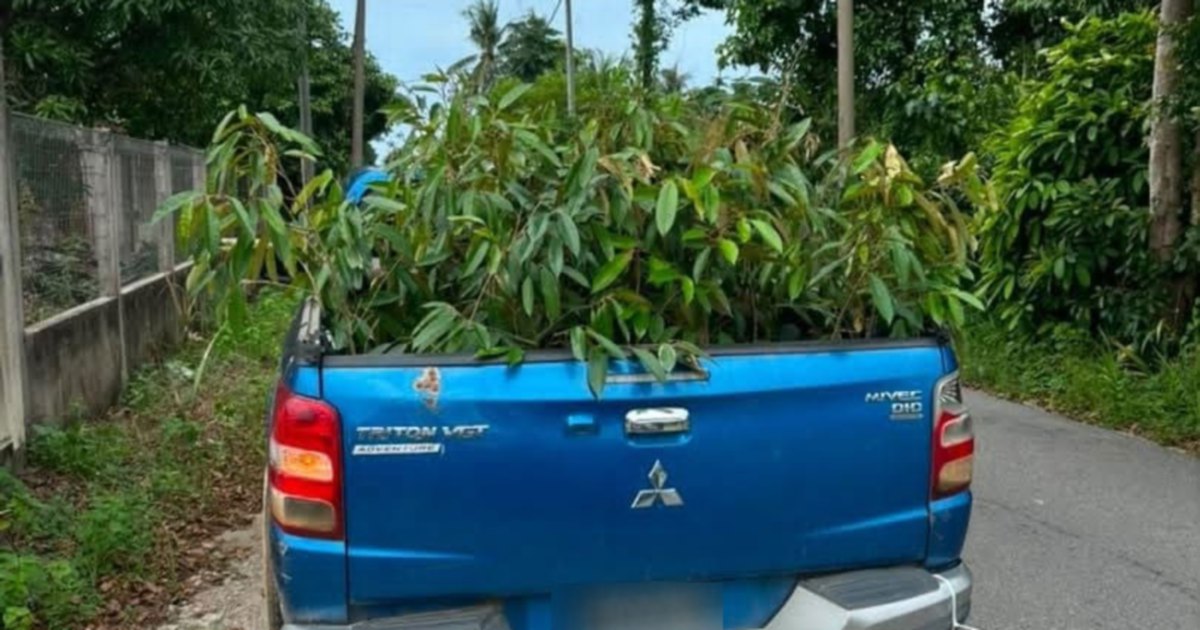
Border enforcement officers in Tumpat have made a significant seizure in the ongoing effort to combat agricultural smuggling across the Malaysia-Thailand frontier. The General Operations Force arrested a 55-year-old suspect during an operation and recovered 52 durian saplings that officials believe had been illicitly transported from Thailand. The arrest underscores the persistent challenge of illegal agricultural trade in one of Southeast Asia's most porous border regions and highlights the vulnerability of Malaysia's horticultural sector to cross-border smuggling networks.
The seizure represents part of a broader pattern of enforcement activity along the Kelantan-Thailand border, where porous terrain and multiple crossing points create opportunities for contraband trafficking. Durian saplings, which carry significant commercial value in Malaysia's thriving durian industry, have become an increasingly attractive target for smugglers seeking to circumvent legal import procedures and quarantine requirements. The smuggling of plant materials bypasses critical biosecurity protocols designed to protect Malaysia's agricultural heritage from pests, diseases, and competing germplasm that could undermine local cultivation efforts.
Malaysia's durian sector represents a cornerstone of the country's agricultural economy, particularly in Peninsular Malaysia where states like Pahang, Johor, and Terengganu have built substantial commercial operations around premium varieties. The industry generates considerable export revenue and employment, making it sensitive to both quality control and genetic resource management concerns. Allowing uncontrolled importation of saplings from Thailand could introduce unknown genetic material, disease vectors, or inferior cultivars that would compromise Malaysia's competitive advantage in producing premium durian varieties recognised in international markets.
The legal importation of plant material into Malaysia is governed by strict protocols administered by the Department of Agriculture and the relevant state authorities. These procedures exist to ensure that incoming genetic resources meet phytosanitary standards and do not introduce plant pathogens, insect pests, or nematodes that could devastate Malaysian orchards. Smuggling bypasses these protective mechanisms entirely, creating unquantified biological risks that could ripple across the nation's durian production landscape if infected or diseased saplings become established in local growing regions.
Thailand's durian industry represents a formidable competitor in regional and global markets, and the movement of saplings across borders raises questions about both fair competition and intellectual property concerns within horticultural trade. Various premium durian varieties command protected status or geographical indication recognition, and uncontrolled dissemination of saplings undermines the value derived from legitimate breeding and cultivation efforts. The smuggling operation also suggests that criminal networks may be operating to supply clandestine growers or unscrupulous traders seeking to establish unauthorised cultivation without adhering to regulatory frameworks.
Enforcement along the Kelantan-Thailand border remains chronically challenging owing to the region's geography, limited border personnel resources, and the relatively small-scale nature of most contraband shipments. Unlike large-volume commodity smuggling, agricultural product trafficking often involves modest quantities that can evade detection through numerous informal crossing points scattered across the frontier. The focus required to intercept saplings represents a targeted enforcement priority that balances broader border security concerns with agricultural protection objectives, requiring coordination between customs authorities, agricultural officials, and the General Operations Force.
The arrest and seizure demonstrate the Government's commitment to protecting Malaysia's agricultural sector, yet the incident also exposes the persistent vulnerability of border controls to determined smuggling operations. Without substantially enhanced enforcement capacity, investment in surveillance technology, and cooperation with Thai authorities, similar smuggling attempts will likely continue unabated. The commercial value of durian saplings—particularly premium or rare varieties—creates sufficient economic incentive for organised smuggling to remain an attractive enterprise.
Beyond immediate enforcement, the incident highlights the need for comprehensive border agriculture security strategies that combine detection and interdiction with engagement of Thailand's authorities to address smuggling at its source. Cross-border cooperation on plant health standards, joint patrols, and information sharing could significantly improve detection rates and deter organised smuggling networks from targeting the Malaysia-Thailand frontier. The International Plant Protection Convention framework provides mechanisms for bilateral cooperation on phytosanitary matters, yet implementation often lags owing to resource constraints and competing priorities.
The arrested individual now faces prosecution under Malaysia's relevant laws governing agricultural smuggling and illegal plant material importation. Beyond the criminal case, the seized saplings will likely be destroyed under quarantine protocols to eliminate any biosecurity risk, representing both financial loss to the suspected smuggler and foregone income for potential recipients of the contraband. Such outcomes demonstrate the tangible consequences of attempting to circumvent Malaysia's agricultural import controls, though they may prove insufficient deterrent against the substantial economic incentives driving ongoing smuggling activity.
For Malaysian durian growers and industry participants, the seizure reinforces the importance of sourcing genetic material through authorised suppliers and legal import channels that guarantee biosecurity compliance and quality assurance. Counterfeit or smuggled saplings carry unquantifiable risks to orchard health and productivity that far outweigh any short-term cost savings from illicit acquisition. The incident also signals to Thai authorities that Malaysia is actively enforcing border controls, potentially encouraging complementary enforcement efforts on the Thai side that could gradually reduce smuggling pressure along this critical agricultural frontier.

