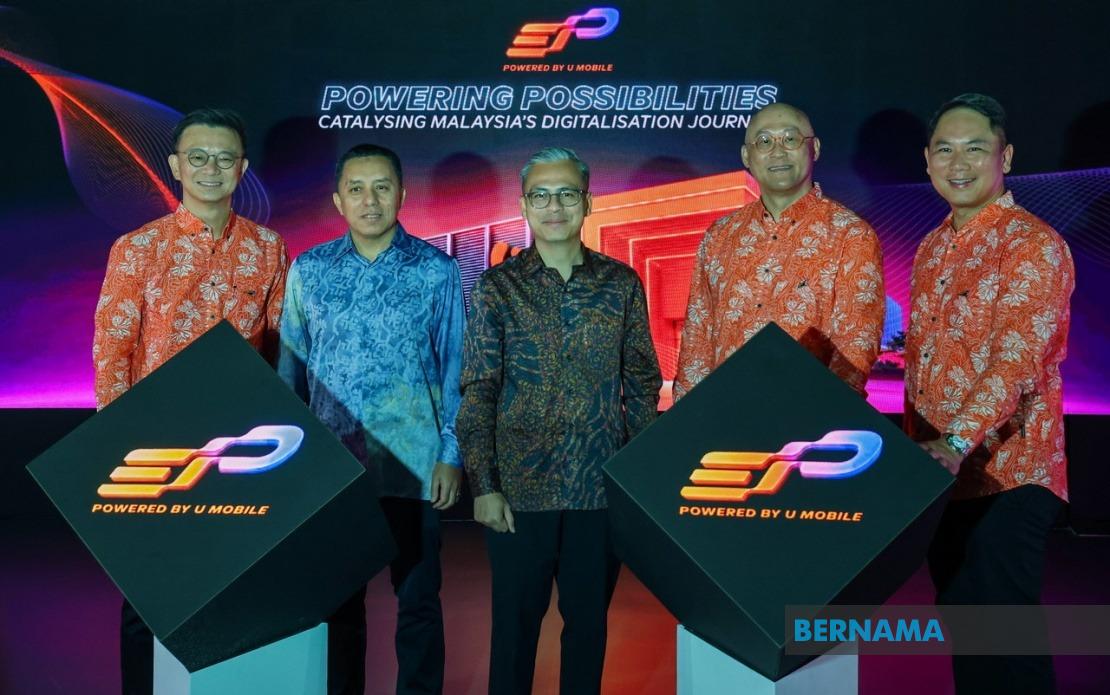
Malaysia's communications sector stands poised to benefit substantially from the rollout of 5G Advanced, or Ultra 5G, technology, which promises to accelerate digital transformation across multiple critical industries. Communications Minister Datuk Seri Fahmi Fadzil made this assessment following the launch of the U Mobile Enterprise Innovation Platform Hub in Kuala Lumpur on August 6, emphasising that the next-generation network infrastructure represents a pivotal opportunity for the nation to enhance operational capabilities and economic competitiveness across key economic pillars.
The technological leap represented by 5G Advanced reflects a significant evolution from current 5G networks, operating on a 5G Standalone architecture that delivers enterprise-grade connectivity with substantially reduced latency. The system's defining characteristics—including network slicing capabilities, doubled capacity relative to earlier fifth-generation systems, and AI-integrated security features—create an environment where complex applications become feasible at scale. These technical advances form the foundation for meaningful productivity gains across sectors that have traditionally struggled with efficiency constraints and resource management challenges.
In agriculture, Fahmi identified particular promise for improving operations at palm oil plantations and other farming enterprises. The integration of artificial intelligence and robotics through 5G Advanced connectivity enables remote monitoring and autonomous decision-making in agricultural settings, potentially reducing labour costs while increasing yield optimisation. This application holds special relevance for Malaysia given the significance of palm oil production to the national economy and the ongoing labour challenges within the sector. Enhanced real-time data collection and processing capabilities could support precision farming techniques that have proven effective in other markets but require robust connectivity infrastructure to implement effectively.
Healthcare represents another sector where Fahmi envisions tangible operational improvements. The ultra-low latency characteristics of 5G Advanced technology create possibilities for reducing workload pressures on nursing staff in hospital settings, potentially through remote patient monitoring systems and automation of routine administrative tasks. This capability becomes increasingly valuable given Malaysia's demographic shift toward an ageing population and the corresponding pressure on healthcare infrastructure. Telemedicine applications, surgical robotics, and real-time clinical data sharing between facilities could all benefit from the enhanced network performance that 5G Advanced provides, though implementation would require coordinated investment in hardware and software systems across healthcare institutions.
Retail and consumer-facing businesses would gain competitive advantages through the data analytics capabilities embedded within Ultra 5G networks. Fahmi highlighted inventory management as a primary use case, where real-time visibility into stock levels across multiple locations enables faster response to demand patterns and reduces the capital tied up in excess inventory. The same analytics infrastructure supports more sophisticated consumer behaviour analysis, allowing retailers to identify emerging purchasing trends and adjust merchandise strategies accordingly. For Malaysian retailers increasingly competing with regional e-commerce platforms, these technological capabilities could prove essential for maintaining market position.
Beyond commercial applications, Fahmi emphasised the national security dimension of 5G Advanced deployment, specifically referencing drone surveillance capabilities powered by advanced networks. The technology is already being trialled in certain locations for border monitoring operations, offering improvements over traditional surveillance methods in coverage area, operational cost, and real-time responsiveness. The Malaysian Border Control and Protection Agency (AKPS) and Royal Malaysia Police (PDRM) have expressed interest in evaluating these systems for implementation along Malaysia's land and maritime boundaries, where surveillance challenges are particularly acute.
The feasibility of expanding such security applications depends significantly on improved internet coverage in border areas, a challenge that has persisted across Malaysia's more remote regions. Fahmi indicated that the Malaysian Communications and Multimedia Commission (MCMC) has committed to coordinating with the Home Ministry and other relevant agencies to extend network infrastructure into these strategically important zones. This inter-agency coordination represents a necessary structural shift, as telecommunications infrastructure investment decisions have traditionally operated in silos from security and defence planning, despite clear mutual benefits from closer alignment.
The broader implications of 5G Advanced adoption extend beyond immediate productivity gains to questions about Malaysia's regional competitiveness and technological sovereignty. As neighbouring economies and regional rivals accelerate their own rollouts of next-generation network infrastructure, Malaysia faces implicit pressure to match these investments or risk losing attractiveness as a destination for technology-intensive industries. The platform launched by U Mobile reflects broader industry momentum toward Ultra 5G implementation, though the pace and scope of deployment will likely depend on commercial viability calculations by telecommunications operators and regulatory decisions regarding spectrum allocation and investment incentives.
Implementation of 5G Advanced across diverse sectors will require more than network infrastructure alone. Businesses seeking to capture the technology's benefits must invest in compatible hardware, software platforms, and workforce training to utilise advanced capabilities effectively. The risk exists that early adopters gain significant competitive advantages while others fall behind, potentially exacerbating existing inequality between large corporations with capital reserves and smaller enterprises lacking resources for technology upgrades. Government support programmes, including potential subsidies or tax incentives for small and medium enterprises investing in 5G-compatible systems, could influence the technology's ultimate impact on overall economic productivity and inclusivity.
The security and surveillance applications Fahmi emphasised also raise questions requiring careful policy consideration. Expanding drone surveillance networks and remote monitoring capabilities necessarily involves questions about privacy protections, oversight mechanisms, and data governance frameworks. Establishing these guardrails before surveillance technology becomes widespread would be prudent, ensuring that security benefits are realised without creating risks of unauthorised monitoring or data misuse. The coordination mechanisms Fahmi described involving MCMC, the Home Ministry, and security agencies should ideally include mechanisms for public accountability and transparent governance of these systems.
Looking forward, Malaysia's ability to fully leverage 5G Advanced's transformative potential depends on sustained policy commitment to telecommunications infrastructure investment, coordinated efforts across government and industry to identify and execute high-impact applications, and proactive development of regulatory frameworks that enable innovation while protecting legitimate public interests. The technology itself represents genuine capability advancement, but realising its promised benefits requires deliberate action and strategic planning across multiple stakeholder groups.

