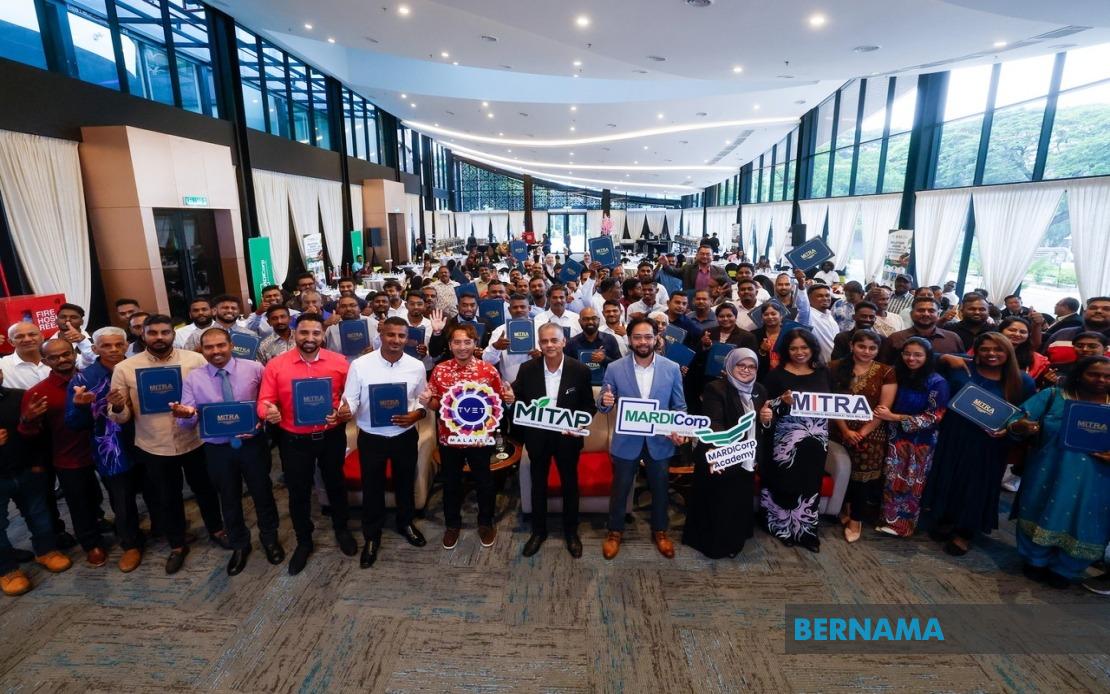
The Malaysian Indian Community Transformation Unit has distributed RM30,000 in Agricultural Transformation Grants to 68 young agropreneurs as part of its Malaysian Indian Transformative Agri Programme. The initiative, announced in Putrajaya, represents a significant push to expand participation from the Indian community in Malaysia's agricultural sector and create sustainable livelihood opportunities for the next generation of farmers.
The MITAP programme operates under a two-pronged approach designed to nurture agricultural entrepreneurship among young people. The QuickWin MITRA component focuses on direct financial support, having already channelled grants totalling RM2.04 million to the 68 recipients. Complementing this is the Young Agropreneur Programme, a more intensive 10-month training initiative that has already seen eight participants graduate with enhanced skills and knowledge in modern farming practices.
According to K. Raveendran Nair, director-general of MITRA, the programme goes beyond simply distributing funds. Graduates continue to receive ongoing support from MARDICorp, the implementing agency, with pathways opened to join government-run agricultural entrepreneurship schemes. This continuation of support is critical for ensuring that initial grants translate into viable, scaling businesses rather than one-time injections that fade without sustained guidance.
The range of agricultural subsectors targeted by the grants reflects Malaysia's diverse farming landscape and market demands. Recipients are engaging in food crop production, dairy cattle management, beekeeping operations, oyster mushroom cultivation, freshwater fish farming, and food processing technology ventures. This sectoral diversity reduces dependency on any single agricultural value chain and allows the programme to address multiple gaps in domestic food production and agribusiness development.
Mohamad Zamir Ghazali, MARDICorp's managing director, emphasised that the initiative extends well beyond knowledge transfer. The programme functions as a networking ecosystem where young agropreneurs can connect with peers, share experiences, and collectively strengthen their market position. Some participants have already joined farming associations, a crucial step that increases their visibility to government agencies and opens access to larger procurement contracts and policy support.
The emphasis on marketing and product development is particularly significant for regions in Malaysia where agricultural entrepreneurs often struggle with post-harvest management and distribution logistics. MARDICorp's commitment to guide participants through downstream product development and technology transfer addresses a common bottleneck where farmers produce quality crops but lack the infrastructure or knowledge to add value or reach wider markets effectively.
For Malaysian agribusiness policy, this initiative signals recognition that demographic shifts and urbanisation have created gaps in agricultural entrepreneurship. The Indian community's historical presence in Malaysian agriculture meant that knowledge transmission often occurred within families, but as younger generations pursue diverse career paths, structured programmes become essential for maintaining agricultural participation and preventing expertise loss.
The RM30,000 grant amount is calibrated to provide meaningful startup capital without overwhelming recipients with repayment obligations. This is crucial in agriculture, where crop cycles, weather uncertainties, and market volatility create inherent income unpredictability in the first years of operation. By removing the debt burden, the initiative allows agropreneurs to reinvest early profits into business expansion rather than loan servicing.
The programme's timing aligns with Malaysia's broader food security agenda. Reducing dependence on imported agricultural products while simultaneously creating employment and entrepreneurial pathways is a policy priority across the region. Young agropreneurs who successfully establish commercial farms not only secure their own livelihoods but also contribute to domestic food production capacity and supply chain resilience.
For Southeast Asian context, Malaysia's targeted approach to encouraging agricultural entrepreneurship among specific communities offers a model for addressing both economic inclusion and food security simultaneously. Countries across the region face similar challenges of youth migration from rural areas and declining participation in traditional agricultural sectors, making such structured incentive programmes increasingly relevant.
The programme's emphasis on government visibility and collective empowerment reflects lessons learned from previous agricultural development initiatives. By creating networks rather than isolating individual beneficiaries, the approach strengthens participants' bargaining power with input suppliers and agricultural buyers, and increases likelihood that government support schemes will continue to reach them in subsequent years.
Moving forward, the success of MITAP will depend on sustained follow-up support, market linkages, and realistic performance expectations. Agricultural enterprises typically require multiple growing seasons to stabilise, and maintaining government and institutional commitment beyond the initial grant phase will be critical for converting these 68 recipients into long-term agricultural stakeholders who can mentor the next cohort of young farmers.

