Penang's prominent charitable organisation, Persatuan Kebajikan 88 Kapten Pulau Pinang, has awarded scholarships totalling more than RM1 million to 44 students from five educational institutions across the state and northern Malaysia. The latest distribution reflects the organisation's steadfast dedication to nurturing young talent and strengthening the educational foundation of the region during a period when many Malaysian families face mounting financial pressures in sending children to higher learning institutions.
Datuk Seri Dr Ooi Eng Hock, who chairs the 88 Captains, emphasised that the scholarship initiative transcends mere financial assistance. Rather, the programme seeks to kindle ambition among recipients, encouraging them to pursue their aspirations with greater determination while inculcating values of responsibility and social consciousness. By combining monetary support with mentorship focused on character development, the organisation aims to produce graduates who contribute meaningfully to society rather than simply completing their studies.
A cornerstone of the 88 Captains' strategy involves strengthening the historically weak connection between Malaysia's educational institutions and the corporate world. Through its Apprenticeship, Internship, Reskilling and Upskilling programme launched last year at Universiti Sains Malaysia, the organisation has created a structured pathway for students to gain practical industry exposure while still pursuing formal qualifications. This initiative addresses a persistent challenge in Malaysian higher education: graduates entering the workforce without sufficient understanding of workplace demands and employer expectations.
The organisation has established a dedicated Young Fellowship comprising outstanding scholars from major regional institutions including Universiti Sains Malaysia, ViTrox College, Tunku Abdul Rahman University of Management and Technology, and INTI International University. These student leaders meet regularly with company executives and business founders to understand evolving industry requirements while simultaneously advocating for graduate interests, including advocating for a minimum starting salary of RM4,000 for degree holders. This two-way dialogue represents an innovative approach to addressing the persistent skills mismatch that affects employment outcomes across Southeast Asia.
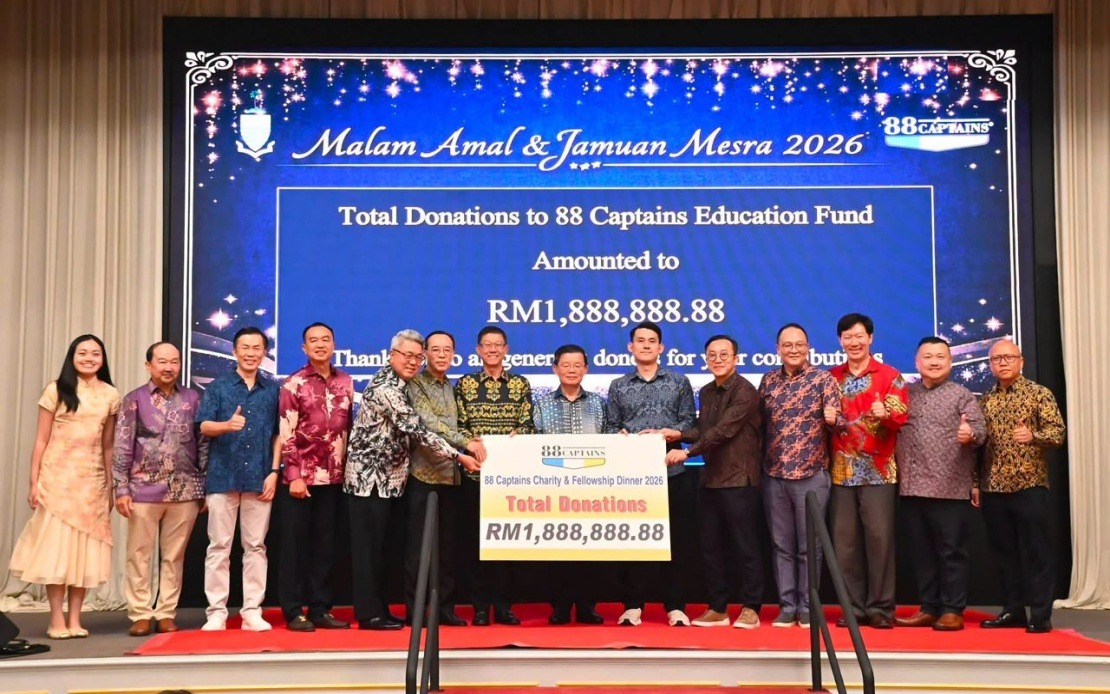
The 88 Captains Annual Charity Dinner 2026, held recently in George Town, generated RM1.89 million in total fundraising—a testament to the strong community support the organisation enjoys among Penang's business elite and philanthropically minded citizens. The event drew prominent attendance from Penang Governor Tun Ramli Ngah Talib and Chief Minister Chow Kon Yeow, signalling government endorsement of the organisation's mission and recognising its contribution to state development objectives.
Beyond scholarships, the 88 Captains has accumulated an impressive track record of community engagement since its establishment in 2022. Over four years, the organisation has orchestrated more than 50 events and implemented diverse initiatives that extend well beyond financial aid. These include donating smart television sets to primary and secondary schools throughout the region, establishing 5G Education Digital Libraries in 88 schools to expand digital literacy, and supporting the Special Education Integration Programme to ensure inclusive learning opportunities for students with diverse needs.
Chief Minister Chow Kon Yeow publicly commended the 88 Captains for its strategic focus on education and human capital development through an integrated approach combining scholarships, digital learning infrastructure, and sustained partnerships with academic and commercial stakeholders. He particularly highlighted how the AIRU programme aligns with Penang's broader economic development strategy, which targets leadership positions in advanced manufacturing, semiconductor production, artificial intelligence applications, and the expanding digital economy—sectors where Malaysia aims to compete internationally.
Recently, the 88 Captains and partner organisations launched a joint initiative addressing mental health and responsible artificial intelligence adoption in schools, reflecting contemporary concerns about student wellbeing and the societal implications of emerging technologies. The timing proved fortuitous, coinciding with Malaysia's introduction of the Anti-Bullying Act 2026, which provides new legal protections for students but simultaneously underscores the need for preventive measures at school and community levels. Chow emphasised that while legislation provides necessary legal frameworks, effective prevention depends on schools, families, and communities working collaboratively to support students and guide teachers in implementing these protections.
The organisation's emphasis on responsible AI adoption carries particular significance for Southeast Asian nations navigating rapid technological transformation. As schools increasingly integrate AI tools into learning environments, the 88 Captains recognises the imperative of equipping educators and students with knowledge about appropriate technology use, potential risks, and ethical considerations. This proactive stance positions Penang as a regional leader in addressing technology governance within educational contexts.
For Malaysian policymakers and education stakeholders, the 88 Captains' model demonstrates how private sector philanthropy can complement government education initiatives by addressing specific gaps and fostering innovation. The organisation's success in mobilising corporate support and directing resources toward both direct student aid and systemic improvements in education-industry linkages offers a replicable template for other regions seeking to enhance talent development outcomes. By focusing simultaneously on financial accessibility, practical skills acquisition, and character formation, the 88 Captains addresses the multidimensional nature of educational excellence in contemporary Malaysia, where employers increasingly seek graduates combining technical competence with soft skills and ethical awareness.

