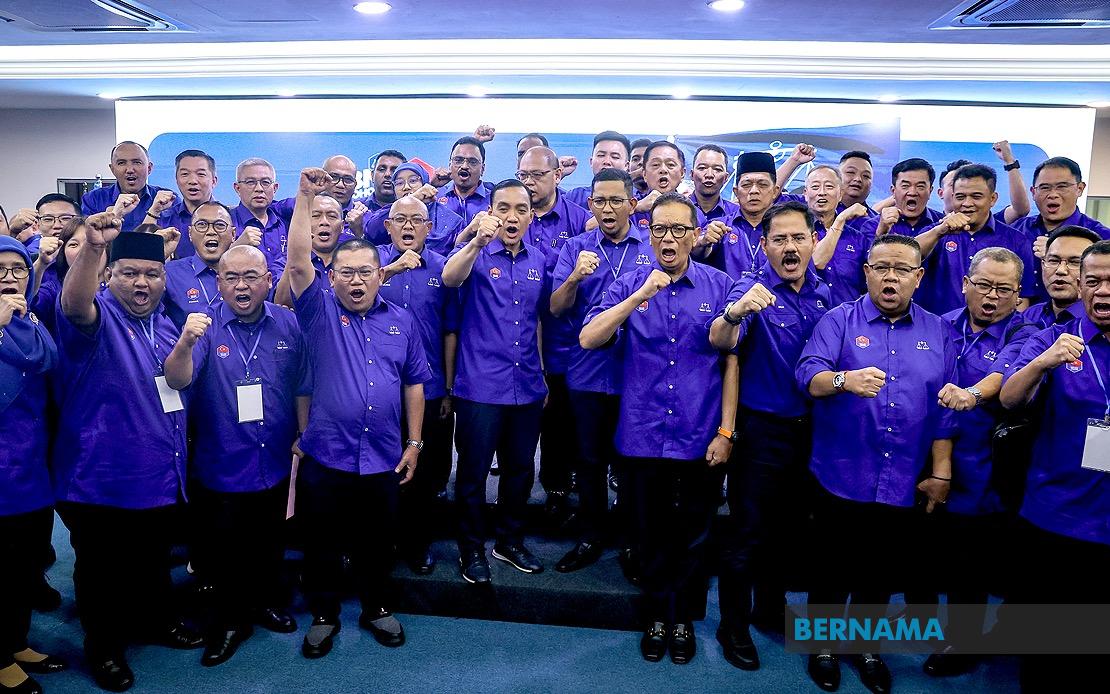
Johor's Barisan Nasional machinery moved into full campaign mode on June 24, presenting an electoral slate that balances experience with selective renewal across the state's 56 contested seats. The formal candidate announcement, presided over by Johor BN chairman Datuk Onn Hafiz Ghazi at a ceremony in Johor Bahru, revealed a coalition composition rooted in UMNO's commanding position within the broader BN structure—a dynamic that shapes political calculations throughout Southeast Asia's most developed Malaysian state.
The breakdown of the 56-seat allocation underscores UMNO's central role in the coalition's strategy, with the party receiving 37 nominations compared to 15 for MCA and four for MIC. This distribution reflects both UMNO's numerical dominance within BN and the gradual demographic and electoral shifts that have reshaped the peninsula's political landscape over the past decade. For Malaysia's federal coalition architecture, the Johor result will carry symbolic weight as BN seeks to demonstrate viability beyond the 2022 federal election comeback and the subsequent Selangor setback that exposed fault lines within the broader alliance.
The most significant name in the candidate roster is Datuk Seri Dr Adham Baba, who returns to electoral politics following two terms representing Pasir Raja between 2008 and 2018. His career trajectory—rising to federal health minister before losing his parliamentary seat in 2022—exemplifies the volatility that has characterised Malaysian politics over the past five years. Adham's rehabilitation in Johor state politics represents an attempt by UMNO's central leadership to recycle senior figures with ministerial experience and factional credibility, particularly within Tenggara division where he currently holds the chief's position. His deployment in Pasir Raja effectively tests whether the electorate is prepared to grant second chances to figures whose previous tenures ended in defeat.
Meanwhile, Menteri Besar Onn Hafiz Ghazi will mount a defence of his Machap seat, which he captured during the 2022 state election. Onn Hafiz's dual positioning as both the chief minister and a candidate signals BN's conviction that its incumbent executive carries sufficient personal support to withstand potential opposition challenges. For Johor's administrative machinery and long-term governance stability, his retention as Menteri Besar regardless of personal electoral outcome remains contingent on the coalition securing a working majority—a reality that injects urgency into BN's ground mobilisation efforts throughout the state.
The candidate selection process carried approval from Datuk Seri Dr Ahmad Zahid Hamidi, the national BN chairman, reflecting the careful coordination required between state and federal party hierarchies when managing election mechanics. This endorsement mechanism ensures that major personnel decisions receive validation from the senior-most levels of coalition leadership, preventing contested nominations from fracturing party unity during the campaign period. The formal bestowal of approval by Ahmad Zahid simultaneously sends market signals to BN's component parties regarding acceptable standards for candidate calibre and factional balance.
A significant departure from continuity emerges in Benut, where former Menteri Besar Datuk Seri Hasni Mohammad—a figure of considerable seniority within Johor's political establishment—has not been retained as a candidate despite holding the Benut state seat. In his place, BN has nominated UMNO working secretary Datuk Mohd Sumali Reduan, a decision that suggests either generational transition planning or adjustment to localised electoral calculations in that constituency. The non-renomination of such an experienced figure would typically signal internal party reassessment regarding electoral viability, yet BN's confidence in deploying a working-level UMNO organiser indicates faith that party machinery and incumbency advantage remain sufficient to hold the seat.
Retention patterns across the wider candidate slate reveal BN's conservative approach to preserving institutional continuity. Nine of the ten former Johor executive councillors who contested in the 2022 state election have been reselected as candidates, a remarkably high renewal rate that prioritises stability over rejuvenation. Only Khairin-Nisa Ismail @ Md On, formerly the State Women, Family and Community Development Committee chairman, has been excluded from the Serom contest. This selective pruning rather than wholesale replacement suggests that BN's state-level organisation views most of its previous executive cohort as retaining sufficient electoral legitimacy and administrative effectiveness to justify continued deployment.
Onn Hafiz deployed deliberate messaging during the candidate announcement to frame nominations as assignments rooted in duty rather than privilege. His characterisation of candidacy as a trust requiring integrity and conduct standards reflects the reputational challenges that Malaysian political parties have confronted following corruption allegations and governance lapses of recent years. By explicitly directing candidates toward courteous, respectful, and prudent campaigning aligned with Johor values, the Johor BN chief attempted to distinguish the coalition's electoral conduct from opposition parties while simultaneously managing expectations that candidates will maintain discipline during the campaign period.
The composition of the candidate slate carries implications extending beyond Johor's immediate state politics. As Malaysia's most economically developed state and traditional BN stronghold, Johor's electoral performance will substantially influence calculations regarding federal coalition resilience heading toward potential future general elections. The deployment of established figures like Adham Baba alongside retention of most state executives suggests BN's assessment that continuity and experienced leadership represent electoral assets in an era marked by voter volatility and declining party loyalty. Conversely, the absence of dramatic generational turnover might indicate limited appetite among senior BN figures to inject untested candidates into competitive contests where outcome uncertainty could jeopardise coalition seats.
The formal announcement of BN's complete candidate roster effectively marked the opening of Johor's pre-campaign period, with the actual polling likely to unfold against broader Malaysian political dynamics. The state election framework provides BN with an opportunity to demonstrate organisational coherence and electoral credibility at precisely the moment when federal politics remains unsettled following the 2022 general election aftermath. Whether the experienced-heavy slate and continuity-focused selection strategy will sufficiently energise BN's voter base or whether opposition parties can capitalise on potential incumbent fatigue remains uncertain, but the coalition's confidence in fielding substantially the same leadership cohort suggests conviction that Johor remains within its secure orbit.