The African Union's Peace and Security Council has made clear its opposition to external powers meddling in Sudan's escalating internal crisis, signalling that foreign intervention only deepens the country's instability. During a high-level meeting at the presidential palace in Khartoum on Sunday, the council's rotating chair Mohamed Khaled delivered a firm message that outside interference fuels rather than resolves the conflict that has devastated the nation since April 2023.
The Algerian diplomat, leading an AU delegation that met with Sudan's Sovereignty Council Chairman Abdel Fattah al-Burhan, characterised the discussions as productive and wide-ranging. The council's stance reflects growing continental concern that Sudan's 16-month conflict between the military establishment and the paramilitary Rapid Support Forces has become a magnet for international actors seeking strategic advantage in the Horn of Africa region. Rather than enabling peace, such external involvement has reportedly complicated negotiations and prolonged fighting.
Beyond foreign interference, the AU body made an equally emphatic point about preventing the fracturing of Sudan's governmental structures. The council explicitly rejected any efforts to create parallel entities or alternative governments that would further fragment an already weakened state apparatus. This concern speaks to the practical reality that as conflict persists, regional militias and external powers have increasingly attempted to establish alternative power centres, potentially making eventual reunification far more difficult. The AU's intervention reflects awareness that state collapse in Sudan could have cascading consequences across the Sahel and Eastern Africa, destabilising a region already grappling with terrorism and humanitarian crises.
Khaled presented a vision for Sudan's path forward that centres on internally driven solutions. He emphasised that sustainable peace can only emerge through mechanisms that bring Sudanese parties to the negotiating table, foster genuine national reconciliation, and culminate in a political settlement reflecting the aspirations of ordinary citizens. This approach contrasts sharply with the international community's occasional tendency to impose external settlements or prop up particular factions, strategies that have repeatedly failed across the African continent. The message carries particular weight given that regional organisations often possess greater legitimacy and understanding of local dynamics than distant powers.
A noteworthy element of the AU's position involves welcoming the Sudanese government's return to performing state functions from Khartoum after periods of displacement. The council described this move as pivotal to restoring institutional capacity and delivering basic services to exhausted populations. The framing reflects recognition that functional state institutions, even in conflict, provide frameworks for eventual civilian transition and normal governance. In Somalia, South Sudan, and elsewhere, the complete collapse of government machinery has made post-conflict recovery exponentially harder and costlier.
The AU delegation also pressed for greater inclusivity in Sudan's transitional structures. Khaled called on both the government and competing political factions to broaden participation beyond military and security elites, building toward a national consensus that could support eventual constitutional reform and free elections. This emphasis on inclusive governance touches on a deeper lesson from decades of African conflicts: transitions managed by narrow power-holder coalitions tend to be brittle and brief, while those embracing diverse stakeholders prove more durable. Sudan's decades-long history of coups and instability suggests that power-sharing arrangements involving broader political currents offer better prospects for stability.
Prime Minister Kamil Idris, meeting separately with the AU delegation, signalled that Sudanese-led dialogue would commence in the near term. Such statements, while encouraging, require careful monitoring given Sudan's history of negotiation announcements that failed to materialise into substantive peace processes. The international diplomatic community will be watching whether these pledges translate into actual talks and whether major stakeholders, particularly the RSF, engage constructively. Previous attempts at mediation, including through the African Union itself, have foundered when armed groups perceived military advantage over negotiated settlements.
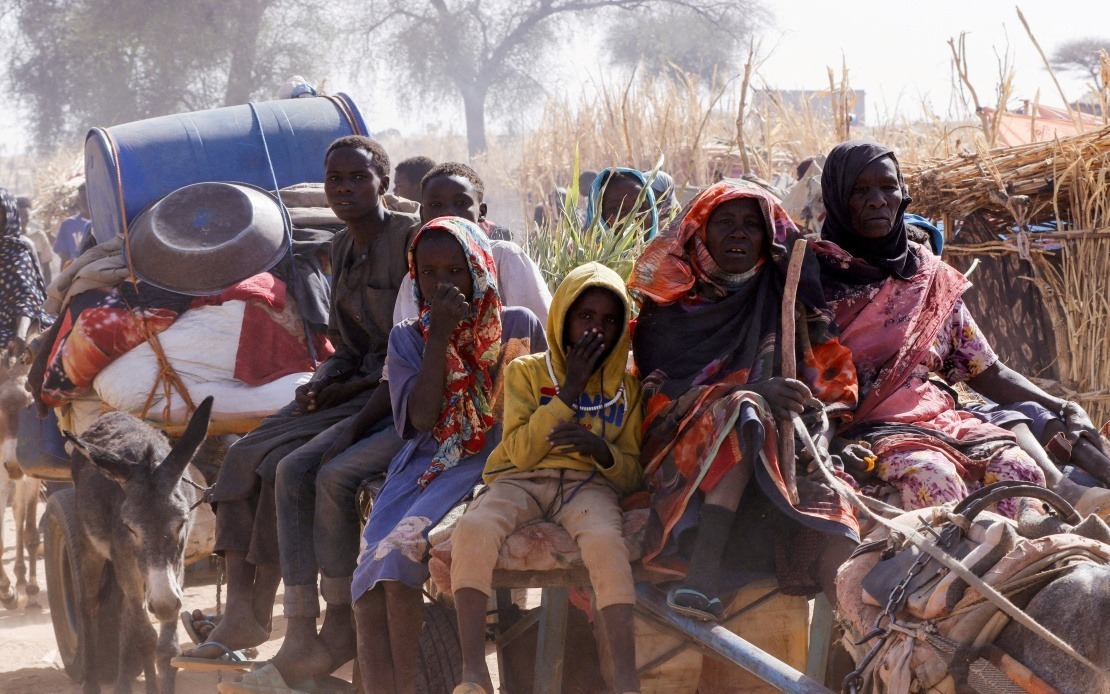
The conflict itself stems from disputes over the integration of the Rapid Support Forces, originally established as a militia, into the formal military structure. What began as an institutional dispute rapidly escalated into a nationwide war characterised by aerial bombardment, ground combat, and massive civilian displacement. According to UN estimates, the fighting has claimed tens of thousands of lives and displaced approximately 13 million people—roughly half Sudan's population. The scale of displacement rivals or exceeds contemporary crises in Ukraine and Syria, yet receives substantially less international media attention.
For Malaysia and Southeast Asia, the Sudan situation carries important implications. Instability in East Africa affects global commodity markets, refugee flows into neighbouring countries, and creates vacuums where terror groups operate. Several Southeast Asian nations have deployed peacekeepers in African missions and maintain diplomatic interests in continental stability. Additionally, the principle that the AU has articulated—opposing foreign interference and supporting African-led solutions—aligns with ASEAN's cherished non-interference doctrine and emphasis on regional problem-solving. How the AU manages Sudan's crisis while resisting external pressure may offer lessons applicable to regional disputes closer to home.
The AU's position also reflects the continental body's evolving role and assertiveness. Once seen as relatively weak compared to UN institutions or major power coalitions, the AU has increasingly articulated independent positions on conflict resolution. This Sudan stance demonstrates the organisation is willing to directly confront foreign powers and reject their proposed interventions. Whether this rhetoric translates into effective mediation will largely depend on whether AU-backed initiatives can broker genuine dialogue and whether major global and regional powers—particularly those with military or economic stakes in Sudan—respect African-led solutions rather than pursuing parallel diplomatic tracks.
Looking ahead, the critical question facing Sudan involves whether the conditions outlined by the AU—dialogue, reconciliation, inclusivity, and state restoration—can be achieved while the RSF and regular army continue military operations. Ceasefires have proven elusive thus far. Without genuine willingness from both sides to abandon military approaches, even well-intentioned international positioning may prove insufficient. The AU's messaging at least establishes a framework toward which pressure can be applied and against which progress can be measured, offering a counternarrative to the possibility of indefinite conflict and state fragmentation.

