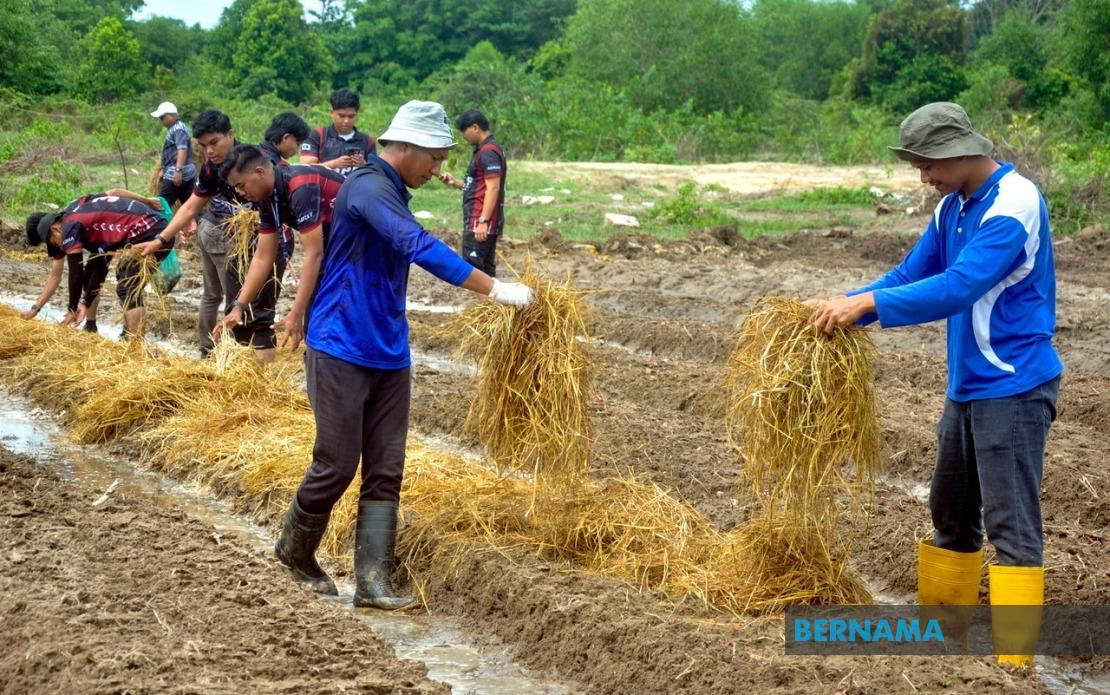
Employment prospects for Technical and Vocational Education and Training graduates in agriculture have improved markedly, with the Ministry of Agriculture and Food Security reporting a 15-percentage-point jump in job placement rates over the past six years. The ministry's Graduate Outcomes of Agricultural TVET in Malaysia report, unveiled during a stakeholder engagement session in Putrajaya on July 23, shows that 76 per cent of agricultural TVET graduates were employed in 2024, a substantial leap from the 61 per cent recorded in 2018. Yet this apparent success masks a more complex reality: the agricultural sector remains significantly underperformed when measured against the broader TVET landscape, where the national employment average stands at 95 per cent, a gap of 19 percentage points that underscores persistent structural challenges in drawing skilled young workers to farming.
The research, conducted jointly between the Ministry of Agriculture and Food Security and PNB Research Institute following a memorandum of understanding signed in September 2025, represents one of Malaysia's more comprehensive attempts to understand not just employment outcomes but the entire economic trajectory of agricultural education graduates. The study examined years of ministry data to build a nuanced picture of how vocational training in farming translates into career trajectories, income generation, and entrepreneurial ventures. This granular approach matters because it moves beyond simple employment metrics to reveal whether agriculture actually offers viable livelihoods that can compete with other sectors in attracting talent and retaining workers.
One genuinely encouraging finding concerns income competitiveness within the sector itself. Agricultural TVET graduates who entered farming earned approximately RM100 more monthly than their peers who pursued non-agricultural employment, suggesting that the sector does offer financial incentives at least comparable to alternative career paths. Moreover, graduates who established agricultural enterprises recorded higher incomes than those who launched non-agricultural businesses, indicating that entrepreneurship in farming can be financially rewarding when properly executed. These figures are significant because they directly counter a persistent narrative in Malaysia that farming is a low-income activity suitable only for those without other options. For young people considering vocational training, evidence of real income potential becomes a crucial recruitment tool.
Yet despite these positive indicators, the agriculture sector confronts a demographic crisis that threatens its future viability. The ministry's report reveals that fully half of all farm workers are now 40 years of age or older, a troubling composition that suggests a severely ageing workforce with limited generational renewal. Youth participation in agriculture has declined consistently over the past decade, indicating that career messaging and economic incentives, while improved, remain insufficient to reverse an entrenched cultural preference for non-agricultural employment among younger Malaysians. This represents a fundamental challenge to national food security aspirations, as labour availability and continuity of knowledge transmission become increasingly precarious.
Geographic distribution of agricultural TVET participation further complicates the policy picture. The ministry's analysis shows concentration in specific states, with Sabah claiming 15 per cent of agricultural TVET graduate participation, followed by Kedah at 14 per cent and Sarawak at 13 per cent. This pattern reflects existing agricultural specialisation and suggests that programme presence follows established production clusters. However, the report identifies major agricultural states including Johor, Pahang, and Perak as substantially underutilised, meaning significant production regions lack sufficient TVET infrastructure or graduate engagement. For these states, the implication is clear: existing agricultural capacity and output cannot be optimised without corresponding investments in vocational training and graduate employment pathways.
To address these multifaceted challenges, the Ministry of Agriculture and Food Security, drawing on the report's findings, has outlined six strategic policy directions aimed at transforming agricultural TVET's trajectory. First, programme expansion must be tailored to individual state requirements rather than implemented through uniform national templates, acknowledging that Johor faces different agricultural dynamics than Sabah. Second, success metrics should be redefined to emphasise outcomes relevant specifically to agriculture rather than generic TVET indicators. Third, policymakers must actively work to reduce entrepreneurial risk through targeted support mechanisms, since the higher incomes available to successful agricultural entrepreneurs mean little without pathways to manage startup costs and operational uncertainties.
Fourth, entrepreneurial and market-oriented skills must be embedded throughout all agricultural TVET curricula rather than treated as optional supplements, equipping graduates with the mindset and tools needed to generate income beyond mere wage employment. Fifth, educational programmes should strengthen exposure to entire agricultural value chains—from production through processing, distribution, and retail—so that graduates understand diverse career opportunities rather than viewing farming as limited to production alone. Finally, the ministry emphasises that substantially stronger collaboration between educational institutions and agricultural industry actors is essential, ensuring that curricula remain responsive to genuine market demands and that employers actively participate in training design and graduate recruitment.
These policy directions reflect an important evolution in how Malaysia approaches agricultural workforce development. Rather than simply increasing the number of graduates produced, the ministry has recognised that transformation requires systematic attention to programme quality, regional appropriateness, entrepreneurial capacity, and genuine industry partnership. The approach aligns with broader national objectives outlined in the National Food Security Policy 2030 and the National Agro-Food Policy 2021-2030, both of which depend fundamentally on a robust pipeline of skilled, motivated agricultural workers and entrepreneurs.
The findings were formally presented to Malaysia's National Technical and Vocational Education and Training Council, chaired by Deputy Prime Minister Datuk Seri Dr Ahmad Zahid Hamidi, during a June 4 meeting that underscored the government's commitment to integrating agricultural TVET into the nation's broader food security architecture. This placement within high-level policy deliberation signals that agricultural workforce development is no longer viewed as a standalone educational matter but as a critical component of national resilience and self-sufficiency in food production.
For Southeast Asia more broadly, Malaysia's experience with agricultural TVET offers instructive lessons. Many regional nations face similar demographic shifts toward older farming populations and youth migration away from agriculture, yet systematic research connecting vocational training outcomes to actual career trajectories and incomes remains sparse. Malaysia's methodical approach to measuring not just employment rates but monthly income differentials and entrepreneurial success creates a foundation for evidence-based policymaking that other countries might emulate. The recognition that underutilised agricultural states represent untapped potential for strategic investment also suggests avenues through which regional governments might unlock unutilised productive capacity through targeted education infrastructure.
The road ahead for Malaysian agricultural TVET remains challenging but potentially transformative. The 76 per cent employment rate, while still below national TVET averages, represents genuine progress, and evidence of income competitiveness provides a factual basis for youth recruitment campaigns. However, narrowing the 19-percentage-point gap with the broader TVET sector, reversing decades of declining youth participation, and developing productive capacity in underutilised agricultural states will require sustained commitment to the six policy directions outlined in the ministry's report. Success will ultimately depend on whether Malaysia can transform agricultural vocational education from a residual option into a genuinely competitive career pathway that attracts talent, supports entrepreneurship, and ensures that the nation's long-term food security rests on a foundation of skilled, motivated, and properly compensated agricultural workers.

