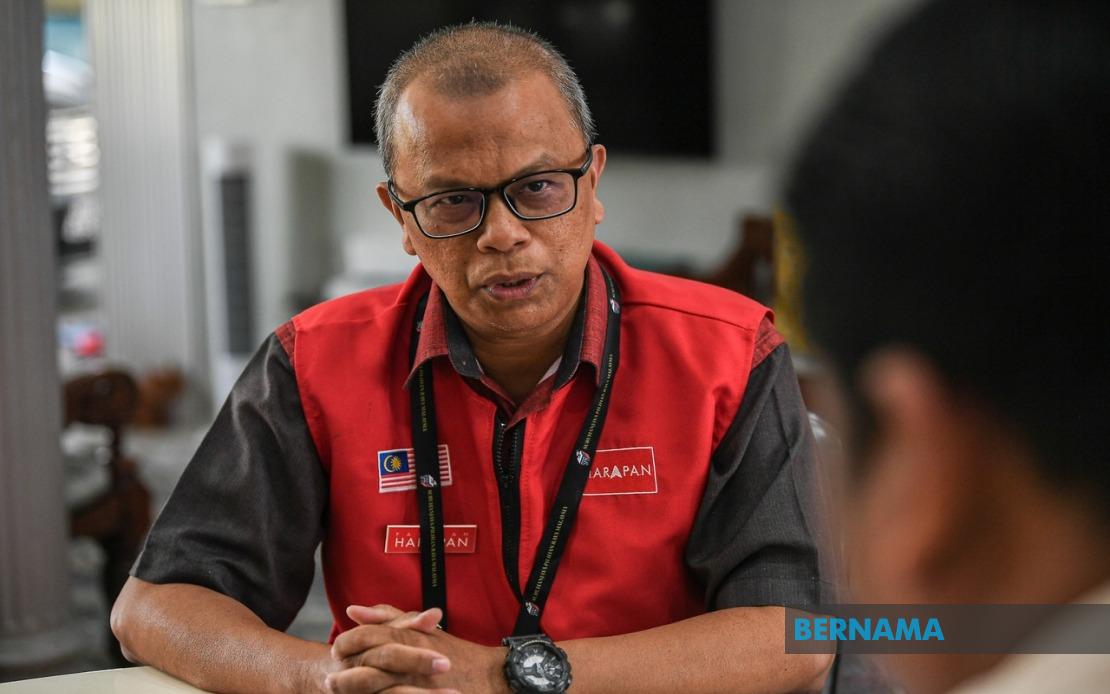
Ahmad Daniel Sharudin, the Pakatan Harapan candidate for Panti, is banking on a comprehensive development strategy centred on unlocking the constituency's untapped natural assets to win voter support in Saturday's Johor state election. The 54-year-old civil engineer believes the scenic rapids at Kampung Temenin and other ecological features represent a significant opportunity for growth that has been largely overlooked by previous administrations. His pitch rests on the conviction that proper branding and infrastructure investment can position Panti as a premier eco-tourism hub comparable to Kota Tinggi's renowned waterfall attractions, drawing both Malaysian and international travellers while preserving the area's environmental integrity.
The former Kota Tinggi District Council member argues that eco-tourism development offers a practical solution to one of Panti's most persistent challenges: limited employment prospects for young people. Currently, many locals are forced to seek work outside the district or even across the border in Singapore, representing a brain drain that weakens the community's economic resilience. Ahmad Daniel contends that a thriving tourism sector would catalyse supporting industries—homestays, restaurants, tour guide services, and hospitality businesses—creating diverse job pathways for youths without requiring them to leave their families and communities. This employment-generation logic appeals to rural constituencies where migration to cities or neighbouring countries has become normalised.
Beyond tourism, Ahmad Daniel's manifesto encompasses three additional pillars: affordable housing, industrial employment opportunities, and renewal of ageing public infrastructure. He frames these commitments as grounded in political realism rather than idealistic promises, citing his position within the Pakatan Harapan coalition and alignment with the federal government as instrumental to securing resources and bureaucratic cooperation for implementation. This emphasis on political pragmatism is a calculated message aimed at voters wary of unfulfilled campaign pledges from previous election cycles. His portfolio as the state Amanah's Syariah and Dakwah Bureau director positions him within the religious establishment, potentially strengthening his appeal among constituencies where Islamic credentials carry weight.
The scale of the Panti constituency presents a logistical challenge that Ahmad Daniel's campaign has worked to overcome through intensive ground engagement. His team reports coverage of nearly 80 percent of the state seat through face-to-face outreach, a substantial achievement given the sprawling geography requiring significant time and resource investment to traverse. With only four days remaining before the July 11 polling, the final stretch of his campaign strategy pivots toward leveraging digital channels to reach remaining voters across age demographics. This dual approach—traditional doorstep canvassing supplemented by social media acceleration—reflects broader campaign evolution across Malaysian elections, where digital platforms increasingly determine messaging penetration in remote areas.
Ahmad Daniel faces a three-way electoral contest against Dr Muhammad Naqib Md Ghazali of Barisan Nasional and Alias Rasman representing Perikatan Nasional. This three-cornered fight adds unpredictability to the outcome, as opposition votes risk splitting across camps and potentially benefiting the incumbent coalition if the anti-government vote fragments. The broader Johor election context involves 172 candidates competing across 56 state seats, with approximately 2.7 million eligible voters participating in what represents a significant test of political sentiment in Malaysia's southern powerhouse state.
The timing and framing of eco-tourism development as a catalyst for rural transformation addresses a genuine gap in Johor's development narrative. While the state has historically concentrated economic attention on urban and industrial corridors, constituencies like Panti have been marginalised from major infrastructure investments and strategic planning. Ahmad Daniel's platform tacitly acknowledges this neglect while positioning his candidacy as a corrective mechanism. For Malaysian policymakers and regional observers, the reception of such eco-tourism narratives in rural Johor provides insight into voter appetite for alternative economic models beyond heavy industrialisation and urban sprawl.
The emphasis on preserving ecosystem integrity while pursuing tourism development reflects evolving environmental consciousness among Malaysian constituencies. Rather than proposing extractive or destructive economic ventures, Ahmad Daniel's vision frames conservation and commerce as complementary objectives. This messaging may resonate particularly with younger voters and urban migrants with family ties to Panti who are increasingly attuned to sustainability concerns. The framing also sidesteps potential environmental opposition that might otherwise mobilise against development projects, positioning eco-tourism as environmentally benign compared to conventional industrial expansion.
Ahmad Daniel's background in civil engineering lends technical credibility to his infrastructure proposals, distinguishing him from candidates without specialist knowledge in development projects. His professional expertise provides a foundation for specific, detailed policy articulation rather than abstract campaign rhetoric. This technical dimension may appeal to voters seeking evidence-based governance and candidates capable of translating vision into executable blueprints. In constituencies where previous elected representatives lacked professional qualifications relevant to constituency development, Ahmad Daniel's credentials represent a substantive differentiator.
The relationship between Panti's development prospects and Johor's broader economic trajectory warrants consideration. Should Pakatan Harapan succeed in the state election, Ahmad Daniel's constituency-specific agenda would operate within a wider government framework potentially more receptive to alternative development models and resource allocation toward previously neglected areas. Conversely, a Barisan Nasional or Perikatan Nasional victory would place him in opposition, limiting his ability to facilitate infrastructure development without cooperation from state authorities. This dynamic underscores how local elections interconnect with state-level political outcomes in shaping constituency fortunes.
The Panti election contest encapsulates broader patterns observable across rural Malaysian constituencies: tension between urban-centric development models and peripheral communities seeking economic relevance, competition among coalitions for rural support, and voter appetite for concrete, locally-tailored solutions rather than national talking points. Ahmad Daniel's eco-tourism pitch represents one articulation of this rural development agenda, staking his candidacy on the proposition that natural assets properly leveraged can generate sustainable prosperity without requiring constituencies to fundamentally alter their character or abandon environmental stewardship. How voters respond will offer important signals about receptiveness to such alternative economic narratives in post-pandemic Malaysia.

