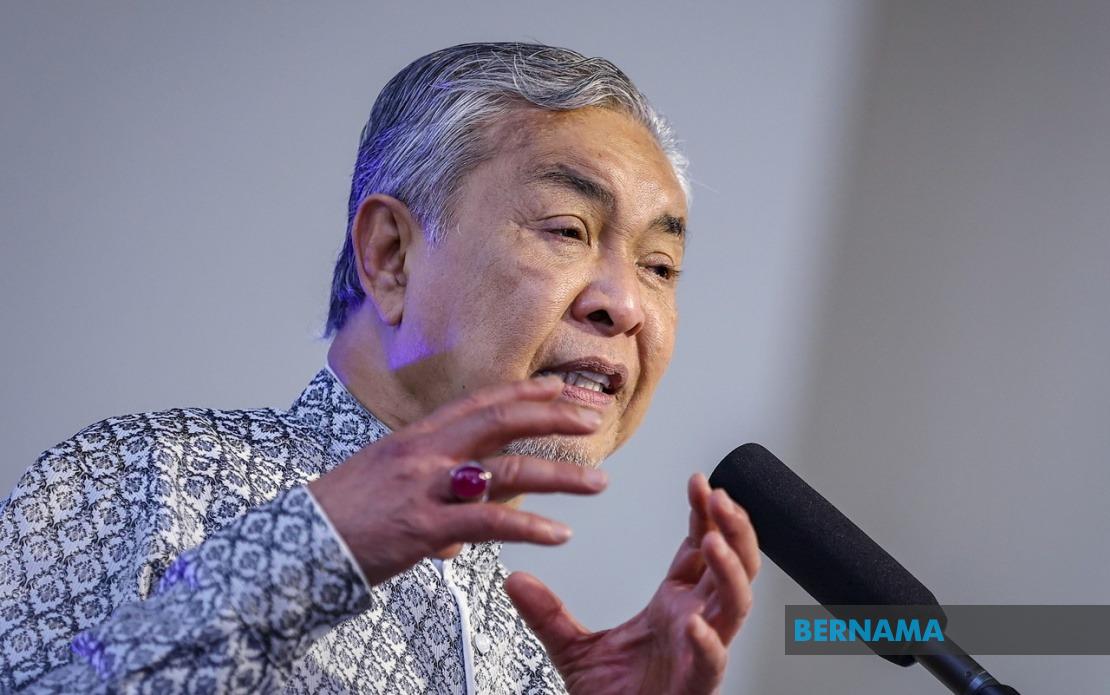
Barisan Nasional chairman Datuk Seri Dr Ahmad Zahid Hamidi has appealed to all contesting parties in the upcoming Johor state election to refrain from raising historical grievances and unrelated matters during the campaign period, calling instead for a more mature and dignified approach to the political contest. Speaking after attending a community gathering in the Kempas state constituency, Ahmad Zahid stressed that the election campaign should centre on the strengths of individual candidates and the concrete benefits they can deliver to voters, rather than dredging up disputes from the past.
The Deputy Prime Minister's remarks come at a sensitive moment in Malaysian politics, where coalition dynamics at both state and federal levels are creating unusual partnership arrangements. Several parties now competing against each other in Johor are simultaneously serving as coalition partners in the federal government, a situation that Ahmad Zahid clearly finds problematic if campaign rhetoric becomes too personal or historically acrimonious. He expressed concern that aggressive attacks rooted in old controversies could poison working relationships between ministers and officials who must cooperate regularly in Cabinet meetings and other government forums.
Ahmad Zahid's appeal reflects a broader challenge facing Malaysian electoral politics: the tension between vigorous democratic competition and the practical need for governmental continuity. When opposition parties at state level are also federal coalition partners, the traditional adversarial nature of election campaigns can create awkward dynamics. His suggestion that leaders should approach the Johor political arena "with wisdom" appears to be a diplomatic request for restraint, even as BN contests all 56 seats in what will be the 16th state election since Johor established its current electoral system.
Contrary to suggestions that BN enters the contest with overconfidence, Ahmad Zahid characterised the coalition as the underdog, citing significant shifts in Johor's political landscape in recent years. This framing serves multiple purposes: it tempers expectations, motivates grassroots supporters, and acknowledges the genuine electoral uncertainties that Malaysian state elections have demonstrated repeatedly over the past decade. The Deputy Prime Minister pointed specifically to BN's performance in the previous state election, when the coalition secured 40 seats—a result that BN now views as a baseline it must exceed rather than match.
Demographic changes constitute a central element of BN's strategic challenge in Johor. Ahmad Zahid highlighted that more than half of the state's voters are now young people, a generation with distinct priorities and concerns that differ markedly from older cohorts. This demographic shift has profound implications for how BN must reshape its messaging and policy offerings. Simply repeating appeals that resonated with previous generations of voters is unlikely to prove effective, particularly in an era when younger Malaysians are more politically engaged and information-conscious than their predecessors.
Recognising this reality, BN's campaign strategy—as articulated through Menteri Besar Datuk Onn Hafiz Ghazi's manifesto—places substantial emphasis on youth-oriented initiatives. The manifesto prioritises job creation opportunities and investment in skills development through Technical and Vocational Education and Training programmes, addressing what BN identifies as critical gaps between existing employment opportunities and the aspirations of young voters. This approach represents an attempt to move beyond traditional bread-and-butter politics toward future-oriented investments in human capital.
Ahmad Zahid presented the national unemployment rate standing at 2.9 per cent as evidence of the government's economic stewardship, characterising this figure as an encouraging sign of broader macroeconomic health. However, he acknowledged candidly that raw unemployment statistics obscure a more nuanced reality facing young Malaysians. The availability of jobs matters less than the quality of those opportunities—specifically, access to what he termed "premium-wage jobs" that can support a middle-class lifestyle and provide genuine career progression. This distinction is particularly important in Malaysian labour markets, where underemployment and wage stagnation among degree-holders have become increasingly prominent concerns.
The emphasis on technical and vocational training directly addresses this gap between employment availability and employment quality. Rather than pushing all young people toward university degrees—a path that has saturated Malaysia's labour market with graduates competing for limited professional positions—BN's manifesto promotes alternative pathways that develop practical skills commanding strong market demand and decent remuneration. Electricians, plumbers, automotive technicians, and other skilled tradespeople often earn substantially more than fresh university graduates, yet vocational pathways historically carried social stigma in Malaysia that BN is now attempting to reverse.
This policy pivot reflects broader shifts in how Southeast Asian governments are approaching workforce development. Singapore, Thailand, and Vietnam have all invested heavily in vocational education systems, recognising that knowledge-based economies require diverse skill sets beyond traditional academic credentials. BN's focus on this area suggests the coalition is attempting to learn from regional peers and adapt its approach to match contemporary labour market realities rather than repeating outdated assumptions about educational pathways and economic mobility.
Ahmad Zahid's explicit appeal to young voters in Johor emphasised the importance of considering what each party actually offers for their future prospects, rather than voting based on historical allegiances or abstract ideological commitments. This represents a significant acknowledgment that younger generations operate with different decision-making frameworks than their parents—they are more transactional, more demanding of concrete deliverables, and less bound by long-standing party loyalties. The implicit message is that BN must earn young voters' support through demonstrable policy commitments and track record delivery, not simply expect it based on historical dominance.
The election will unfold across two phases, with early voting scheduled for July 7 and polling day on July 11. BN's decision to contest all 56 seats represents a show of confidence, yet Ahmad Zahid's candid acknowledgment of the coalition's underdog status suggests internal recognition that the path to a decisive victory is far from assured. The campaign period provides limited time for BN to reshape perceptions among younger voters and demonstrate that its policy offerings address their genuine concerns about employment, education, and economic opportunity in an increasingly competitive regional economy.

