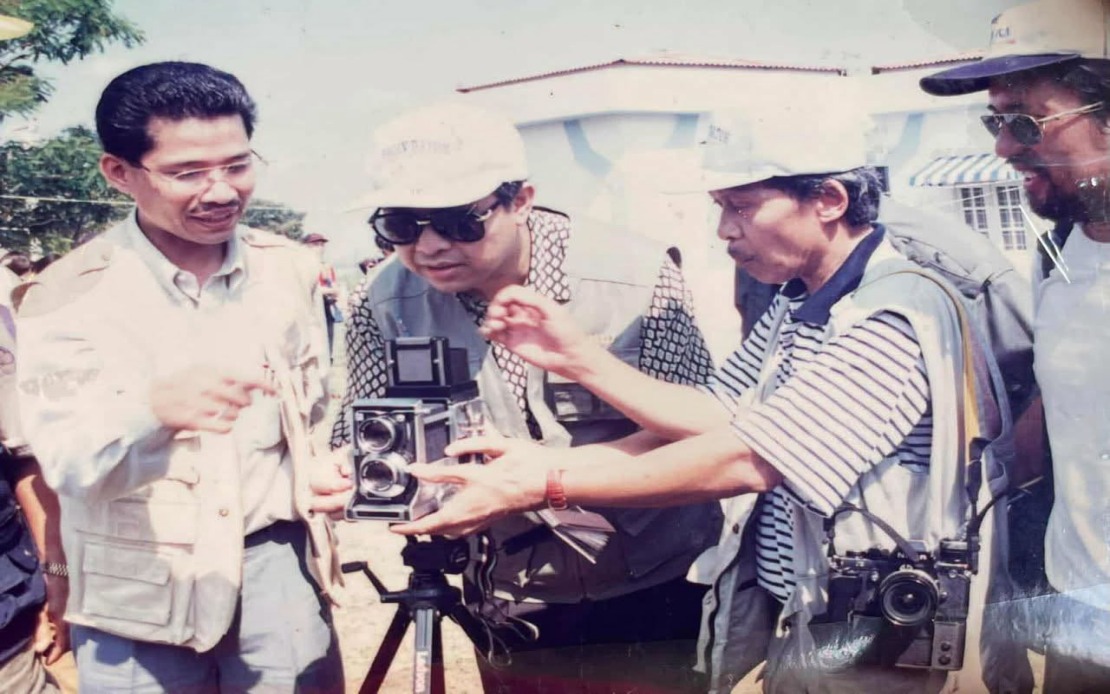
Malaysia's Deputy Prime Minister Datuk Seri Dr Ahmad Zahid Hamidi has publicly recognised the vital role that photographers play in society, marking World Photography Day 2026 with a message that encompasses professionals and casual practitioners alike. In remarks shared via social media, he celebrated the diverse spectrum of individuals who dedicate themselves to the art and craft of capturing visual moments, from seasoned photojournalists working across media outlets to those who simply document family occasions for their loved ones.
The tribute offered by Ahmad Zahid reflects a broader acknowledgement of how photography functions across multiple tiers of Malaysian society. Professional photographers operating within news organisations, commercial enterprises, and event industries form one dimension of this landscape. Yet equally important, he emphasised, are the countless individuals who assume the informal role of family historian, recording birthdays, celebrations, weddings, and everyday occasions that hold deep personal significance. This inclusive framing recognises that photography today is not merely a profession but a democratised practice embedded in contemporary life, particularly as smartphone cameras have become ubiquitous.
In his statement, the Deputy Prime Minister explored the profound nature of what photographs ultimately represent. He acknowledged that while many images are treasured privately by families and communities, others find permanent display in homes and offices where they serve daily as visual anchors for shared experience. Beyond the personal realm, Ahmad Zahid pointed out that certain photographs transcend their original purpose entirely, evolving into documentary evidence and reference material that informs how societies understand their own histories. This transformation from momentary capture to enduring historical artifact underscores photography's unique power as both intimate medium and public archive.
The technical simplicity yet artistic complexity of photography formed another dimension of Ahmad Zahid's reflection. He noted that despite the apparent ease of pressing a camera's shutter button, the act of photography demands qualities that emerge only through practice, patience, and intuition. Photographers must observe their environments with sustained attention, wait for the precise alignment of elements that creates visual meaning, and possess sufficient technical knowledge to recognise when conditions cohere into something worth documenting. What appears instantaneous—the fraction of a second required to expose film or sensor—often represents hours of positioning, anticipation, and decision-making that precedes the actual capture.
This deeper understanding of the photographer's craft becomes particularly relevant in Malaysia's context, where visual documentation has played a significant historical role across the nation's development. From images capturing the nation's independence journey through contemporary documentation of urban transformation and cultural diversity, photography has provided an invaluable visual chronicle. The Deputy Prime Minister's recognition touches implicitly on this broader narrative function, acknowledging that today's photographers are quite literally creating the reference materials and emotional records upon which future generations will rely to understand the present era.
The timing of Ahmad Zahid's message during World Photography Day observance aligns with global recognition of the medium's importance. The annual commemoration, observed internationally, provides an opportunity for countries to reflect on how images shape cultural memory and communication. In Malaysia's multicultural context, photographs serve the additional function of documenting the nation's religious, cultural, and ethnic diversity in ways that foster visual understanding and bridge communities. Professional photographers working in journalism, documentary, and commercial spheres contribute substantially to this record, as do amateur practitioners preserving family narratives across the country's various communities.
The Deputy Prime Minister's emphasis on memory preservation resonates particularly with the Malaysian experience, where rapid modernisation and urbanisation continuously reshape landscapes and living patterns. Photographs function as counterbalance to this flux, stabilising moments before they recede into the past. For families across Malaysia—whether in metropolitan centres like Kuala Lumpur or in smaller towns and rural areas—personal photography maintains connections across distances and generations, preserving visual evidence of how loved ones appeared at specific moments and how shared spaces once looked before inevitable changes arrived.
Ahmad Zahid's inclusive approach to defining who counts as a photographer also reflects evolving realities of media production and documentation in the digital age. The professional boundaries that once neatly separated photographers from casual image-makers have become considerably more porous. Many journalists now require working knowledge of photography; many photographers have expanded into video and multimedia production; and countless citizens now function as documentarians of their immediate worlds through social media platforms. This democratisation of image-making capacity, while challenging professional photographers' traditional market position, has simultaneously expanded the overall volume and diversity of visual material capturing Malaysian society.
Beyond the ceremonial acknowledgement, the Deputy Prime Minister's remarks invite consideration of photography's broader role in governance, journalism, and public communication. Images accompanying news stories shape how citizens perceive events and understand policy impacts. Photographs in official records document government activities and public works. Documentary photography can illuminate social conditions and human experiences that might otherwise remain invisible to broader audiences. In this sense, recognising photographers encompasses recognising the significance of visual communication itself to how modern societies function and how citizens access information about their own nations and communities.
The message also implicitly encourages Malaysian photographers to continue their work with awareness of its ultimate significance. Whether capturing breaking news, documenting celebrations, or preserving everyday moments that might seem unremarkable in their immediate context, photographers across all sectors contribute to a continuous visual archive. Ahmad Zahid's statement reframes photography not as mere technical documentation but as a meaningful cultural practice through which societies record, remember, and ultimately understand themselves. This recognition carries particular weight coming from a high-ranking government official, suggesting that the administration acknowledges photography's importance to Malaysian national discourse and collective memory.

