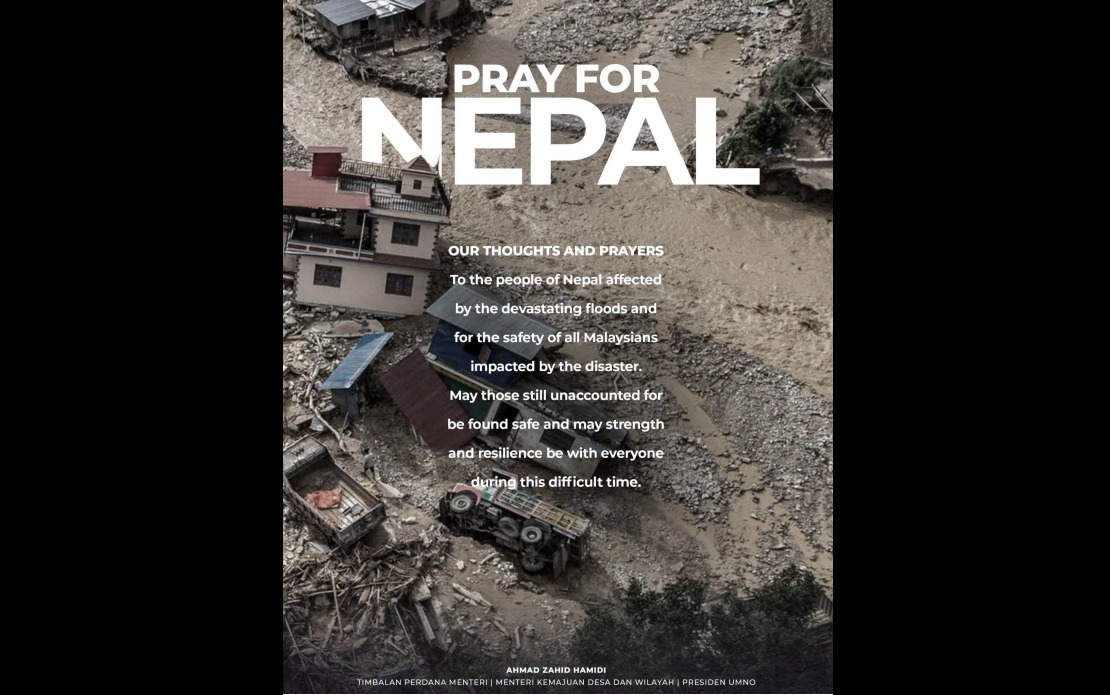
Deputy Prime Minister Datuk Seri Dr Ahmad Zahid Hamidi has publicly expressed grave concern regarding the safety and welfare of Malaysian citizens affected by the destructive floods that have ravaged Nepal, as rescue teams continue search operations for those still missing in the disaster zone. Speaking through a Facebook post, Ahmad Zahid conveyed his heartfelt sympathy to the bereaved families while simultaneously offering solidarity to the broader Nepalese population grappling with the aftermath of the catastrophe.
The Malaysian government official articulated his profound distress at the scale of destruction wrought by the sudden flash flooding across Nepal. The natural disaster has claimed hundreds of lives, rendered numerous families homeless, and triggered extensive infrastructure damage across affected regions. Ahmad Zahid emphasised that his thoughts and prayers remain with all those impacted, particularly families who have experienced loss and those maintaining an anxious vigil awaiting word of their missing relatives.
In his statement, Ahmad Zahid appealed for the swift conclusion of ongoing rescue operations, expressing optimism that search and rescue teams would successfully locate additional survivors and extract those still in immediate danger. He underscored the critical nature of these recovery efforts, recognising that time remains a crucial factor in locating missing persons alive. The deputy prime minister's intervention reflects Malaysia's traditional diplomatic approach of extending humanitarian concern during international crises affecting its citizens abroad.
According to official data compiled by Nepal's tourism board, the confirmed death toll from the flooding had climbed to 359 as of Thursday evening, measured at 5:30 pm local Nepal time, equivalent to 7:45 pm Malaysian time. These figures represent one of Nepal's most significant natural disasters in recent years, with the cascading impacts continuing to unfold across multiple districts and communities. The scale of casualties underscores the ferocity with which the floodwaters swept through populated areas, often with little warning.
The humanitarian crisis unfolding in Nepal carries particular resonance for Malaysia, which maintains longstanding cultural and diplomatic ties with the South Asian nation. Nepalese communities have established themselves across Malaysia, particularly in Kuala Lumpur and other urban centres, while Malaysian tourists and business professionals regularly visit Nepal for both leisure and commercial purposes. The flooding threatens to disrupt these cross-border connections and raises questions about the welfare of Malaysian expatriates and visitors currently in the affected regions.
Flash flooding in mountainous terrain such as Nepal presents distinctive challenges for rescue operations. The rapid onset of floodwaters, combined with rugged topography and potentially damaged infrastructure, restricts access for emergency personnel and complicates the identification and recovery of casualties. Survivors often find themselves stranded in remote locations, and communication networks frequently collapse during such events, rendering missing persons difficult to locate without sustained search efforts spanning multiple days.
Ahmad Zahid's statement, while brief, signals that the Malaysian government maintains active awareness of the situation and stands prepared to provide assistance if called upon by Nepal's authorities. Such declarations serve multiple purposes—they reassure Malaysian citizens and their families that the government monitors their welfare abroad, they affirm Malaysia's commitment to regional humanitarian values, and they establish goodwill with Nepal as a neighbouring nation in Asia.
The Malaysian Ministry of Foreign Affairs and other relevant government agencies presumably maintain active channels of communication with their Nepalese counterparts to verify the status of Malaysian nationals. Embassy and consulate staff would typically conduct outreach to registered Malaysian residents and business owners to confirm their safety. However, the chaotic nature of natural disasters often means that some individuals remain temporarily uncontactable, contributing to the pool of unaccounted persons that relatives and authorities struggle to track.
Natural disasters crossing international borders underscore the interconnected vulnerabilities facing modern societies, particularly as tourism and migration patterns increase exposure of nationals to risks in foreign jurisdictions. For Malaysia, which sends significant numbers of tourists to adventure destinations and maintains migrant populations throughout Asia, such incidents serve as reminders of the importance of disaster preparedness, travel safety awareness, and robust diplomatic mechanisms for assisting citizens abroad during emergencies.
The flooding in Nepal also invites reflection on climate change implications for the broader South Asian region. Nepal's geography—characterised by steep mountain slopes and monsoon systems—renders it particularly susceptible to flash floods during heavy rainfall periods. As climate patterns potentially intensify extreme weather events, countries across Southeast and South Asia may face escalating frequency and severity of such disasters, necessitating enhanced preparedness and international cooperation frameworks.
Ahmad Zahid's compassionate statement extends beyond mere political protocol; it acknowledges the human dimension of the catastrophe affecting ordinary people across Nepal. By emphasising themes of family reunification, resilience, and mutual support, the deputy prime minister articulated values that resonate across Malaysian society, which itself comprises multicultural populations familiar with the devastating impacts of natural disasters from its own experience with seasonal flooding.

