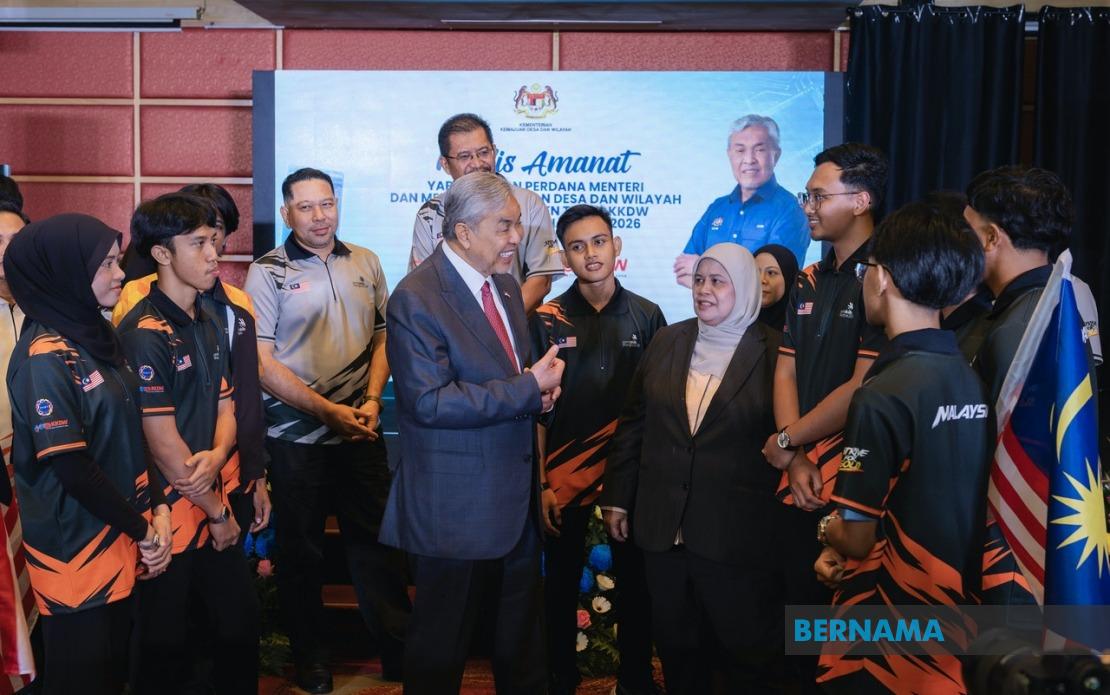
Deputy Prime Minister Datuk Seri Dr Ahmad Zahid Hamidi has made a significant commitment to reward excellence in Malaysia's technical education sector, pledging personal funds to sponsor umrah pilgrimages for gold medal winners at the upcoming WorldSkills Competition in Shanghai. The announcement, made during an address to the TVET@KKDW contingent on July 13, represents an unusual incentive scheme designed to motivate young Malaysian skilled workers competing on the global stage. Ahmad Zahid, who holds the additional portfolio of Rural and Regional Development Minister, framed the pledge as both recognition of achievement and a token of national appreciation for participants representing Malaysia at the biennial international skills competition.
The WorldSkills Competition 2026 will take place in Shanghai from September 22 to 27, attracting competitors from dozens of nations in diverse technical disciplines. Malaysia's delegation comprises nine participants from TVET institutions overseen by the Ministry of Rural and Regional Development, each competing in specialized skill categories ranging from fashion technology to mechanical engineering. The minister's promise extends beyond individual medallists, explicitly including parents of gold medal winners—a provision that underscores the family-centered values Ahmad Zahid emphasizes in his public statements. He articulated the commitment with characteristic directness, stating that if all nine Malaysian participants secure gold medals, he will personally fund umrah pilgrimages for the entire cohort and their parents.
The nine Malaysian competitors selected for Shanghai represent diverse technical disciplines critical to Malaysia's industrial and service sectors. Nadratulliyana Ab Malek will compete in Fashion Technology, while Haziq Syahmi Nazri represents the automotive sector through Automobile Painting. The manufacturing and construction sectors are represented by Khairul Idham Bahari in Cabinetmaking, Muhamad Nashrul Zulkifli in Digital Construction, and Muhammad Haziq Lailla Zamri in Electrical Installations. Technology and engineering expertise are showcased through Mohammad Ezaly Iman Ramli's Cyber Security entry, Amirul Sharif Sharifudin's Electronics participation, Muhammad Huzairy Mohamad Thes's Mechanical Engineering CAD category, and Wan Hamiz Ozai Wan Hamidzi's Rail Vehicle Technology representation. This diverse skill portfolio reflects Malaysia's strategic focus on developing human capital across multiple economic sectors simultaneously.
The umrah sponsorship pledge carries particular symbolic weight within Malaysian political and cultural contexts. Umrah, the lesser pilgrimage to Mecca, holds profound religious and personal significance for Muslim Malaysians, and government sponsorship of such journeys often signals official recognition and honor. By linking umrah sponsorship to WorldSkills achievement, Ahmad Zahid connects secular vocational excellence with religious and cultural values, attempting to frame technical skill development as a form of national and spiritual contribution. This approach aligns with broader Malaysian government narratives that position TVET education not merely as economic necessity but as a pathway to personal fulfillment and social dignity.
WorldSkills competitions serve critical functions within the international vocational education ecosystem. These biennial events establish global benchmarks for technical skill standards, allow countries to assess their workforce development outcomes against international peers, and generate valuable intelligence about emerging skill gaps and training innovations. For Malaysia, participation at WorldSkills represents an opportunity to demonstrate the quality of its TVET system to international audiences and identify areas requiring curriculum reform or investment. Strong performances by Malaysian competitors enhance the nation's reputation in technical fields and potentially increase interest in vocational pathways among secondary school students considering career options.
The competitive landscape at WorldSkills 2026 will be intense, with leading vocational nations deploying extensively trained and selected representatives. Nations such as South Korea, Germany, and China have historically performed strongly, reflecting long-standing institutional commitments to skills development and rigorous selection processes. Malaysian participants must compete not only against absolute standards of technical excellence but also against representatives from countries with mature, well-resourced vocational training systems. The competitive difficulty makes Ahmad Zahid's pledge noteworthy—offering personal financial incentives constitutes a departure from typical government recognition approaches and suggests confidence in the caliber of Malaysian preparation.
Ahmad Zahid's involvement with TVET promotion reflects a broader Malaysian political shift toward elevating vocational education's status within national discourse. Historically, TVET pathways faced stigmatization relative to academic-track education, creating workforce imbalances and skill shortages in critical sectors. Government officials, particularly those with rural development responsibilities, have increasingly positioned TVET as essential infrastructure for inclusive economic development and opportunity creation beyond traditional urban, university-educated professional classes. By personally championing TVET excellence and offering tangible rewards, Ahmad Zahid signals that Malaysia's political leadership prioritizes closing this perception gap.
The Ministry of Rural and Regional Development's oversight of TVET@KKDW programs connects skills development explicitly to rural economic transformation and regional equity objectives. Rural Malaysia faces demographic challenges, including youth outmigration to urban centers, economic structural challenges, and educational infrastructure disparities. Strategic TVET investment in rural areas offers potential mechanisms for creating dignified employment opportunities in-place, anchoring younger rural populations, and building service sector capacity in regions facing population decline. The WorldSkills contingent drawn from this ministry's TVET institutions therefore represents not merely individual competitors but symbolic representatives of rural Malaysia's potential to produce world-class technical professionals.
Deputy Rural and Regional Development Minister Datuk Rubiah Wang's presence at the announcement ceremony underscores institutional commitment to the initiative and suggests coordination across ministerial leadership regarding TVET promotion. Such visible leadership presence at youth-oriented announcements reinforces messaging that technical skill development receives priority within government priorities and that pathways exist for capable young Malaysians to achieve recognition through non-traditional channels. The ceremony itself, conducted at a national capital location and reported through official news sources, amplified the announcement's reach and legitimized TVET participation as worthy of ministerial attention.
The umrah sponsorship pledge, while generous, must be contextualized within broader questions about TVET ecosystem sustainability. Individual incentives, however substantial, cannot substitute for comprehensive institutional support including modern facilities, qualified instructors, industry partnerships, and continual curriculum updating. Malaysia's TVET system requires sustained investment across multiple dimensions to consistently produce world-competitive technical professionals. Ahmad Zahid's pledge demonstrates personal commitment to excellence but highlights the need for systematic, long-term approaches ensuring that TVET graduates across the full cohort—not merely medal winners—possess globally competitive skills.
Looking toward Shanghai 2026, Malaysian observers will closely monitor how the nine TVET@KKDW participants perform against international competition. Success would validate government TVET investment decisions and potentially shift broader perception of technical pathways. Even strong performances falling short of gold medals would provide valuable information about remaining skill gaps and training requirements. Ahmad Zahid's unambiguous pledge creates clear accountability—promising substantial personal investment if all nine achieve gold status establishes both motivation for competitors and transparent measurement criteria for success. Whether the pledge's ambitious scope proves realistic depends on how thoroughly Malaysian TVET preparation compares to international standards in September 2026.

