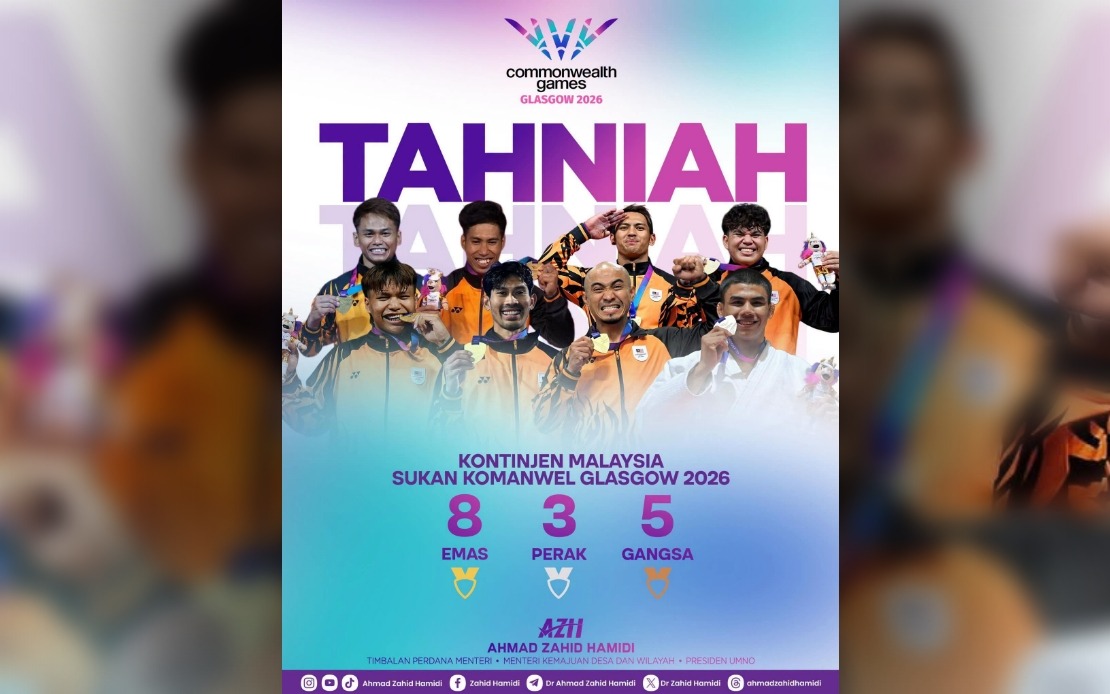
Malaysia's performance at the recently-concluded Commonwealth Games in Glasgow, Scotland has drawn high-level commendation from the country's political leadership. Deputy Prime Minister Datuk Seri Dr Ahmad Zahid Hamidi took to social media to congratulate the 59-strong Malaysian contingent, which included 22 para athletes, for what he characterised as an outstanding achievement that will reverberate beyond the sporting arena.
The accolades reflect a tangible success story: Malaysia's athletes returned with eight gold medals, three silver, and five bronze medals—a haul that surpassed pre-competition expectations and delivered the nation's strongest Commonwealth Games showing in over a decade. The 16-medal tally positioned Malaysia in 10th place across the medal standings, a respectable finish for a middle-income Southeast Asian nation competing against larger and wealthier sporting powers.
Ahmad Zahid's statement extended recognition beyond medal winners to encompass the broader ecosystem supporting Malaysian sport. Coaches, officials, and support staff received explicit acknowledgement, reflecting the reality that modern competitive athletics depends on comprehensive infrastructure and professional guidance rather than individual talent alone. This inclusive approach to praise underscores a growing understanding within Malaysian government circles that sustainable sporting success requires investment across multiple sectors.
The performance represents Malaysia's best Commonwealth Games outcome since Delhi in 2010, a benchmark that carries particular significance given the intervening years of economic and political transition within the country. That Malaysia has clawed back to such standards while managing competing fiscal priorities and structural challenges suggests that recent sporting administration reforms may be yielding dividends. The recovery signals that despite resource constraints and regional competition from more heavily-funded neighbours, Malaysian athletics remains capable of competing credibly on the international stage.
What makes this achievement noteworthy for Malaysian observers is the composition of the delegation. The inclusion of 22 para athletes and their collective contribution to the medal count underscores the growing maturity of Malaysia's disabled sports programme. Historically, Paralympic and Commonwealth Games participation has received less institutional support and media attention than mainstream athletics, but the substantial representation and medal success demonstrates shifting priorities within the Malaysian sports establishment toward inclusive excellence.
Ahmad Zahid's emphasis on the team's collective spirit and commitment points to a broader narrative about Malaysian national identity that extends beyond politics. In an era when divisive issues frequently dominate local discourse, sporting achievement offers a rare domain where Malaysians from diverse backgrounds unite behind a common cause. The Deputy Prime Minister's messaging—that even non-medallists deserve national pride—reflects an attempt to position sports as a unifying national endeavour rather than a zero-sum competition for resources and recognition.
For Malaysia's Olympic movement and broader sporting sector, Glasgow represents a template for future competitions. The alignment between pre-competition targets and actual results demonstrates improved capacity for realistic goal-setting and athlete preparation. Regional observers, particularly within Southeast Asia where Malaysia competes intensely with Thailand, Vietnam, and Indonesia across multiple sporting disciplines, will view this performance as evidence that Malaysian programmes remain competitive despite demographic and economic advantages some neighbours possess.
The implications extend to the 2026 Commonwealth Games in Melbourne, Australia, where Malaysian athletes will again compete on a major international platform. Today's congratulations serve implicitly as both validation of current approaches and motivation for continued investment. The government's recognition of this Glasgow success creates political cover for sustained or increased funding for sporting development, training facilities, and athlete welfare in the medium term.
Looking toward subsequent international competitions, Malaysia faces the challenge of converting this Glasgow momentum into sustained improvement. The nation's participation in major multi-sport events such as the Southeast Asian Games, Asian Games, and Olympic Games requires consistent capability-building and strategic focus. Ahmad Zahid's statement, while primarily ceremonial, signals that the political establishment views sports achievement as aligned with national development objectives—a positioning that can facilitate resource allocation and policy support for the athletic sector.
Ultimately, the Glasgow Commonwealth Games result demonstrates that Malaysian sport, despite structural constraints and limited per-capita investment compared to developed nations, retains the capacity to perform at competitive international levels. The Deputy Prime Minister's fulsome praise reflects recognition that such achievements, while modest in global terms, carry outsized importance for national morale and international standing in an era when soft power increasingly derives from cultural and sporting prowess alongside traditional diplomatic mechanisms.

