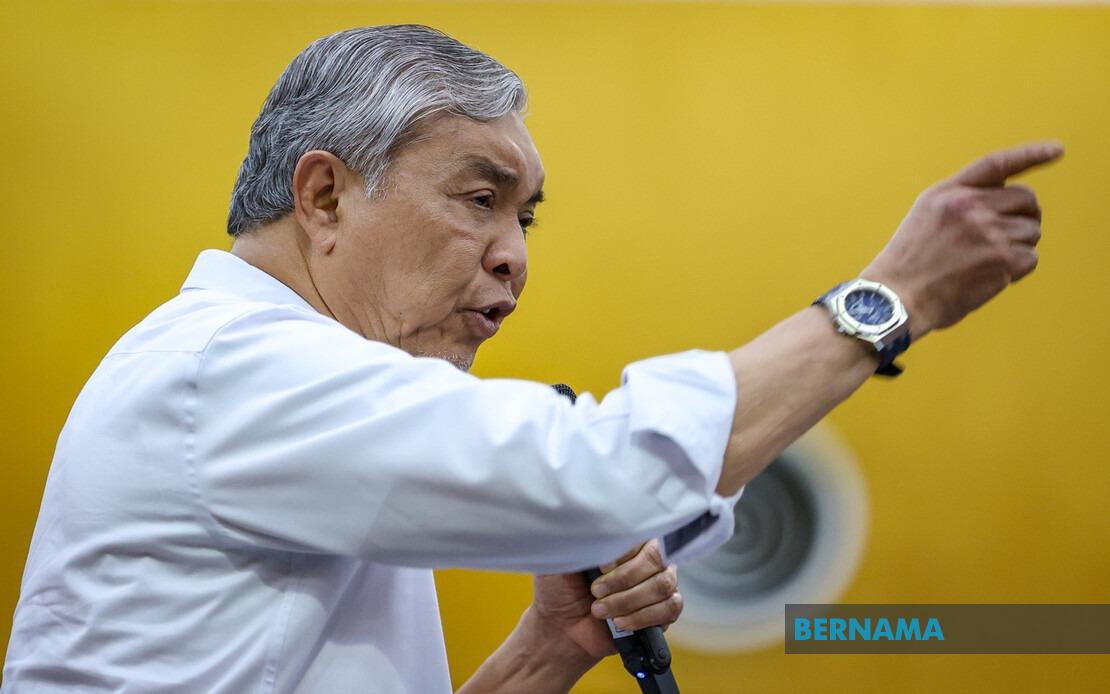
Deputy Prime Minister Datuk Seri Dr Ahmad Zahid Hamidi has launched an initiative to strengthen the political awareness and leadership capabilities of student leaders across Malaysia's higher education institutions. Speaking in Johor Bahru on July 9, Ahmad Zahid proposed that Student Representative Councils (MPP) undertake structured courses in leadership and political studies, designed to deepen their comprehension of democratic systems and Malaysia's political environment. The proposal reflects growing concern among senior government figures about the political maturity of younger voters and their understanding of national issues, particularly as the country faces evolving governance challenges.
The Deputy Prime Minister, who holds the concurrent position of Barisan Nasional chairman, indicated strong institutional backing for the programme. He committed that the government would finance such courses across the nation's higher education sector, provided that the respective Student Representative Councils submit requests and obtain clearance from Higher Education Minister Datuk Seri Dr Zambry Abd Kadir. This two-tier approval process suggests the government's intention to ensure quality control and institutional alignment before implementing the initiative. Ahmad Zahid framed the investment not merely as an expenditure but as an essential component of nation-building, allowing young leaders to acquire practical knowledge about the political arena and equip themselves to influence Malaysia's future direction.
The initiative carries particular resonance in Malaysia's contemporary political context, where youth engagement and electoral participation have become focal points for all major political coalitions. Ahmad Zahid's remarks underscore a distinction between political involvement and political literacy that Malaysian policymakers increasingly wish to emphasise. He clarified that students need not necessarily pursue active political careers or party membership, a nuance suggesting the government's desire to broaden political understanding across the youth spectrum rather than concentrate recruitment efforts. This inclusive framing may be designed to defuse potential concerns about indoctrination, framing the courses instead as civic education that empowers informed decision-making regardless of partisan affiliation.
Drawing from his own formative experiences, Ahmad Zahid recounted his engagement with student politics at Universiti Malaya, recalling how his institutional leadership role shaped his subsequent political trajectory. He suggested that contemporary young voters could similarly benefit from exposure to political structures and processes during their university years, even if they ultimately chose non-political career paths. This personal anecdote serves multiple rhetorical purposes: it lends credibility to his proposal, demonstrates accessibility of political engagement, and normalises the intersection between campus leadership and national politics. His emphasis on understanding rather than participation reflects a recognition that Malaysia's political system requires a citizenry capable of making discerning electoral choices.
Crucially, Ahmad Zahid stressed the importance of voter participation and decision-making quality among Malaysia's 18-year-old and first-time voters, demographics that have attracted increasing attention from political strategists. He argued that young voters should exercise their franchise thoughtfully rather than passively, emphasising that individual ballots collectively determine both party leadership and broader political direction. This framing positions voting as an active responsibility rather than a civic duty, suggesting that uninformed electoral participation represents a missed opportunity to influence national trajectory. For Malaysian context, where youth comprise an expanding proportion of the electorate and voter turnout varies significantly across age cohorts, such messaging attempts to mobilise younger demographics toward greater electoral consciousness.
The timing of Ahmad Zahid's announcement merits consideration within Johor's immediate political calendar. His proposal emerged during preparations for the state's election scheduled for the following Saturday, with 56 state seats contested and voter attention focused on localised campaigns. While the announcement ostensibly addresses national-level institutional reform, its deployment amid active state-level polling suggests political calculation regarding youth messaging. Student leaders and campus-based political networks often amplify electoral messaging through informal networks, and positioning the government as champion of youth political education may influence perceptions among younger voters evaluating competing political offerings.
The proposal also reflects evolving conversations about civic education within Malaysia's formal schooling and university systems. Currently, political literacy receives variable emphasis depending on institutional priorities and curricular design, with no standardised national framework ensuring consistent exposure to democratic principles, electoral systems, and contemporary political challenges. Government-funded courses administered through Student Representative Councils would potentially address this gap by providing structured, age-appropriate political education delivered through peer networks rather than formal classroom settings. This approach leverages the credibility and accessibility of student leadership structures, potentially achieving greater engagement than traditional classroom instruction.
From a regional perspective, Malaysia's initiative reflects broader Southeast Asian patterns of governments attempting to shape youth political consciousness amid social media-driven information ecosystems and increasingly fragmented political allegiances. Thailand, Indonesia, and the Philippines have similarly grappled with youth voter engagement, recognising that demographic trends favour countries capable of mobilising younger cohorts. Ahmad Zahid's proposal positions Malaysia within this regional trend while suggesting that institutional investment in political education represents a stabilising force in democratising societies where younger voters demonstrate less party loyalty than older generations.
The practical implementation of such a programme would face considerable logistical challenges requiring careful coordination between multiple ministerial portfolios and institutional stakeholders. Developing standardised curricula, training facilitators, scheduling courses around academic calendars, and maintaining consistent quality across diverse institutional contexts would demand sustained bureaucratic commitment. The requirement for Higher Education Minister approval creates a potential bottleneck but also ensures ministerial accountability. However, questions remain about pedagogical approach: whether courses would emphasise civic participation across all parties, focus on specific policy frameworks, or develop critical analytical skills for evaluating competing political claims.
Critically, Ahmad Zahid's emphasis on political understanding rather than party affiliation suggests recognition that overt partisanship in educational settings generates controversy and potential backlash, particularly among parents and opposition constituencies concerned about institutional neutrality. By framing the initiative around democratic literacy rather than BN recruitment or advocacy, the government positions the proposal as broadly beneficial rather than narrowly partisan. This messaging strategy acknowledges that explicit party indoctrination would prove counterproductive among increasingly sceptical young voters capable of recognising institutional bias. Instead, Ahmad Zahid's approach attempts to establish legitimacy through claims to broader civic purpose while implicitly assuming that better-informed voters would recognise government achievements and support incumbent coalitions.
The proposal ultimately reflects the Deputy Prime Minister's conviction that Malaysia's political future depends on younger citizens equipped with sophisticated understanding of governance systems, electoral processes, and substantive policy challenges confronting the nation. Whether implemented as announced, modified through institutional consultations, or absorbed into existing higher education frameworks remains uncertain. Nevertheless, Ahmad Zahid's initiative signals that Malaysia's political leadership increasingly recognises youth political education as central to long-term democratic stability and institutional legitimacy.

