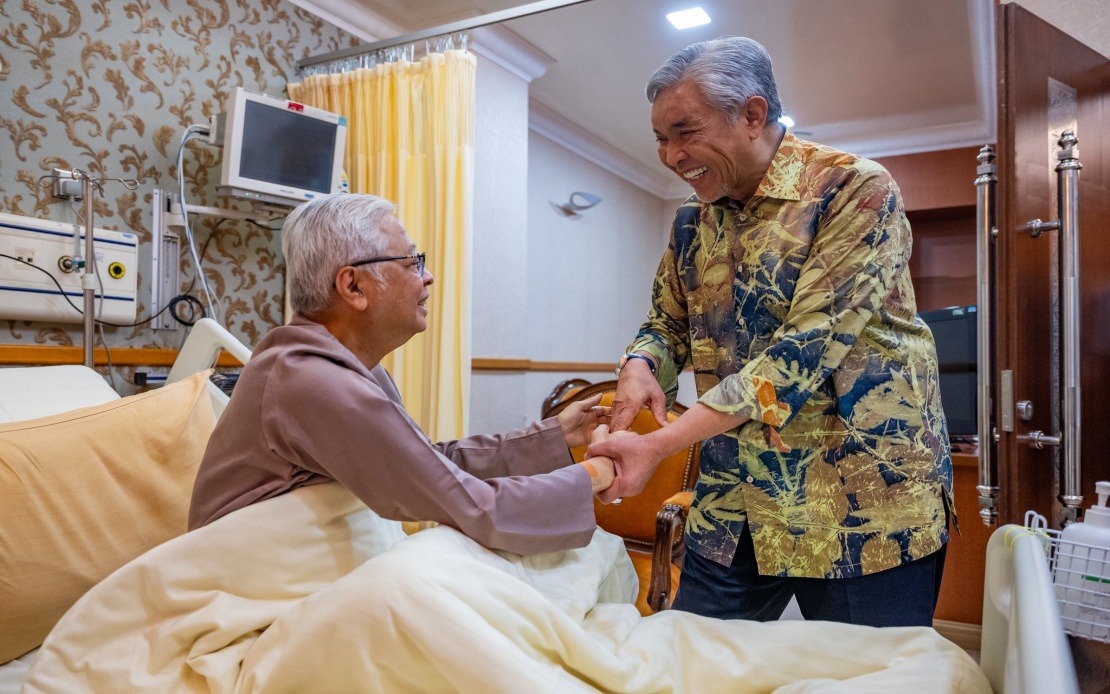
Deputy Prime Minister Datuk Seri Dr Ahmad Zahid Hamidi made a visit on August 10 to former Prime Minister Datuk Seri Ismail Sabri Yaakob, who is currently undergoing medical care at the National Heart Institute (IJN) in Kuala Lumpur. The gesture reflects ongoing ties within the political establishment during a period when Ismail Sabri faces both health challenges and other official matters.
Through a social media post, Ahmad Zahid expressed his well-wishes for his predecessor's recovery and long-term wellness. He conveyed prayers that Ismail Sabri would regain his strength and enjoy restored health, with all complications resolved smoothly. The Deputy Prime Minister extended his hopes that the former head of government would be granted a complete and swift recovery from his current medical condition.
Ahmad Zahid's remarks specifically included prayers that Ismail Sabri would resume his normal responsibilities and daily functions without further complications. Such public expressions of support from senior figures underscore the political significance of Ismail Sabri's position within Malaysia's leadership structure, even as he navigates health difficulties at present.
The sequence of events that led to Ismail Sabri's hospitalization began on August 6 when he encountered unexpected health complications while at the Malaysian Anti-Corruption Commission (MACC) headquarters for a statement recording session. The sudden onset of symptoms necessitated immediate medical intervention, prompting his rapid transfer to the National Heart Institute for specialized cardiac care.
Upon admission to IJN, medical specialists determined that Ismail Sabri required intervention for an irregular heart rhythm condition. The medical team proceeded with implantation of a wireless pacemaker device, a modern therapeutic approach designed to regulate his heart's electrical function and restore normal rhythm. This procedure represents a significant medical intervention but is widely regarded as a relatively routine solution for managing such arrhythmias in contemporary cardiac medicine.
The timing of Ismail Sabri's medical episode, occurring during his MACC statement recording, has drawn public attention given the various investigations and legal matters that have involved former government leaders in recent years. However, the focus has primarily remained on his health status and recovery prospects rather than the underlying circumstances of his MACC visit.
Ismail Sabri's tenure as Prime Minister from August 2021 to August 2022 was marked by significant political developments, including navigating the country through the latter stages of the COVID-19 pandemic and managing internal coalition dynamics. His subsequent return to private life and parliamentary duties as the Member of Parliament for Bera have maintained his visibility within Malaysian politics, even as attention has shifted to current leadership.
The National Heart Institute, as Malaysia's leading specialized cardiac treatment facility, provides comprehensive care for complex heart conditions and has established considerable expertise in managing cases requiring advanced interventions such as pacemaker implantation. The decision to admit Ismail Sabri to this facility underscores the serious nature of his condition and ensures access to the nation's most sophisticated cardiac capabilities.
Wireless pacemaker technology represents a significant advancement over traditional implanted devices, offering patients reduced surgical trauma, lower infection risks, and improved long-term outcomes. Such devices have become increasingly common in treating bradycardia and other conduction disorders, though the procedure still requires careful monitoring and post-operative care during the recovery phase.
The visit by Ahmad Zahid carries broader implications for political continuity and institutional solidarity among Malaysia's senior leadership. Despite differing political affiliations and occasional public disagreements, Malaysia's political establishment has traditionally maintained a culture of public support for colleagues facing health crises, reflecting deeply embedded values of personal respect and governmental decorum.
Ismail Sabri's recovery timeline will likely extend over several weeks, with gradual resumption of activities typically recommended following pacemaker implantation. Close medical monitoring during this period ensures the device functions properly and the patient's cardiac status stabilizes as intended. Family members and political colleagues have been largely quiet regarding specific details of his condition or recovery trajectory, respecting his privacy during this challenging period.
The broader Malaysian public has demonstrated considerable interest in updates regarding the health of former leaders, reflecting the cultural and political significance attributed to individuals who have served in the nation's highest office. Ismail Sabri's condition has generated sympathetic responses across political lines, with various figures from government and opposition parties expressing hopes for his complete recovery and return to full activities.

