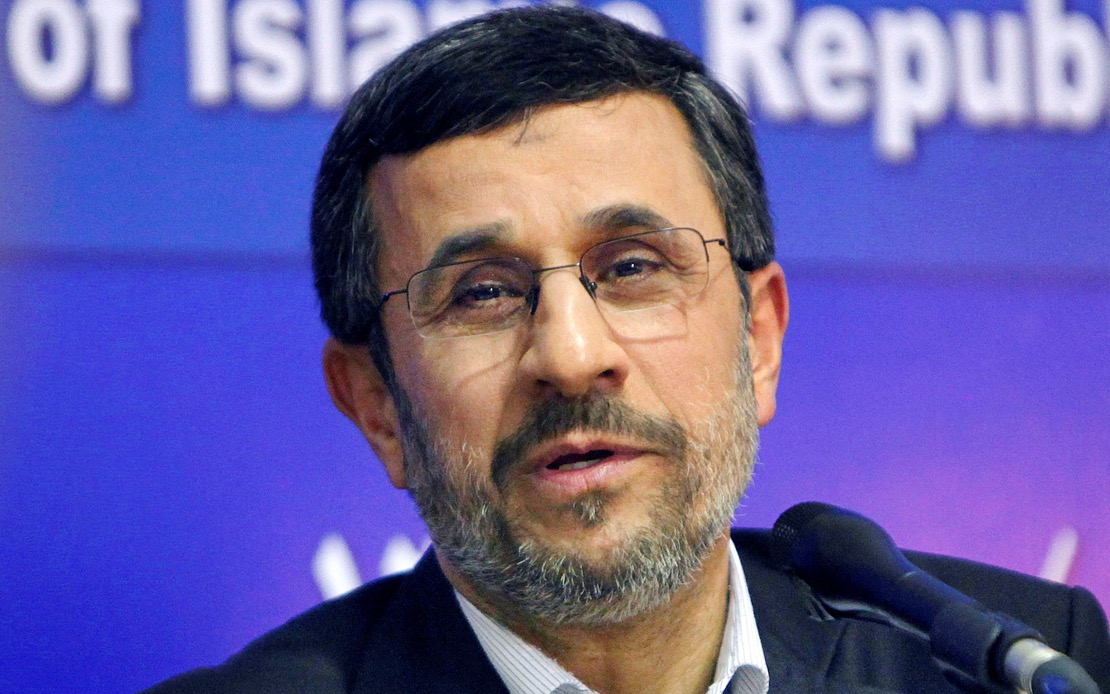
Mahmoud Ahmadinejad, Iran's president from 2005 to 2013, has issued a forceful denial of a New York Times investigation claiming that Israel's Mossad intelligence agency sought to enlist his cooperation and that he is currently confined to his residence. Through a formal statement released on Tuesday, his office branded the allegations "completely false" and accused the American newspaper of publishing unverified reports designed to manipulate public perception and sow discord within Iran's political establishment.
The Times report, published on Monday, presented a detailed narrative of alleged Israeli attempts to cultivate Ahmadinejad as an asset over recent years. According to the newspaper's account, which cited unnamed American officials, Mossad operatives had provided financial support for his housing and travel expenses while conducting multiple meetings with him at locations outside Iran, including the Hungarian capital Budapest. The investigation further suggested that these efforts were part of a coordinated strategy by Israel to facilitate regime change in Tehran and position Ahmadinejad as a potential replacement leader.
Central to the Times' allegations is a purported operation during late February, coinciding with the opening phases of an escalating confrontation between the United States, Israel, and Iran. The newspaper claimed that Israeli intelligence attempted to extract Ahmadinejad from Tehran as part of a broader initiative to destabilise and overthrow the Iranian government. According to the report, this operation included an airstrike on February 28 targeting his residential compound, which struck a building occupied by his security personnel and damaged his armoured vehicle.
The narrative presented in the Times account suggests that following the airstrike, a black Peugeot vehicle arrived at the scene and transported Ahmadinejad to a concealed safe house within Iranian territory. The report attributed this assertion to four senior Iranian officials with alleged knowledge of the incident, and identified the vehicle's driver as a Mossad operative based on information from American and Iranian officials supposedly familiar with the operation. This account, if verified, would represent an extraordinary claim of direct Israeli intelligence involvement in Iran's territory during a period of acute military tension.
Ahmadinejad's office has systematically rejected each element of these allegations. The statement characterised the New York Times' reporting as "absurd" and emphasised that the former president is not under house arrest, as the newspaper had suggested. Officials close to Ahmadinejad framed the timing and content of the report as deliberately inflammatory, designed to intensify divisions within Iran's political sphere while casting doubt on the Islamic Republic's security capabilities.
The controversy emerges at a particularly sensitive juncture in Iran's political calendar. Just last week, Ahmadinejad made a significant public appearance at the funeral of Supreme Leader Ali Khamenei, marking his first visible engagement in the public sphere since the beginning of the US-Israeli military operations against Iran. His attendance at this state funeral was itself noteworthy, given Iran's restrictive security environment and the apparent tensions between Ahmadinejad and the current leadership structure. This high-profile presence may have prompted the Times to publish its investigation, or conversely, may have been motivated by concerns about Ahmadinejad's political positioning.
For Malaysian and Southeast Asian observers, this episode illuminates the complexity of Iranian internal politics and the manner in which foreign intelligence services seek to influence developments in strategically significant nations. Israel's alleged outreach to Ahmadinejad—who has long held hardline positions against Israel and whose presidency was marked by inflammatory rhetoric towards the Jewish state—suggests that intelligence agencies may pursue recruitment strategies that transcend ideological alignment or public posturing. This dynamic reflects broader patterns in international espionage, where assets are cultivated on the basis of utility rather than shared values.
The allegations also underscore the volatile environment surrounding Iran's political transitions. The recent death of Supreme Leader Khamenei and the apparent fluidity in Iran's succession arrangements create opportunities for foreign powers to exploit internal fissures or position potential alternative leaders. The Times' investigation, whether accurate or overstated, highlights the degree to which external actors perceive Iran's political system as vulnerable to manipulation during transitional moments.
From a regional security perspective, the narrative of alleged Israeli operations within Iranian territory—if substantiated—would signal a significant escalation in covert activities and a willingness by Israel to pursue deep penetration operations during periods of overt military confrontation. Such operations would carry implications for the broader Middle East and would factor into calculations by other regional actors regarding deterrence and escalation dynamics.
Ahmadinejad's categorical denial is consistent with the approach taken by Iranian officials generally when confronted with allegations of foreign intelligence penetration or attempts to undermine state security. The former president's office has rejected not only the factual claims but also the newspaper's credibility and motivations, suggesting an organised campaign to discredit the Times' reporting rather than selectively addressing specific allegations.
The dispute remains fundamentally unresolved, with neither party possessing obvious means to compel public verification of the contested claims. American and Israeli intelligence agencies are unlikely to confirm or deny the allegations, and Iranian officials have a structural interest in downplaying any successful foreign intelligence operations within their territory. The episode demonstrates how allegations of espionage and covert influence operations can proliferate in international media without resolution, shaping perceptions of state security and geopolitical vulnerability even when ultimate truth remains contested.

