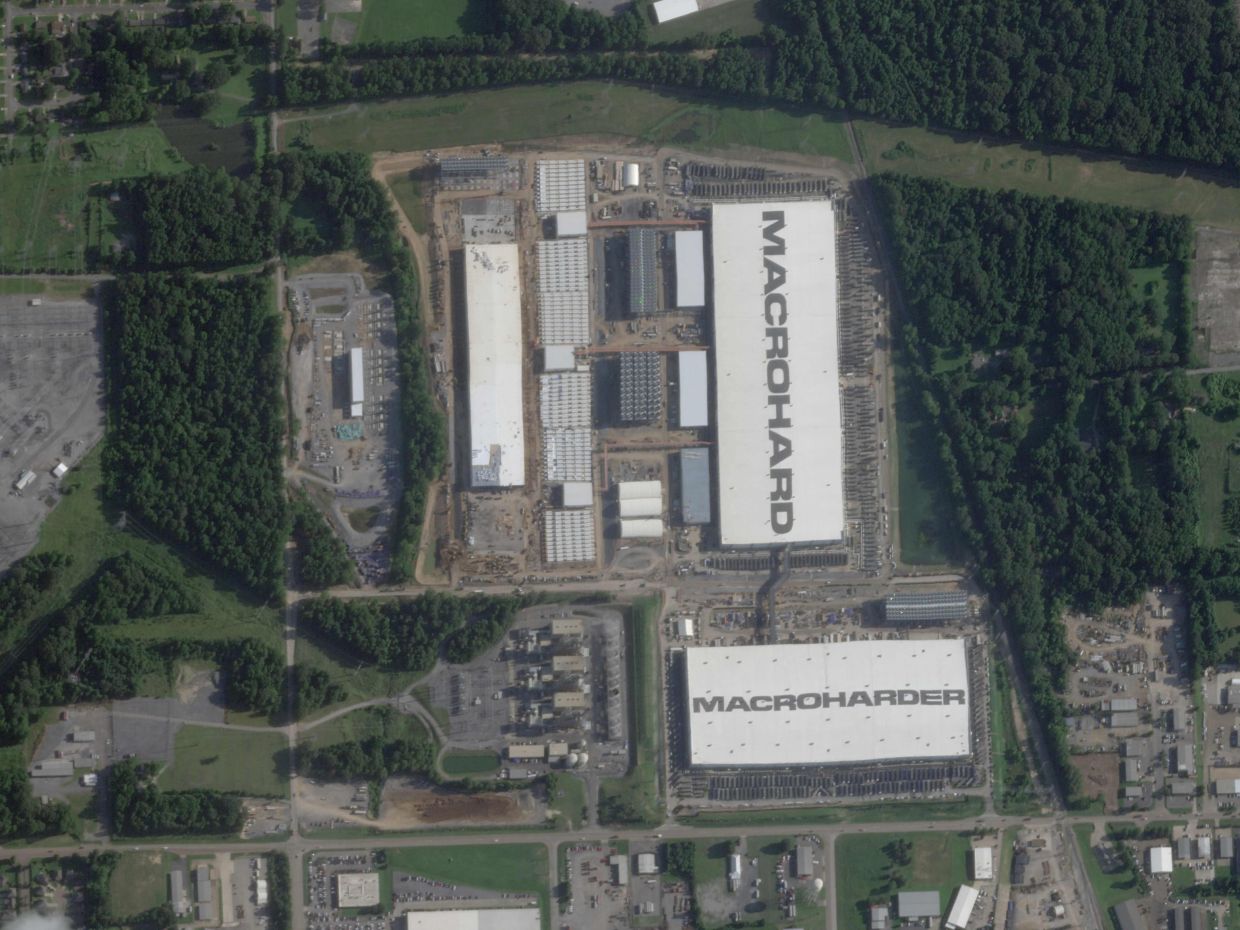
The rapid expansion of artificial intelligence infrastructure across the United States has sparked fierce community resistance, particularly in historically marginalised Black neighbourhoods where data centres are being erected with minimal public consultation. In Memphis, a sprawling facility known as Colossus I exemplifies the tensions between technological innovation and environmental justice, as residents in Boxtown and South Memphis confront the consequences of hosting one of Elon Musk's flagship AI supercomputer operations.
The facility, which took merely four months to construct, now leases its entire capacity to Anthropic for more than US$1 billion monthly. Yet beneath the headline figures lies a troubling pattern of environmental burden falling disproportionately on communities that have already endured generations of industrial pollution. Boxtown itself carries particular historical significance—founded by freed slaves following the Emancipation Proclamation of 1863—making its current circumstances emblematic of how technological wealth and environmental risk remain unequally distributed along racial lines in America.
Jasmine Bernard, a 17-year-old resident whose family lives adjacent to Boxtown, has spent two years mobilising against the gas turbines that power the data centre's operations. The teenager articulates a sophisticated understanding of her neighbourhood's predicament, connecting contemporary environmental threats to deeper historical patterns of neglect. Cancer risk in South Memphis registers at four times the national average, a statistic that underscores decades of exposure to industrial emissions. For Bernard and her peers, the arrival of Colossus I represents not progress but another iteration of a familiar injustice—powerful entities treating their community as a convenient dumping ground for hazardous infrastructure.
KeShaun Pearson, co-founder of Memphis Community Against Pollution, has emerged as a national voice challenging the unchecked expansion of data centre infrastructure. Travelling across the country to document similar struggles, Pearson characterises SpaceXAI's operations as a transparent failure of democratic governance. Elected officials, he argues, made grand promises about economic mobility and community benefit, yet consistently excluded residents from meaningful participation in decisions that directly affect their health and environment. The pattern reveals a governance vacuum in which corporate expansion proceeds regardless of local opposition, constrained only by the threat of legal action.
Beyond atmospheric concerns, Colossus I imposes acute stress on Memphis's water resources. The facility extracts 1.2 million gallons of groundwater daily from the aquifer that supplies drinking water to the broader city, according to Sarah Houston of Protect Our Aquifer. SpaceXAI initially committed to constructing a water recycling facility to mitigate this extraction, but that project has been indefinitely suspended. The contradiction is stark: a technology company essential to America's competitive position in artificial intelligence operates with minimal accountability regarding one of the region's most precious natural resources.
The company's response to environmental allegations relies on technical assurances and regulatory compliance claims. SpaceXAI states that its mobile turbines incorporate advanced emission control technologies, and monitoring data purportedly demonstrates that local air quality meets or exceeds Environmental Protection Agency standards. Yet these statements ring hollow for residents experiencing tangible health impacts and for advocates who recognise that regulatory compliance may establish a floor rather than a ceiling for environmental protection. The firm generated US$12 million in tax revenue during the initial construction phase, prompting Memphis Mayor Paul Young to redirect US$3.35 million toward affected communities—a gesture critics view as inadequate compensation for sustained environmental burden.
A parallel conflict unfolds in nearby Mississippi, where Colossus II operates in Southaven with 69 turbines continuously spinning to power SpaceXAI's Grok AI assistant. Here, resident Krystal Polk describes an environment transformed by industrial noise pollution. The constant drone—which Polk compares to an aircraft perpetually preparing for takeoff—creates vibrations that induce nausea and prevent normal domestic life. Her family's pine trees, inherited across generations, offer no protection against technological infrastructure imposed without consent or adequate public process.
Legal advocates argue that SpaceXAI's operational strategy systematically circumvented established environmental law. Laura Thoms from Earthjustice, representing the NAACP in litigation against the company, explains that the Clean Air Act explicitly requires permits securing community health and safety before construction begins. Instead, SpaceXAI installed turbines while simultaneously pursuing permits, categorising the installations as temporary to evade regulatory requirements. This legal manoeuvre enabled the company to avoid operational delays while shifting compliance burdens to communities and advocacy organisations.
In July, facing mounting pressure, SpaceXAI committed to dismantling the turbines and constructing a compliant power plant. However, the negotiated agreement—brokered opaquely between company officials and local government—grants the firm until July 2027 to execute this transition. Critics suspect that extended timelines allow SpaceXAI to defer expensive compliance investments while continuing profitable operations. Meanwhile, additional data centre facilities continue expanding, with residents remaining uninformed about their power sourcing and environmental implications.
The Justice Department's June intervention further complicated the picture, requesting dismissal of the NAACP's complaint on national security grounds. This invocation of security concerns to bypass environmental accountability demonstrates how artificial intelligence infrastructure has become entangled with national strategic interests, potentially overriding local welfare considerations. Such precedent threatens to establish a troubling dynamic wherein critical infrastructure claims exemption from ordinary democratic scrutiny and environmental protection.
Boxtown residents possess relevant precedent for effective resistance. In 2021, community mobilisation successfully blocked a pipeline project, demonstrating that collective action can constrain corporate expansion. Advocacy groups now hope to replicate that success against further data centre proliferation. Yet structural imbalances persist—while residents voluntarily donate time and resources to opposition campaigns, SpaceXAI leverages vast capital and government support. The outcome of this Memphis struggle will establish crucial precedent for how American society balances technological advancement with environmental justice in an era of artificial intelligence expansion.
For Southeast Asian observers, the Memphis conflict offers instructive lessons as artificial intelligence infrastructure rapidly expands throughout the region. Policymakers contemplating similar facilities should examine whether their communities possess genuine influence over siting decisions, environmental monitoring mechanisms, and benefit distribution. Without deliberate safeguards ensuring community participation and environmental protection, the region risks replicating patterns whereby technological wealth concentrates while environmental burdens disperse to vulnerable populations.

