Silicon Valley's startup ecosystem is undergoing a fundamental restructuring driven by artificial intelligence, with companies increasingly opting for smaller, more experienced teams augmented by powerful coding assistants rather than hiring larger workforces of junior programmers. This transformation is redefining what it means to build software at scale, creating immediate productivity gains whilst simultaneously narrowing pathways into the technology profession for the next generation of developers.
The strategic pivot centres on a deliberate choice about workforce composition. Giftory's founder and various other startup leaders are actively seeking what they term "architects" – seasoned developers with years of industry experience who understand complex workflows and can harness AI tools to dramatically amplify their individual productivity. Rather than recruiting entry-level programmers to write code line-by-line, these companies are investing in premium AI subscriptions costing around US$200 (RM816) monthly per employee, a fraction of the six-figure annual salaries of experienced engineers. This calculus renders the traditional pyramid structure of software teams – where numerous juniors supported a smaller cadre of seniors – economically obsolete.
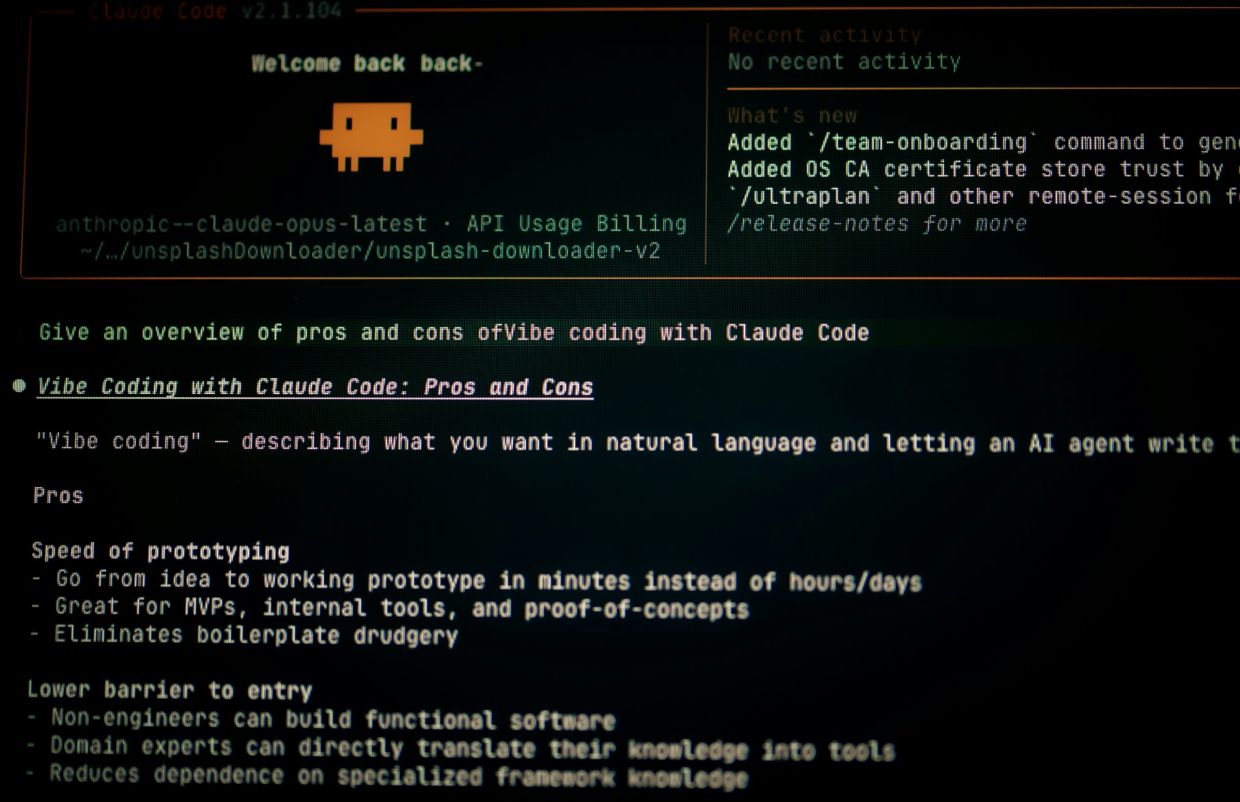
The velocity of this shift has been remarkable. Within Y Combinator's Winter 2025 batch, a quarter of all startups were constructed using code that was 95% AI-generated, according to Managing Partner Jared Friedman's assessment. Tools like Anthropic's Claude Code and OpenAI's Codex have fundamentally altered the mechanics of software development, converting programmers from typists methodically crafting code into project orchestrators who compose natural language prompts that AI systems then instantly generate, test, and refine. This represents a categorical change in how technical work gets performed across the industry.
Startup leaders articulate clear efficiency arguments for this approach. Haitham Mengad at Stems Labs consciously chose to expand the capabilities of existing talented engineers rather than expand headcount. Lindsay Euller, overseeing customer success at Espresa, quantifies her team's AI integration as generating savings in the millions annually. These aren't marginal improvements – they represent transformative reductions in operational overhead at precisely the moment when venture funding dynamics encourage companies to demonstrate path to profitability and lean unit economics.
Yet beneath these encouraging productivity narratives lies a demographic crisis emerging across the profession. Stanford's Digital Economy Lab, analysing detailed payroll data spanning millions of American workers, identified a nearly 20% decline in employment among 22- to 25-year-olds within occupations most directly threatened by AI, particularly software development roles. Harvard researchers examining resume submissions and job postings across 62 million workers discovered that companies actively adopting generative AI reduced junior employment by approximately 9% relative to non-adopting peers, whilst simultaneously maintaining or increasing senior roles. The divergence reveals not merely workforce optimisation but structural exclusion of entry-level talent.
Cybersecurity entrepreneur Ian Amit captures the broader hiring paralysis gripping the sector, describing widespread interview activity that nevertheless fails to convert into actual hiring decisions. Companies remain cautious about commitments, evidently awaiting further clarity on how AI capabilities might eliminate positions before budgets are allocated. This hesitation creates a compounding problem: junior developers cannot gain entry-level experience if companies systematically defer junior hiring pending technological maturation.
Not all industry voices celebrate this trajectory. Amazon Web Services CEO Matt Garman has publicly criticised the replacement strategy as fundamentally misguided, arguing that industries that sever the pipeline producing future leaders essentially engineer their own long-term decline. His warnings carry particular weight given AWS's position within the broader cloud infrastructure ecosystem upon which startups depend. Yet such cautionary voices appear insufficient to reverse prevailing economic incentives.
The educational sector is already registering this disruption. Computer science enrollments across the University of California system have declined 6%, with two-thirds of computing programmes nationwide reporting reduced student numbers according to the Computing Research Association. These declining enrolments likely reflect both young people's rational assessment of tightening entry points and broader cultural perception that AI might eliminate programming as a viable career path before they complete their training.
For regional readers across Southeast Asia, this transformation carries particular significance. Malaysia and the broader region have been cultivating software development talent pipelines, viewing technology careers as pathways to economic opportunity and higher incomes. The global shift toward AI-augmented, lean-team models threatens to compress these opportunities precisely as they were expanding. Malaysian and Southeast Asian developers who lack extensive experience may find their comparative advantage – lower salary expectations – completely negated by AI tools that render geographic arbitrage irrelevant. Rather than attracting junior roles that companies outsource to lower-cost regions, the region may instead face reduced overall demand for entry-level developers across all geographies.
The fundamental tension animating this transition remains largely unresolved. Startups operating within competitive venture ecosystems face relentless pressure to demonstrate operational efficiency and rapid path to profitability. The availability of increasingly capable AI coding tools removes the economic justification for maintaining traditional team structures. Yet systematically excluding junior developers from the profession creates obvious long-term vulnerabilities – atrophying talent pipelines, reducing innovation from fresh perspectives, and concentrating knowledge amongst an ageing cohort of senior engineers. The industry confronts a genuine coordination problem where individually rational decisions (hiring fewer juniors) produce collectively suboptimal outcomes (talent shortages).
Lauer's own framing of the challenge reveals the tension without resolving it: startup leadership must continuously decide between allocating resources toward additional people or toward more sophisticated AI tools. In the current market environment, that choice increasingly defaults toward AI and away from hiring. Without deliberate structural interventions – whether through educational policy encouraging broader AI literacy, venture incentive structures rewarding diverse hiring, or corporate commitment to talent development – the current trajectory appears likely to continue deepening inequality between those who gain the experience necessary to become "architects" and the increasingly barred population attempting entry into the profession.

