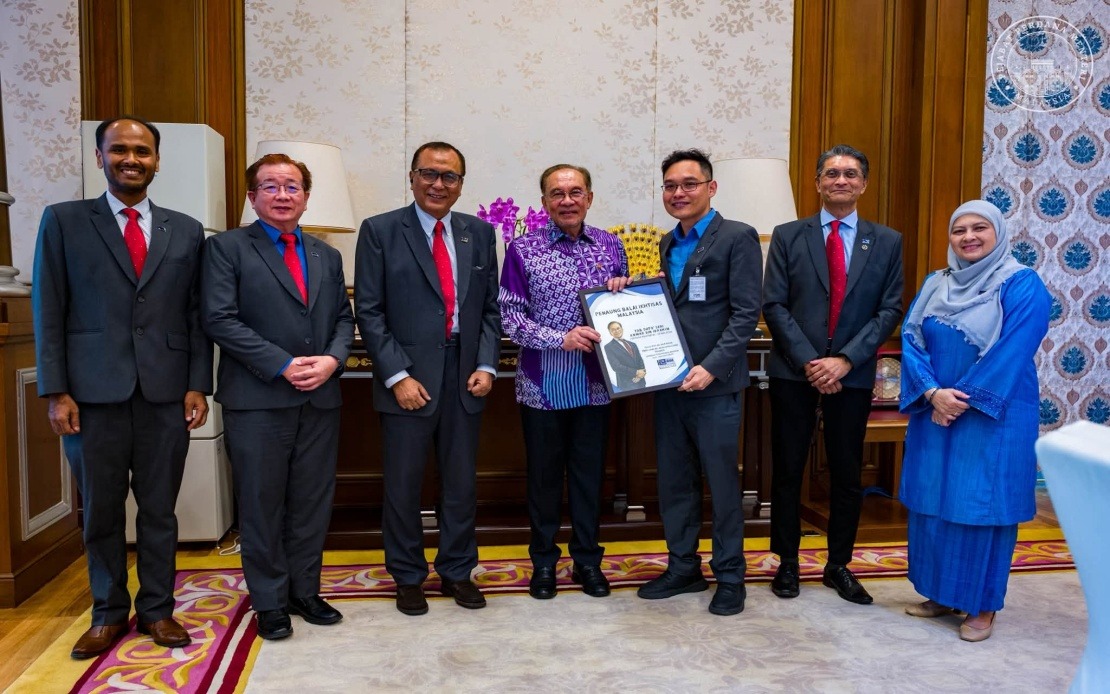
Prime Minister Datuk Seri Anwar Ibrahim has placed artificial intelligence capabilities and professional talent development at the forefront of the government's strategic agenda, signalling a renewed commitment to building human capital in an increasingly technology-driven economy. The priorities emerged during a meeting with Balai Ikhtisas Malaysia (BIM), the Malaysian Professional Centre, when a delegation headed by its president, Prof ChM Dr Juan Joon Ching, visited the Prime Minister's office in Kuala Lumpur on July 16.
The emphasis on AI readiness reflects growing recognition within Malaysian policymaking circles that the nation cannot afford to lag behind regional and global peers in adopting and integrating artificial intelligence across sectors. As automation and machine learning reshape labour markets worldwide, governments across Southeast Asia are racing to ensure their workforces possess the skills needed to navigate this transformation. Malaysia's particular vulnerability lies in its dependence on foreign expertise for advanced technical roles, a gap that domestic talent development programmes could help address.
Anwar's framing of professionals as strategic partners in national competitiveness suggests a departure from viewing talent development purely as an educational or corporate responsibility. By positioning the professional community as instrumental to implementing his administration's MADANI agenda—centred on prosperity, sustainability and inclusivity—the government signals that economic modernisation depends fundamentally on empowering knowledge workers. This partnership approach acknowledges that policymakers alone cannot drive the innovation necessary to elevate Malaysia's standing in the region.
The MADANI agenda itself provides the overarching context for these initiatives. Launched as the government's development framework, it represents an attempt to move beyond conventional economic growth metrics toward more holistic measures of citizen wellbeing. Within this framework, professional excellence and innovation become not mere economic objectives but foundational elements of national advancement. Strengthening Malaysia's position as a regional hub for professional excellence thus directly supports the broader vision of creating a more prosperous and inclusive society.
The timing of these discussions carries particular significance given Malaysia's evolving role in Southeast Asia's technology landscape. The region is increasingly attracting major technology corporations seeking to establish regional research and development centres, and Malaysia has positioned itself as a potential hub for such investment. However, competing effectively against Singapore, Thailand and Vietnam requires a workforce that can not only implement technological solutions but also innovate and lead in emerging fields. Without deliberate investment in AI literacy and professional development, Malaysia risks becoming a consumer of technology rather than a creator.
Anwar's acceptance of an invitation to Hari Ikhtisas Malaysia—an event celebrating the professional community's contributions to national development—further underscores government commitment to elevating the status and recognition of professionals in Malaysian society. Such public endorsements, when made by the Prime Minister, carry symbolic weight beyond the event itself. They signal to employers, educational institutions and young people considering career paths that the government views professional development as integral to national success, potentially encouraging greater investment in continuous learning and upskilling programmes.
The emphasis on integrity alongside competitiveness in Anwar's comments merits closer examination. By coupling technical skill development with ethical professional practice, the government appears mindful of the risks associated with rapid technological adoption. As artificial intelligence becomes increasingly embedded in decision-making processes affecting citizens—from healthcare diagnostics to financial services to law enforcement—ensuring that professionals applying these tools do so with integrity becomes paramount. This dual emphasis suggests a more sophisticated approach than simply racing to acquire AI capabilities.
For Malaysian employers, particularly those in knowledge-intensive sectors like finance, telecommunications, healthcare and professional services, these government signals create an implicit encouragement to invest more heavily in employee development. Companies that anticipate growing government emphasis on AI readiness and professional excellence may find competitive advantage in establishing or expanding internal training programmes. This public-private alignment could accelerate the pace of upskilling across multiple sectors simultaneously.
The broader implications for Malaysia's economic trajectory are substantial. Nations that successfully navigate the transition to AI-augmented workforces typically do so through sustained investment in education and continuous professional development, not through isolated initiatives or one-off projects. Anwar's framing suggests an understanding that this transformation requires ongoing dialogue between government, employers and professional bodies. Whether this commitment translates into concrete policies—such as funding mechanisms for professional development, tax incentives for employers investing in training, or revised immigration policies to support technology sector growth—will ultimately determine the effectiveness of these strategic intentions.
Regionally, Malaysia's approach to professional talent development and AI readiness will be watched by other Southeast Asian economies grappling with similar challenges. How successfully the government executes on these priorities could influence the nation's attractiveness to international talent and investment, potentially reshaping Malaysia's competitive position within ASEAN. The government's emphasis on creating a pipeline of AI-ready professionals signals confidence in the nation's capacity to not merely adopt emerging technologies but to develop local expertise that reduces long-term reliance on foreign specialists.

