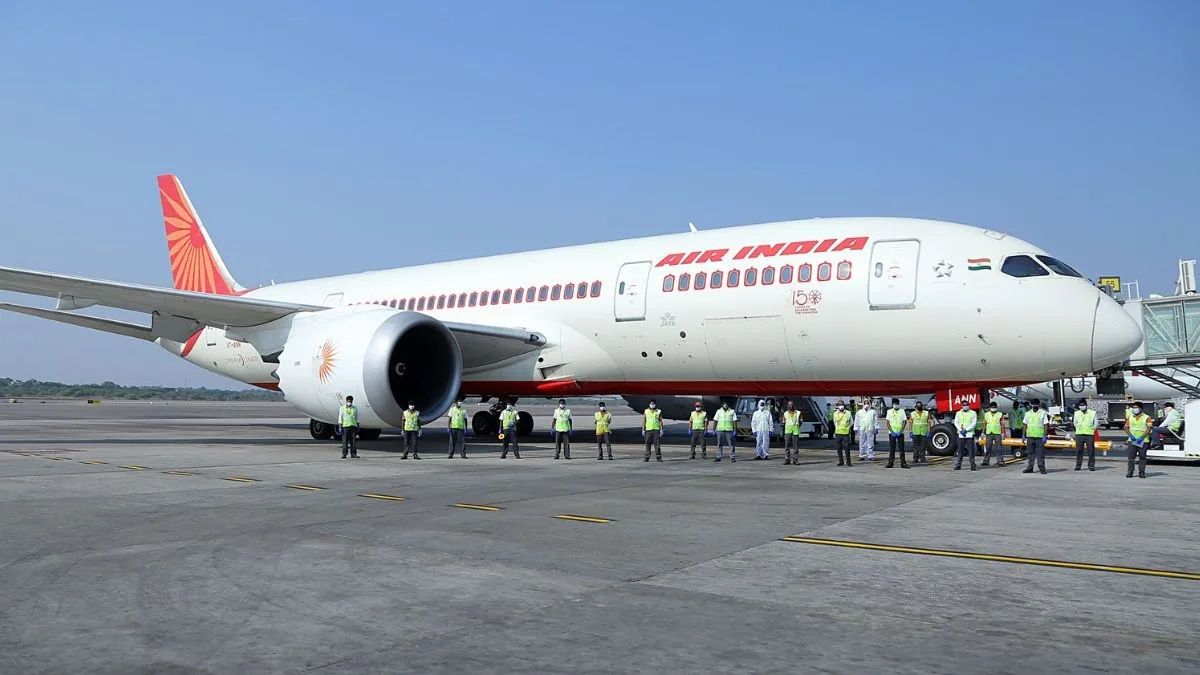
An Air India aircraft operating between Delhi and Amritsar briefly strayed into Pakistani airspace on Monday evening after its navigation systems malfunctioned, triggering a chain of operational challenges that delayed the flight by nearly four hours. The Airbus A321, designated as Flight AI-463, departed from Indira Gandhi International Airport at 9.18pm on June 22 but encountered technical difficulties shortly after takeoff that would set the stage for a complex sequence of events spanning multiple countries and aviation authorities.
The fundamental issue originated from a navigational system failure aboard the aircraft that caused it to deviate significantly from its planned flight path. Rather than maintaining its westward trajectory toward Amritsar in Punjab, the malfunctioning systems allowed the aircraft to drift progressively westward, crossing the International Border that separates India from Pakistan. This type of incident, while rare, represents a significant concern for aviation authorities in South Asia, where the proximity of international borders demands exceptional precision in navigation and constant vigilance from air traffic management systems.
The breach was identified by Pakistani air traffic control authorities monitoring their airspace, who detected the aircraft's unauthorized presence and immediately contacted the flight crew to inform them of the situation. Pakistani ATC's swift detection and communication proved critical in preventing what could have escalated into a more serious security incident. According to aviation sources familiar with the incident, the pilots responded promptly to the alert, acknowledging the navigation error and initiating corrective measures to guide the aircraft back across the border into Indian airspace. This coordination between Pakistani and Indian air traffic authorities, though conducted under tense circumstances, demonstrated the established protocols that exist between the neighbouring nations for managing such emergency situations.
The successful course correction represented a relief after the initial crisis, but the flight's troubles were far from over. As the aircraft approached Sri Guru Ram Dass Jee International Airport in Amritsar around 10.30pm, airport authorities informed the crew of severe congestion in the local airspace. The combination of heavy traffic and unavailable landing slots created a predicament that forced air traffic controllers to make the difficult decision to divert the aircraft back to Delhi rather than risk a potentially unsafe approach or extended holding patterns over a congested airport.
This secondary diversion transformed what might have been a simple domestic flight into a complex operational challenge requiring multiple airports and extensive coordination. The aircraft retraced its route southward, returning to Delhi where it landed safely at approximately 11.30pm. Upon arrival, the aircraft was subjected to thorough technical inspections to determine the precise nature of the navigation system failure and to ensure all systems were functioning within normal parameters before authorizing further flight operations.
Following completion of the technical inspection and receipt of necessary operational clearances from Delhi air traffic control, the flight was cleared to attempt its journey to Amritsar once more. This time, the aircraft successfully navigated the Delhi-Amritsar route without incident, touching down at its intended destination at approximately 2.20am on Tuesday morning. The cumulative delay of nearly four hours represented a significant disruption for the 181 passengers and crew aboard, who experienced an evening that extended well beyond normal operating hours.
Neither Air India nor India's Directorate General of Civil Aviation has yet released detailed public statements regarding the specific technical malfunction that precipitated the incident. The lack of immediate transparency has left questions unanswered about the nature of the navigation system failure, whether it affected the primary flight management computer, the inertial navigation system, or the GPS-based navigation equipment. Understanding these technical details would be crucial for other operators of similar aircraft to assess whether similar failures might occur in their own fleets.
Aviation authorities have initiated a formal investigation into the circumstances surrounding the route deviation, following standard procedures for incidents involving international airspace violations. Such investigations typically examine the aircraft's maintenance history, the actions taken by the flight crew, the functionality of ground-based navigation aids, and whether any external factors contributed to the system failure. The findings will likely be shared through official aviation accident investigation channels and may result in maintenance recommendations or procedural adjustments across the industry.
The incident occurs within a broader regional context of occasional airspace incursions in South Asia. Approximately one month before this Air India deviation, a Pakistan International Airlines flight briefly entered Indian airspace due to adverse weather conditions. In that instance, Indian air traffic controllers successfully guided the aircraft back to its authorized route, demonstrating the established mutual cooperation that exists between Indian and Pakistani aviation authorities despite broader geopolitical tensions. These incidents underscore that technical malfunctions and weather-related challenges can transcend political boundaries, requiring professional coordination to ensure safety.
For Malaysian and Southeast Asian aviation stakeholders, this incident carries implications regarding the robustness of navigation systems across modern commercial aircraft and the importance of maintaining stringent maintenance standards. As regional air traffic continues to grow and airspace becomes more congested, the risk of such deviations increases unless navigation systems are meticulously maintained and flight crews remain vigilant. The successful resolution of this incident, while reassuring, also highlights the critical role that air traffic control coordination plays in preventing escalation of technical problems into security concerns.
The rapid response by Pakistani authorities and the successful course correction by the flight crew prevented what might have become a significant diplomatic incident had the aircraft remained in Pakistani airspace longer or had communications between the two nations' aviation authorities been less coordinated. The professionalism demonstrated during this incident offers important lessons for all regional aviation authorities regarding the importance of maintaining open communication channels and established protocols for handling emergency situations, regardless of political circumstances prevailing between nations.