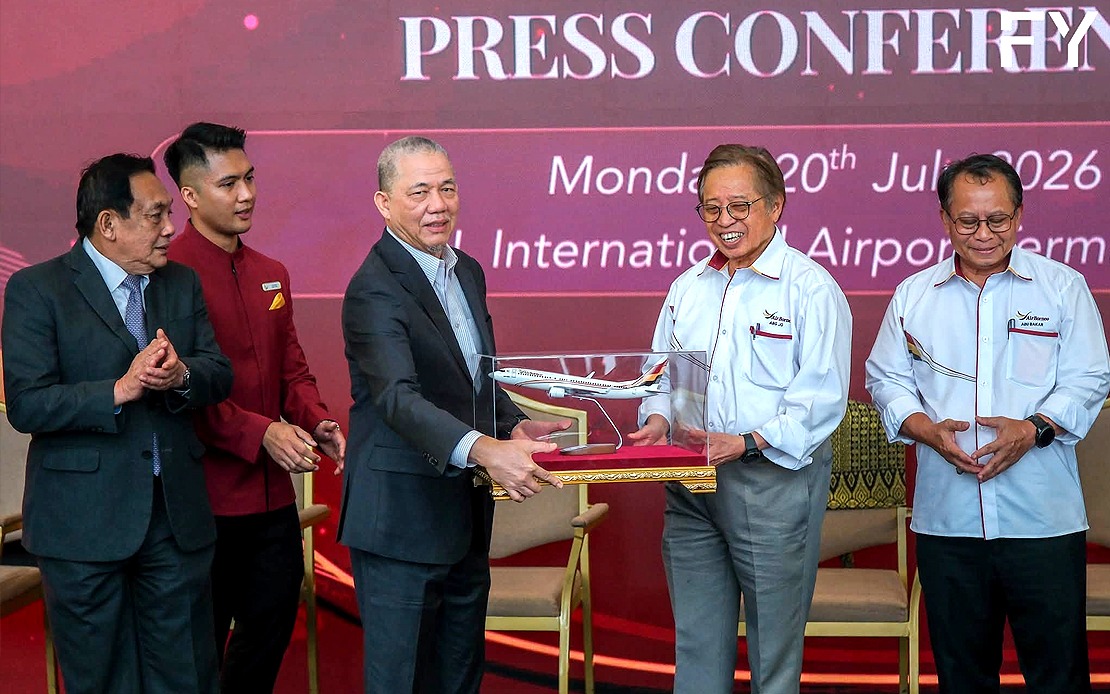
AirBorneo Airways has commenced commercial operations with its first scheduled service from Kuching to Kuala Lumpur International Airport, marking a significant milestone for Sarawak's efforts to take greater control of air transport infrastructure within the state. Deputy Prime Minister Datuk Seri Fadillah Yusof characterised the launch as a watershed moment for addressing persistent grievances over flight ticket pricing that have constrained mobility and economic opportunity across Sarawak.
The establishment of this state-owned carrier represents more than a commercial venture; it signals Sarawak's determination to reduce dependence on national and international airlines for essential connectivity. Fadillah outlined an ambitious vision encompassing three core objectives: bringing ticket prices within reach of ordinary residents, ensuring transparent pricing structures, and delivering passenger experiences that rival competitors without sacrificing operational standards. This multifaceted approach acknowledges that affordability alone cannot succeed if service expectations remain unmet.
Sarawak Premier Tan Sri Abang Johari Tun Openg previously emphasised that AirBorneo functions as more than a transportation operator; it represents a deliberate economic investment designed to fortify the state's long-term prosperity. The timing of the inaugural flight—occurring just two days before the July 22 Sarawak Day celebrations—was chosen deliberately to coincide with the commemoration of the state's historical autonomy and development achievements. This symbolic scheduling underscores how aviation infrastructure has become intertwined with contemporary expressions of regional identity and self-determination.
The airline's establishment addresses a structural gap in Malaysia's aviation landscape. Sarawak's geography, with numerous remote settlements accessible primarily by air, means that flight services constitute essential infrastructure rather than discretionary luxuries. High airfare costs have historically limited travel for essential purposes including medical treatment, business engagement, and family visitation. By introducing competition and state-level oversight, AirBorneo aims to recalibrate pricing dynamics that have disadvantaged residents in peripheral regions.
Fadillah characterised AirBorneo as instrumental in unlocking economic potential across multiple sectors. Enhanced air connectivity is expected to stimulate tourism development by reducing visitor transportation costs and transit times. The airline should facilitate business travel, thereby supporting trade relationships and investment opportunities throughout the state. Additionally, improved regional air links strengthen supply chains for Sarawak's primary industries, including agriculture, forestry, and energy sectors. These economic multiplier effects potentially justify the state's investment beyond simple fare reduction metrics.
A particularly significant consideration involves maintaining aviation services to rural communities that commercial carriers might otherwise neglect as unprofitable. Sarawak's dispersed population centres create service gaps that strictly market-driven operators may not address. As a state-controlled entity, AirBorneo can implement cross-subsidisation mechanisms where profitable routes finance essential services to remote areas, ensuring that geographical isolation does not become a barrier to basic mobility. This social obligation distinguishes public aviation enterprises from purely commercial operators.
The airline's inception reflects broader Southeast Asian trends toward regional self-sufficiency in critical infrastructure. Similar state-owned carriers operate across the region, often addressing challenges that private operators consider commercially unviable. AirBorneo thus positions Sarawak within a recognisable framework of regional aviation development, while simultaneously asserting greater autonomy over transport policy. This dual positioning—combining local pride with practical economic reasoning—explains the political significance attached to the inaugural flight.
Fadillah's emphasis on transparency represents recognition that public trust in aviation pricing requires clear, predictable mechanisms. Opacity in airfare calculation has previously generated resentment, particularly when residents perceive pricing practices as discriminatory or exploitative. By establishing governance structures emphasising transparent methodologies, AirBorneo seeks to rebuild confidence in aviation services while demonstrating that state ownership can yield benefits beyond mere cost reduction. This transparency imperative may eventually establish benchmarks influencing broader industry practices.
The airline's operational launch arrives amid broader discussions about transportation equity across Malaysia's states. Sarawak's successful establishment of AirBorneo may encourage similar initiatives elsewhere, particularly in regions facing comparable connectivity challenges. The Malaysian government's support, evidenced by Deputy Prime Minister attendance at inaugural ceremonies, suggests recognition that aviation affordability constitutes a legitimate policy concern deserving state-level intervention. This institutional backing strengthens AirBorneo's trajectory and signals potential for similar ventures in other contexts.
Looking forward, AirBorneo's performance will significantly influence perceptions regarding state-owned enterprise effectiveness in competitive sectors. Success requires balancing commercial sustainability with social objectives—a challenging equilibrium that will test management capability and political commitment. The airline must generate sufficient revenue for long-term viability while maintaining the affordability commitments that justify public investment. This balance remains precarious; numerous public airlines globally have struggled with financial sustainability when constrained by service obligations to uneconomic routes.
For Malaysian readers broadly, AirBorneo's launch carries implications extending beyond Sarawak. It demonstrates willingness to challenge established market arrangements when public interest justifies intervention. The airline's trajectory will shape ongoing debates regarding appropriate roles for state participation in infrastructure provision. Success would validate public enterprise models in competitive sectors; failure could reinforce scepticism about government operational capability. Either outcome will inform future policy discussions throughout Malaysia regarding regional development and equitable access to essential services.

