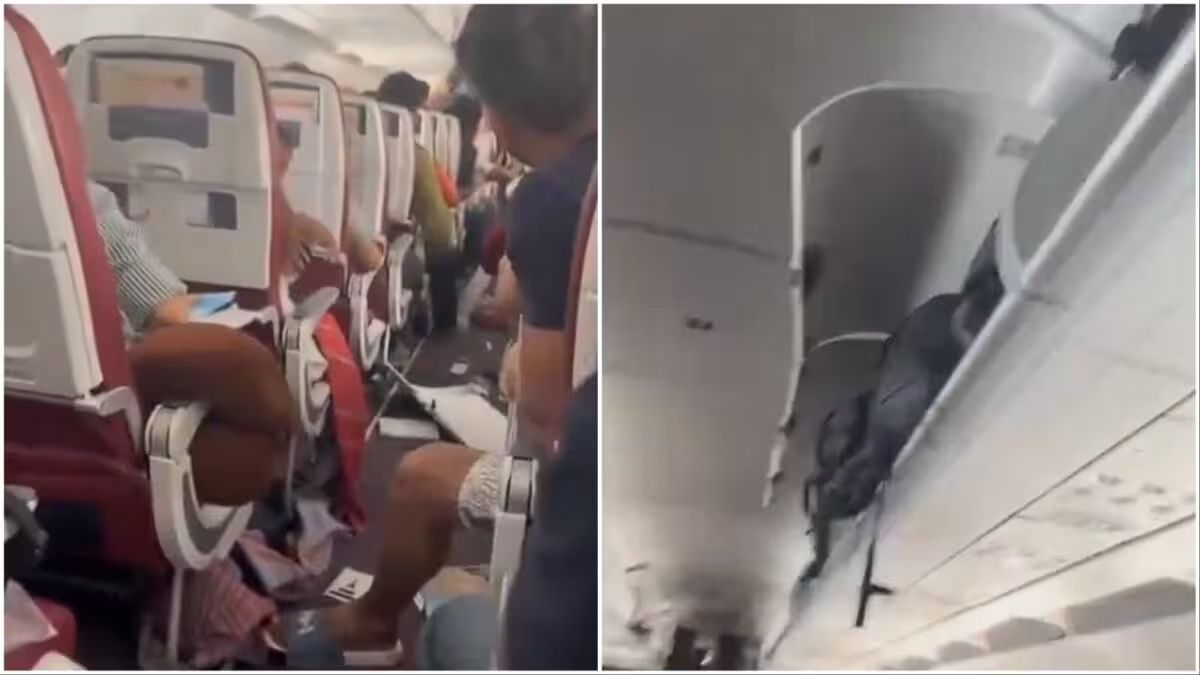
Airbus is dispatching a team of technical specialists to New Delhi this week to support Indian aviation authorities investigating a serious incident involving an Air India A320 that underwent an alarming loss of altitude mid-flight, according to a statement released by the aircraft manufacturer on Monday. The European planemaker's involvement underscores the complexity of the probe into what occurred during the August 4 flight, which carried 137 passengers and eight crew members from Phuket to New Delhi before the aircraft unexpectedly descended approximately 300 feet and subsequently stabilised for a safe landing.
The investigation has taken on heightened significance following reports that one of the aircraft's pilots returned a preliminary positive result for psychoactive substances during routine screening conducted immediately after the flight touched down in the Indian capital. The Aircraft Accident Investigation Bureau (AAIB), India's official investigative body, has classified the occurrence as a Serious Incident and initiated a formal inquiry. Authorities are awaiting confirmatory laboratory analysis on the pilot-in-command's samples, with results still pending public disclosure. Both pilots have been removed from the roster pending the outcome of all investigations.
Air India issued a statement confirming that the aircraft had "experienced a sudden loss of altitude" whilst en route and pledged full cooperation with investigators. The airline noted that Airbus had been notified of the incident in accordance with standard aviation protocols. Neither the carrier nor the manufacturer has officially acknowledged reports circulating in Indian media suggesting the aircraft encountered multiple technical irregularities immediately preceding the altitude loss, though such claims remain unconfirmed by relevant authorities.
Airbus's decision to deploy technical assistance reflects the manufacturer's standard protocol in incidents involving its aircraft, particularly where structural, mechanical, or systems-related factors may warrant expert analysis. The company stated that it is "actively supporting the airline" and will furnish additional information as the investigation progresses. This collaborative approach is typical in international aviation incident investigations, where aircraft manufacturers work alongside national aviation authorities and airline operators to establish a comprehensive understanding of causation.
The incident resulted in injuries to seventeen people—eight passengers and four cabin crew members were hospitalised following arrival in New Delhi, with additional passengers treated for lesser injuries. The relatively low number of serious injuries relative to those aboard underscores both the aircraft's structural integrity and the pilots' ability to stabilise the situation despite the frightening ordeal experienced by passengers during the altitude loss.
For Malaysian and regional aviation observers, this incident carries particular relevance given Southeast Asia's heavy reliance on air transport and the region's substantial Air India passenger traffic. The Phuket-New Delhi route is heavily utilised by travellers throughout the region, and such incidents inevitably draw scrutiny to airline safety standards and regulatory oversight across South and Southeast Asian carriers operating in shared airspace and infrastructure.
This incident represents the latest in an accumulating series of operational and safety challenges that have beleaguered Air India over recent months. The airline has endured substantial commercial disruption stemming from Middle Eastern geopolitical tensions, which have compromised routing flexibility and operational efficiency across its network. Far more damaging to institutional credibility was the catastrophic crash of Air India Flight 171 in June 2025, when a Boeing 787 Dreamliner bound for London crashed shortly after departure from Ahmedabad, resulting in 241 fatalities among those aboard and an additional 19 deaths on the ground. That disaster claimed all but one passenger and crew member, representing one of aviation's deadliest incidents in recent years.
Given this tragic recent history, the August incident has amplified concerns regarding Air India's operational and safety governance. The airline's reputation, already significantly damaged by the Ahmedabad catastrophe, faces renewed pressure as investigators seek to establish whether systemic issues, crew training deficiencies, maintenance lapses, or other factors contributed to the mid-air incident. The involvement of potential substance impairment in preliminary testing has introduced an additional layer of complexity, raising questions about pre-flight screening protocols and crew fitness-for-duty procedures.
The timing of this investigation coincides with significant leadership transitions at Air India. The airline appointed Tewolde Gebremariam, the former chief executive of Ethiopian Airlines, to its top position last week, tasking him with executing a comprehensive turnaround strategy. Gebremariam inherits an organisation grappling with severe reputational damage, operational disruptions, and intense regulatory scrutiny. The appointment reflects efforts to inject experienced external leadership into an airline struggling to restore confidence among investors, travellers, and regulatory authorities.
Gebremariam's background leading Ethiopian Airlines—itself a carrier that has navigated significant safety and operational challenges—provides relevant experience navigating crisis situations within African aviation. However, the Indian aviation sector operates within a distinct regulatory framework under India's Directorate General of Civil Aviation, and he will need to demonstrate rapid implementation of safety protocol enhancements and operational improvements to restore stakeholder confidence.
The AAIB's investigation will likely examine multiple vectors including aircraft maintenance records, crew training documentation, weather conditions during the flight, air traffic control interactions, and the technical specifications of the A320's autopilot and altitude management systems. The manufacturer's technical expertise will prove invaluable in analysing whether the aircraft's systems functioned correctly during the incident or whether equipment malfunction contributed to the altitude loss.
For Southeast Asian carriers and their regulators, the incident serves as a reminder of the importance of rigorous safety oversight, comprehensive crew vetting, and maintenance discipline. Regional aviation authorities including Malaysia's civil aviation authority will monitor the investigation's findings and any resulting safety directives from India or Airbus affecting the A320 fleet operating throughout Southeast Asia.
The outcome of the AAIB's investigation and the confirmatory toxicology results will prove critical not only for Air India's immediate operational future but also for aviation safety protocols across the region. Investigators must determine whether human factors, technical failures, or a combination of both precipitated the incident—conclusions that will inevitably influence safety standards and operational procedures implemented across carriers operating similar aircraft throughout South and Southeast Asia.

