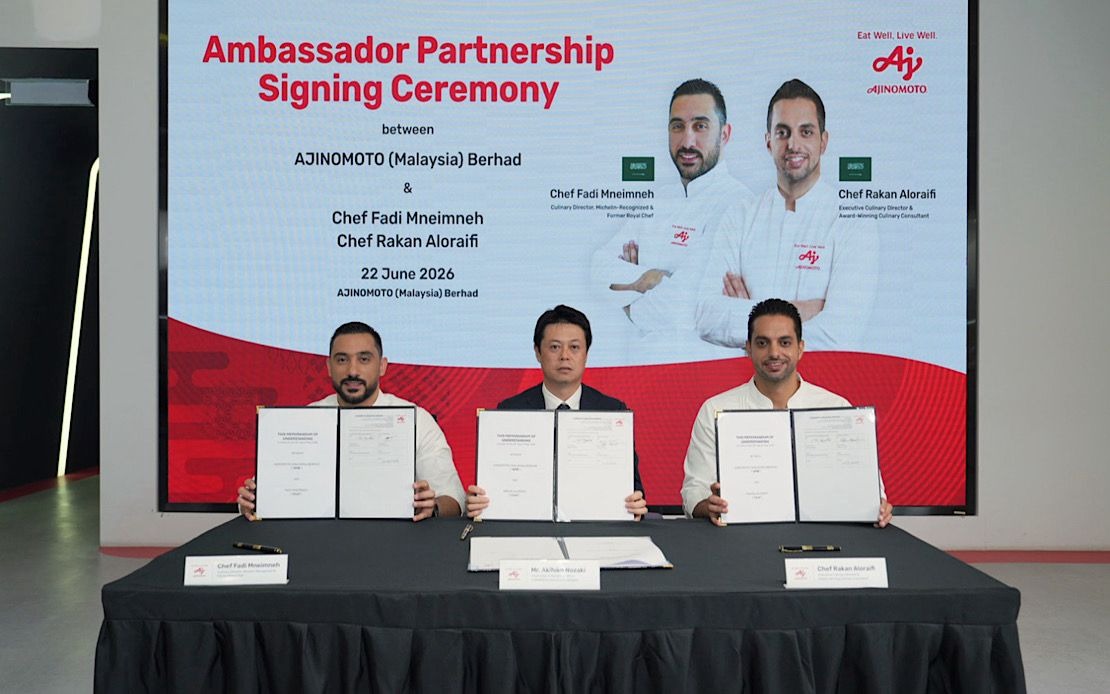
Ajinomoto (Malaysia) Berhad is accelerating its push into Middle Eastern markets through a carefully crafted alliance with two of the region's most respected culinary professionals. The collaboration with Chef Fadi Mneimneh and Chef Rakan Aloraifi represents a calculated move to tap into the surging appetite for premium halal food solutions, positioning the Malaysian manufacturer as a credible innovator within one of the world's fastest-growing food sectors.
The partnership reflects a broader strategic shift in how established Malaysian food companies are approaching international expansion. Rather than relying solely on traditional distribution channels, Ajinomoto Malaysia is leveraging the credibility and influence of high-profile figures within the Middle Eastern hospitality ecosystem. Chef Fadi, a Michelin-starred culinary director with credentials as a former royal chef, and Chef Rakan, an award-winning executive director and culinary consultant, bring substantial cultural capital and institutional connections that would be difficult to acquire through conventional marketing alone.
During a recent factory visit to the company's manufacturing facility in Bandar Enstek, Negeri Sembilan, the two chefs experienced firsthand the production processes and quality standards underpinning Ajinomoto's halal-certified product range. This immersive approach serves multiple objectives simultaneously: it builds genuine understanding among influential stakeholders, generates authentic testimonials grounded in direct observation, and creates opportunities for collaborative content that resonates with Middle Eastern food professionals who increasingly prioritise supply chain transparency and halal integrity.
The company's emphasis on umami—the fifth taste sensation derived from glutamates—reveals a sophisticated marketing strategy that bridges Japanese culinary traditions with Middle Eastern gastronomic preferences. Rather than positioning Ajinomoto products as foreign additions to regional cuisine, the collaboration frames umami enrichment as a technique that deepens authentic flavours while maintaining culinary heritage. This narrative proves particularly valuable in markets where food authenticity carries both commercial and cultural significance.
The exclusive demonstrations conducted by both chefs showcased how Ajinomoto ingredients could enhance traditional Middle Eastern dishes without compromising their fundamental character. By proving that umami enhancement complements rather than displaces traditional recipes, the initiative addresses a potential resistance point among professional chefs and culinary traditionalists who might otherwise view Japanese ingredients with scepticism. The strategic pairing of culinary innovation with cultural respect opens pathways for product adoption that pure ingredient promotion would struggle to achieve.
From a Southeast Asian perspective, this initiative underscores how Malaysian manufacturers increasingly compete on sophistication and cultural intelligence rather than price alone. The involvement of Ajinomoto Malaysia's Brunei distributor in the proceedings signals awareness of how halal food networks operate as interconnected regional systems, where influence in one market creates cascading opportunities across neighbouring territories. Such networking multiplies the commercial impact of individual partnerships far beyond their immediate scope.
The halal certification advantage remains central to Ajinomoto Malaysia's regional strategy. While several manufacturers produce food flavourings and ingredients, the combination of genuine halal credentials, Malaysian manufacturing excellence, and high-level chef endorsements creates a compelling value proposition for Middle Eastern hospitality businesses seeking suppliers that can simultaneously deliver culinary performance and religious compliance. This dual assurance becomes increasingly valuable as Middle Eastern food service providers internationalise their operations and require suppliers with credible multi-market halal credentials.
The planned HORECA events scheduled for October 2026 in Riyadh and Jeddah represent the partnership's logical progression toward direct business development. By positioning Chef Fadi and Chef Rakan as live demonstration leaders, Ajinomoto Malaysia transforms what might otherwise be standard trade show participation into compelling content delivered by trusted regional experts. HORECA procurement professionals and executive chefs attending such demonstrations encounter products validated by peers whose culinary judgement they inherently respect.
This expansion strategy also reflects recognition that Middle Eastern food markets are undergoing rapid professionalisation and internationalisation. As consumer preferences evolve and younger generations increasingly engage with global culinary trends, suppliers capable of articulating how their products enhance rather than replace traditional approaches gain competitive advantage. Ajinomoto Malaysia's willingness to invest in long-term relationship-building through chef partnerships suggests confidence in sustained regional demand growth.
The broader implications extend beyond Ajinomoto Malaysia's commercial interests. The partnership demonstrates how Malaysian companies are positioning themselves as sophisticated global players rather than regional cost competitors. By engaging with internationally acclaimed figures and investing in premium brand narratives, Malaysian manufacturers signal that they understand their target markets deeply and respect the cultural contexts in which their products operate. This positioning strengthens Malaysia's reputation as a source of quality, innovation, and reliability within global food systems.
For Malaysia's halal industry more broadly, such initiatives reinforce the nation's standing as a trusted halal certification hub with manufacturing capabilities that satisfy the most demanding international standards. As Middle Eastern markets increasingly scrutinise supplier credentials and demand transparency, the visibility of Malaysian halal excellence through high-profile culinary collaborations generates positive associations that benefit the entire ecosystem of Malaysian food producers seeking regional expansion.

