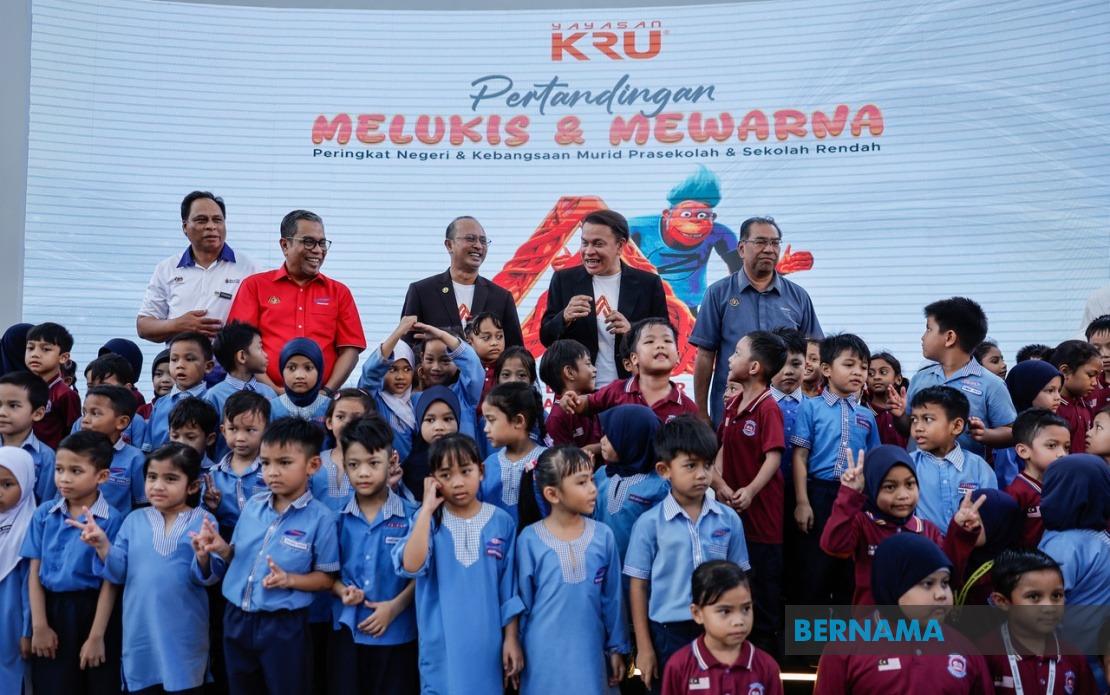
A nationwide colouring competition organised by Yayasan KRU has achieved a significant recognition milestone by setting a new Malaysia Book of Records entry for the largest participation of preschool children in such an event. The AKAR 2026 competition, which drew more than 153,000 participants from KEMAS and Unity kindergartens, was conducted simultaneously across the country and reflects growing interest in structured creative activities among Malaysia's youngest learners.
The scale of participation underscores the importance educational authorities and child development organisations place on early childhood engagement programmes. By mobilising such substantial numbers across multiple states, the initiative demonstrates the capacity of public institutions to coordinate large-scale events that reach vulnerable populations and underserved communities. For Malaysia's preschool sector, the record serves as a benchmark for future competitions and highlights the appetite among parents and educators for activities that extend beyond traditional classroom learning.
Yayasan KRU Board of Trustees president Datuk Norman Abdul Halim framed the achievement as part of a broader mission to cultivate creative thinking in young children while simultaneously advancing environmental awareness. The "I Love Orangutans" campaign element embedded within the competition shows how creative competitions can serve dual purposes—entertaining and educating participants about conservation issues relevant to Southeast Asia. This integrated approach aligns with global trends in early childhood education, where environmental literacy is increasingly recognised as fundamental to developing socially conscious citizens.
The competition's structure incorporates incentive mechanisms designed to reward excellence and encourage participation across socioeconomic backgrounds. A total of RM100,000 in prize money distributed at state and national levels will be credited directly into winners' National Education Savings Scheme (SSPN) accounts, effectively converting prize winnings into long-term educational investments. This approach addresses financial barriers to education while recognising academic and creative achievement, a particularly significant benefit for families with limited disposable income.
The national finals scheduled for Putrajaya on August 29 will determine overall winners competing for top prizes reaching RM3,000, creating clear progression pathways that incentivise continued participation and performance improvement. Such tournaments mirror competitive structures common in established sports and academic competitions, potentially establishing colouring as a legitimate competitive discipline in early childhood development rather than merely a recreational activity. The visibility accorded to this event through official record recognition may influence other organisations to develop similar large-scale initiatives.
Multiple government agencies collaborated to enable this competition, including the Education Ministry, the Community Development Department (KEMAS), the Department of National Unity and National Integration (JPNIN), and the National Higher Education Fund Corporation (PTPTN). This cross-sector partnership reflects how contemporary social initiatives require coordination across traditionally separate bureaucratic silos. The involvement of JPNIN alongside conventional educational bodies signals government recognition that preschool engagement contributes to broader national integration and unity objectives.
KEMAS director-general Datuk Mohd Hanafiah Man positioned creativity as a critical competency for future economic competitiveness, reflecting shifts in workforce development thinking that prioritise creative problem-solving and innovation over rote memorisation. This perspective aligns Malaysian educational priorities with international competency frameworks emphasising flexible thinking and adaptive capacity. For preschool settings, activities like AKAR 2026 introduce foundational creative practices at developmental stages when neural plasticity is highest and learning habits form.
The participation of Unity kindergartens alongside KEMAS facilities ensures reach across both government and private preschool sectors, though the emphasis on KEMAS suggests particular attention to access for lower-income families. This dual-track approach acknowledges Malaysia's mixed early childhood education landscape, where government-supported facilities serve communities with fewer private educational options. Ensuring equitable access to competitive opportunities during early childhood helps mitigate educational inequalities that typically widen during primary and secondary schooling.
The AKAR 2026 record carries implications beyond Malaysia's borders for regional early childhood development practices. Southeast Asian nations increasingly benchmark their educational initiatives against regional peers, and Malaysia's achievement may inspire comparable competitions in neighbouring countries. The integrated environmental messaging, particularly regarding orangutan conservation, reflects transnational concerns about biodiversity loss in the region, potentially catalysing similar conservation-education initiatives elsewhere in Southeast Asia where primate populations face comparable threats.
From a policy perspective, the successful execution of such a large-scale event demonstrates government capacity to manage complex logistical operations involving thousands of institutions and hundreds of thousands of individual participants. This operational success creates precedent for scaling other social programmes and suggests untapped potential for coordinated initiatives across Malaysia's preschool network. Future iterations might expand beyond colouring to incorporate other creative modalities, or replicate the model across different age groups and educational contexts.
Looking forward, the Malaysia Book of Records recognition provides valuable publicity that may boost future participation while establishing AKAR as an annual fixture in Malaysia's early childhood calendar. Competition between preschools to achieve higher representation in subsequent editions could drive broader institutional commitment to creative programming. For families, awareness of such opportunities may influence kindergarten selection decisions, creating market incentives for preschool providers to enhance creative offerings.
The achievement also highlights the potential of structured recreational activities to generate both developmental benefits and measurable social impact. By converting a simple creative exercise into a record-breaking national event, Yayasan KRU transformed an ordinary activity into a meaningful milestone that garners attention and recognition. This approach demonstrates how strategic framing and institutional coordination can amplify the significance of early childhood initiatives, potentially influencing resource allocation and policy attention directed toward preschool education.

