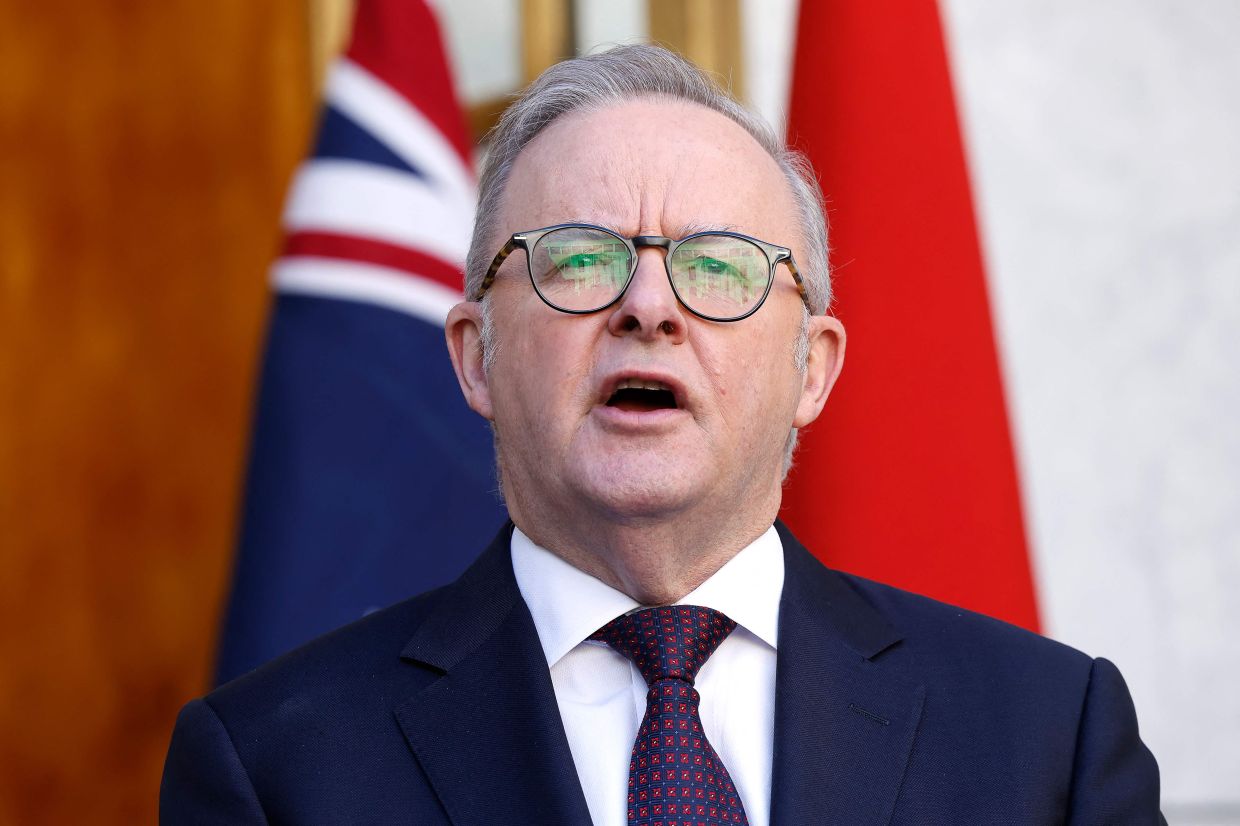
Australian Prime Minister Anthony Albanese has resisted mounting pressure to apologise for off-colour remarks about a gift presented by Japanese Prime Minister Sanae Takaichi during her visit to Australia earlier this year, prompting fresh diplomatic friction between the two nations. The controversy emerged when a podcast interview from last month surfaced this week, revealing the Australian leader had made ribald comments about an expensive Japanese melon he received from Takaichi, drawing sharp criticism from opposition politicians who characterised his conduct as disrespectful and unbecoming of his office.
The incident came during a recorded conversation with podcast host Nikki Osborne at Albanese's official residence, where the Australian prime minister described the royal melon as an unusual present. When questioned whether the fruit had cleared Australian customs, Albanese quipped that he had received "a couple of melons," a remark that became particularly controversial when Osborne responded with an innuendo comparing Takaichi's appearance to actress Pamela Anderson. The exchange, captured on tape, subsequently became public this week and ignited fierce debate about parliamentary standards and the dignity of international relations.
The cultural and economic significance of the melon gift appears to have been lost in the banter. Premium melons are prized commodities in Japan, functioning as luxury gifts exchanged among dignitaries and business leaders, with individual fruits routinely commanding prices exceeding AUS$270 (approximately US$190) according to Japan's former ambassador to Australia. By treating this gesture of goodwill as an object for crude humour, Albanese appears to have misunderstood or disregarded the symbolic importance of Takaichi's offering, which represented a thoughtful diplomatic gesture rooted in Japanese gift-giving traditions.
When directly questioned in parliament on Tuesday about whether he intended to apologise for what opposition members characterised as disrespectful behaviour, Albanese flatly rejected the premise of the inquiry. "I reject the assertion in the question," he responded tersely, effectively refusing to engage with calls for contrition. His deflection strategy contrasted sharply with his handling of earlier controversy, when he had already publicly apologised for separate inappropriate remarks made during the same podcast interview, in which he expressed that he would "shag" Australian singer Kylie Minogue—a comment that drew immediate rebuke and forced an acknowledgment of error.
Albanese's refusal to apologise this time suggests a calculated political decision to treat the melon incident as less serious than his previous gaffe, or to avoid setting a precedent of capitulating to opposition demands for apologies. By maintaining that no disrespect was intended toward Takaichi or Japan, he appears to be betting that the controversy will fade if he demonstrates sufficient resolve and stands by his characterisation of the Japanese leader as both a friend of Australia and a personal friend. This approach, however, risks deepening the diplomatic wound if Tokyo chooses to view his refusal to apologise as contemptuous.
Australia's Foreign Minister Penny Wong moved to contain the damage by issuing a carefully worded statement emphasising that the prime minister had not intended his comments to cause offence. "The prime minister has been clear that he did not mean for those comments to be interpreted in the way they have been by those opposite," Wong said, directing blame toward the opposition for manufacturing controversy rather than acknowledging any genuine diplomatic misstep. Her defensive posture indicates the government views this as a domestic political attack rather than a legitimate international relations issue requiring substantive remedial action.
The controversy emerges at a delicate moment in Australia-Japan relations, which have deepened considerably in recent years as both nations seek to counter-balance China's growing regional influence. Takaichi's May visit to Australia represented part of this strategic warming, and her presentation of the luxury melon was consistent with the high-level diplomatic courtesies typically exchanged between allied nations. The casual and crude treatment of her gift by Albanese potentially signals to Tokyo that the Australian government does not accord sufficient respect to these symbolic gestures of partnership, which carry weight in East Asian diplomatic culture.
For Malaysian and broader Southeast Asian observers, the incident underscores how easily diplomatic relationships can suffer collateral damage from domestic political messaging and casual disregard for cultural protocols. In a region where hierarchical respect and face-saving remain culturally embedded in international relations, Albanese's dismissive handling of a luxury gift and his subsequent refusal to acknowledge potential disrespect may reverberate beyond the immediate bilateral relationship. The episode serves as a reminder that leaders' informal comments, especially when recorded and publicised, carry diplomatic consequences that extend far beyond domestic political cycles.
The timing of the apology-refusal also reveals strategic calculations within Australian politics. Albanese's willingness to apologise for the Kylie Minogue comment while stonewalling on the melon incident suggests he views opposition pressure on the latter as lacking sufficient traction to require capitulation. Whether this gamble proves sustainable depends partly on whether the Japanese government formally registers displeasure, which would force Canberra to recalibrate its stance. For now, the Australian leader appears to be betting that Takaichi will accept his protestations of personal regard and move past the incident, though the reputational damage to Albanese's standing as a statesman may prove more enduring than the diplomatic crisis itself.

