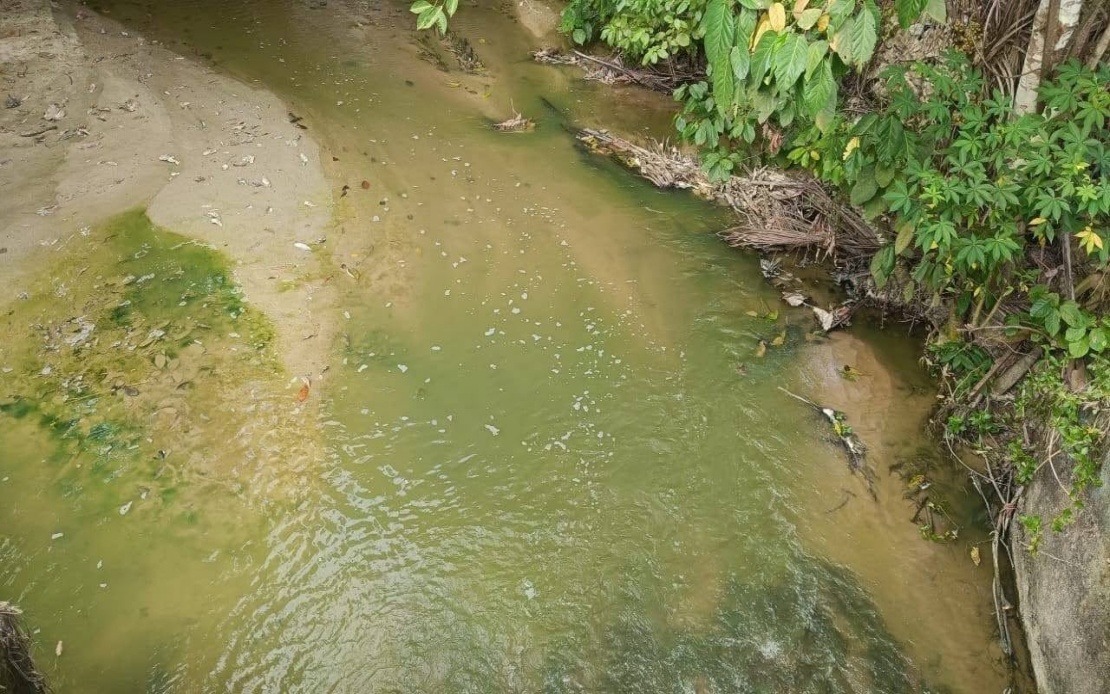
The murky green waters that appeared in Negeri Sembilan's Pertang River have sparked alarm among residents and online communities, but state fisheries officials say the discoloration stems from a natural phenomenon rather than industrial contamination. The Negeri Sembilan Department of Fisheries (DOF) has determined that prolific algae blooms triggered by sustained heat and minimal rainfall are responsible for the colour change in waterways near Mukim Pertang, Jelebu district, where aquaculture operations occupy former mining grounds.
When social media users began sharing screenshots of concerned messages about the river's unusual appearance—initially attributing it to wastewater discharge from neighbouring fish-breeding facilities—many feared an environmental crisis. However, a thorough investigation by the DOF's team, led by director Kasim Tawe, revealed that the green tint originates from dense algal growth within the fish ponds themselves rather than from any pollutant. The distinction carries significant implications for both local communities and the region's aquaculture industry, which relies heavily on maintaining public confidence in farming practices.
Algae blooms are a double-edged phenomenon in controlled aquaculture settings. Under optimal management conditions, Kasim explained, the algae serves several beneficial functions that actually enhance fish farming operations. The microorganisms produce oxygen as a byproduct of photosynthesis, enriching dissolved oxygen levels that fish depend on for survival. Additionally, certain algae species double as a nutritional resource, providing natural food sources that reduce the financial burden of commercial feed while improving overall water chemistry. The algae also acts as a biological sunshade, mitigating solar stress on farmed fish—a particularly valuable function during Malaysia's relentless dry seasons.
The prevailing environmental conditions this season have created ideal circumstances for algal proliferation. Extended periods of elevated temperatures combined with scarce rainfall have concentrated nutrients in water bodies, accelerating growth rates. These conditions are neither uncommon nor unexpected in Peninsular Malaysia's climate patterns, yet they occasionally catch farming operations unprepared. The Pertang operation, which spans approximately 29.54 hectares across a reclaimed mining pond, currently stocks baung, red tilapia, and Lee Koh fish—species particularly sensitive to water quality fluctuations.
Yet unchecked algal proliferation can rapidly transform from asset to liability. When algae density becomes excessive, the photosynthetic organisms consume dissolved oxygen at night—a critical vulnerability in closed or semi-closed water systems. This nocturnal oxygen depletion can trigger sudden crashes in dissolved oxygen concentrations, potentially suffocating farmed fish in mere hours. Simultaneously, dense algae blooms destabilize pH levels, causing sharp, unpredictable swings that stress fish physiology and can clog gill membranes with organic matter, further compromising respiration.
Recognising these risks, the DOF has outlined a series of practical interventions that fish breeders should implement to maintain algal growth within sustainable parameters. Mechanical aeration devices such as waterwheels—particularly when operated during nocturnal hours when algae ceases oxygen production—can stabilize dissolved oxygen levels. Gradual water exchanges help dilute nutrient concentrations that fuel algal multiplication. Reducing fish stocking density and feed volumes lessens the nutrient loading that drives blooms. Installation of shade netting moderates sunlight availability, naturally suppressing growth rates. Application of probiotic bacteria introduces competitive microorganisms that suppress algal dominance while simultaneously improving pond microbiota.
The Jelebu District Fisheries Office has initiated a collaborative surveillance programme with Pertang Police Station to maintain continuous oversight of both the river system and adjacent aquaculture installations. This partnership underscores the interconnected responsibilities of environmental stewardship and public safety—authorities recognise that sustained monitoring prevents minor management oversights from escalating into genuine crises. For aquaculture operators throughout Negeri Sembilan and indeed across Southeast Asia, the incident serves as a timely reminder that environmental vigilance during extreme weather seasons demands proactive rather than reactive strategies.
The episode also highlights how social media narratives, while sometimes alarmist, serve an important public watchdog function. The viral circulation of concerns about the river's appearance, though based on incomplete information, prompted official investigation and transparent public communication from state authorities. This pattern of digital-era accountability increasingly shapes how governments and agencies prioritise environmental monitoring and public engagement across Malaysia.
For Malaysian aquaculturists managing operations during challenging climate periods, the Pertang situation illustrates that informed management practices—rather than panic—should guide responses to visible water quality changes. The distinction between natural ecological processes and genuine pollution incidents requires expertise and investigation, not assumption. As climate variability continues affecting rainfall patterns across the peninsula, understanding the nuances of algal dynamics in aquatic systems becomes increasingly central to sustainable fish farming practices.

