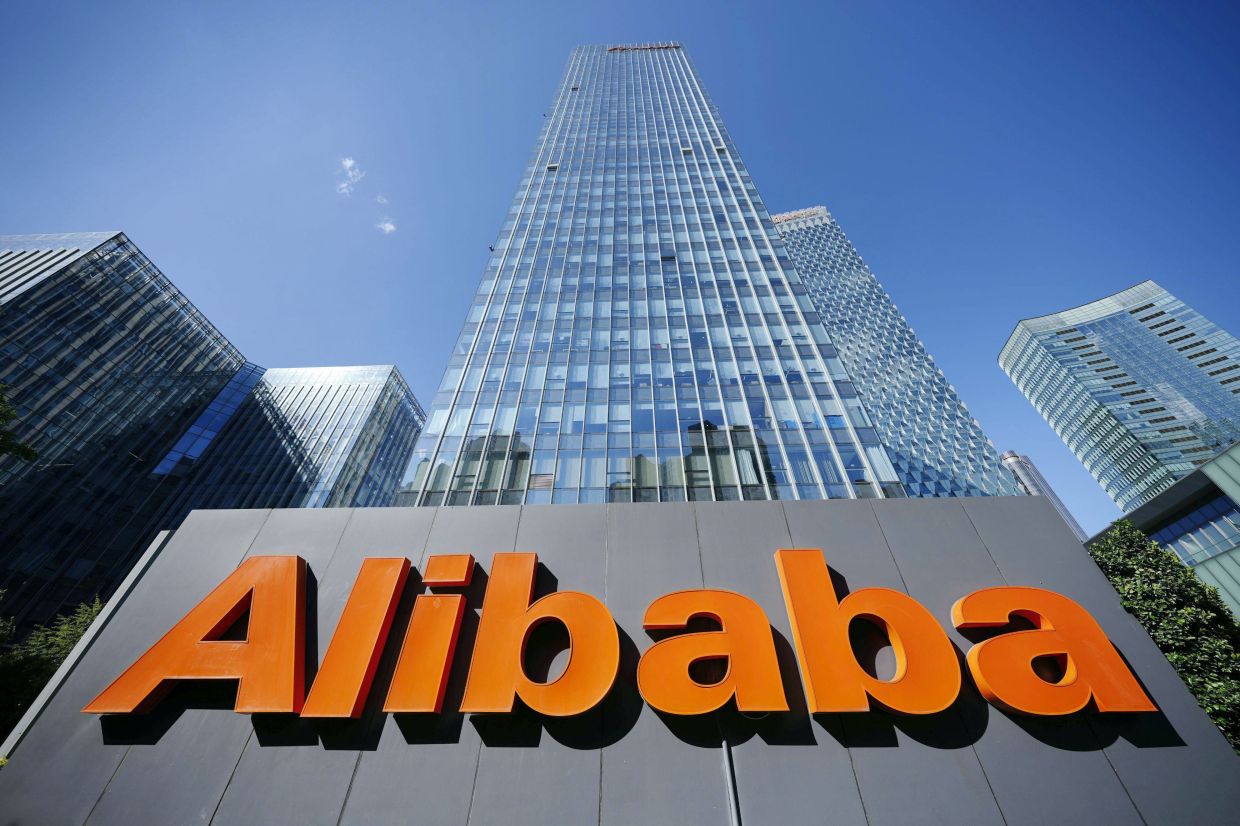
Alibaba Group Holding, China's dominant e-commerce and technology conglomerate, has initiated legal action against the United States Department of Defence in an attempt to overturn its designation as a military-affiliated enterprise. The lawsuit, filed Tuesday in a federal district court in San Jose, California, marks an escalation in tensions between the world's leading technology companies and Washington's increasingly restrictive posture towards Chinese firms deemed strategically significant to Beijing's defence apparatus.
The Pentagon's blacklisting decision, announced on June 9 under provisions of the National Defence Authorisation Act Section 1260H, categorised Alibaba alongside electric vehicle manufacturers BYD and Nio, search platform Baidu, robotics developer Unitree Robotics, and networking equipment supplier TP-Link as entities with military connections. Though the designation does not automatically impose sanctions, it substantially constrains these companies' ability to raise capital in American markets and bid for government contracts, creating practical commercial harm even without formal punitive measures.
In its legal filing, Alibaba asserts that the Pentagon's action violated fundamental constitutional protections regarding due process and freedom of expression. The company's lawyers argue that the Department of Defence lacked sufficient evidentiary foundation for its determination and failed to provide adequate procedural safeguards before imposing what amounts to a de facto commercial embargo. An Alibaba spokesperson characterised the listing as "arbitrary and capricious," emphasising that the company operates as a commercial technology and retail enterprise with no involvement in military operations or state-mandated military-civilian integration initiatives.
The core of Alibaba's defence rests on refuting two Pentagon assertions. First, the company denies any subordinate relationship to China's State-owned Assets Supervision and Administration Commission, the state entity overseeing major government enterprises. Second, Alibaba contests the Pentagon's inference that routine regulatory interactions with China's Ministry of Industry and Information Technology constitute evidence of military-civil fusion participation. The company argues these engagements represent standard compliance activities required of all technology operators within China's regulatory framework, analogous to technology companies' routine dealings with US government agencies.
Alibaba's timeline argument strengthens its legal position. The company engaged directly with Pentagon officials in January to challenge the anticipated designation, subsequently submitting a formal written response in March detailing its commercial operations and civilian-only business purposes. Despite this engagement and rebuttal, the Pentagon proceeded with the blacklisting in June without, according to Alibaba's account, meaningfully addressing the company's substantive objections. This procedural sequence underscores Alibaba's constitutional due process claim and suggests the Pentagon had reached its determination before genuinely considering contrary evidence.
The Pentagon declined to comment on the active litigation, maintaining institutional distance from Alibaba's claims. However, the Defence Department's silence itself reflects the elevated sensitivity surrounding US-China technological competition. American officials have consistently framed these designations not as punitive measures but as protective mechanisms identifying entities that, whether directly or indirectly, contribute to advancing Chinese military capabilities across emerging technology domains including artificial intelligence, biotechnology, and renewable energy sectors.
Alibaba's legal challenge arrives amid broader retaliatory measures from Beijing. On Monday, one day before Alibaba's lawsuit filing, China's Ministry of Commerce announced export control restrictions targeting ten American technology and defence firms including Aveox, Teal Drones, Ball Aerospace & Technologies, L3Harris Maritime Services, and MP Materials. Simultaneously, China's Ministry of Finance restricted forty-six American companies from Chinese government procurement, including major defence contractors Lockheed Martin, Raytheon Missiles & Defense, General Dynamics Land Systems, and Boeing Defence divisions.
These coordinated retaliatory actions constitute an escalating tit-for-tat dynamic that extends beyond individual company disputes into systemic economic decoupling. Chinese officials characterised their countermeasures as responses to what they termed "malicious actions" by Washington, effectively framing the conflict as American-initiated hostility rather than defensive Chinese positioning. The Chinese embassy separately issued a statement "firmly opposing" what it described as Washington's "overstretched" conception of national security and its deployment of "discriminatory lists" targeting Chinese enterprises.
For Malaysian and Southeast Asian technology businesses and investors, this escalating dispute carries significant implications. Many regional firms operate integrated supply chains spanning China and the United States, rendering them vulnerable to collateral damage as both superpowers weaponise commerce and investment access. The designation process established under Section 1260H creates ambiguity about which commercial activities trigger military-affiliation classifications, potentially chilling normal business relationships with Chinese counterparts among regional companies uncertain whether routine commercial engagement might invite future US restrictions.
Alibaba's lawsuit will likely establish important precedent regarding the scope of American authority to unilaterally designate foreign commercial entities as military-affiliated without transparent evidentiary standards or meaningful procedural review. The case also tests whether constitutional protections apply to foreign corporations challenging administrative actions, an unsettled legal question that could influence Washington's ability to weaponise commerce designation authorities against Chinese competitors.
The underlying dispute reflects deeper anxieties about technological sovereignty and the bifurcation of global technology ecosystems. Both American and Chinese policymakers increasingly view technological leadership as inseparable from national security, justifying commercial restrictions that previous generations would have considered purely protectionist. As Alibaba presses its lawsuit, the case becomes a proxy for fundamental questions about whether global technology markets can accommodate geopolitical competition without fragmenting into incompatible American and Chinese-led ecosystems.
Beyond the immediate legal outcome, Alibaba's challenge signals that major Chinese technology companies will contest rather than passively accept American restrictions, moving beyond diplomatic complaints to legal accountability mechanisms. This assertiveness may embolden other blacklisted firms like Baidu and BYD to pursue similar litigation, potentially creating multiple test cases that clarify the legal boundaries of American designations. Whether Alibaba succeeds in California courts or not, the lawsuit demonstrates that commercial warfare between superpowers now includes sophisticated legal dimensions rather than merely tariffs and sanctions.
For regional observers, the escalating dispute underscores the reality that middle powers cannot remain neutral as American and Chinese technology sectors increasingly operate according to separate competitive logics. Malaysian technology investors, manufacturers, and retailers must prepare for continued restrictions that may force difficult choices between American and Chinese partnerships, ultimately reshaping the region's technology ecosystem in ways that extend far beyond the specific Alibaba lawsuit.

