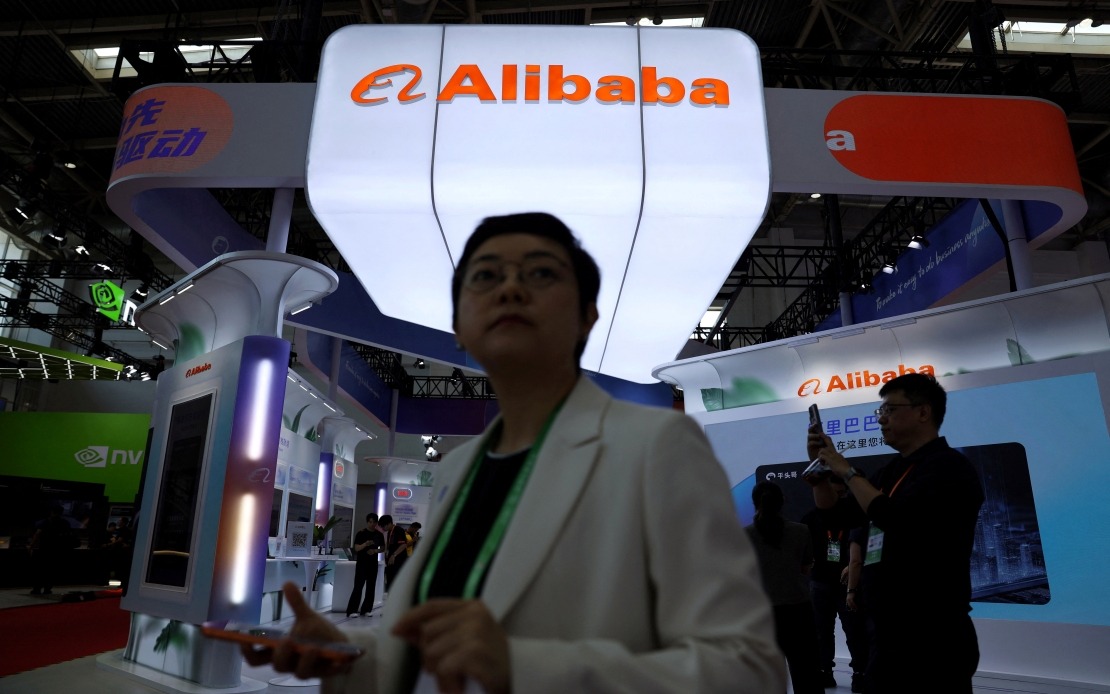
Alibaba, the sprawling Chinese technology conglomerate, has escalated its dispute with the United States government by filing a federal lawsuit contesting its designation as a military-linked enterprise. The court filing, disclosed on Tuesday, represents a direct legal challenge to a Pentagon decision made earlier in June that added the e-commerce and cloud computing powerhouse to an official roster of companies considered affiliated with China's military-industrial apparatus.
The designation carries substantial consequences for Alibaba's operations and standing in Western markets. Inclusion on such lists can restrict access to US investment, limit technology partnerships, and complicate dealings with American financial institutions—consequences that underscore why the company felt compelled to mount a formal legal challenge rather than accept the determination quietly. The lawsuit argues that the Pentagon's decision fundamentally mischaracterises the nature of Alibaba's business and governance structure, setting up a battle over how American regulators evaluate foreign tech companies amid broader geopolitical tensions with China.
At the heart of Alibaba's defence is a straightforward organisational claim: the company maintains an independent board of directors with no military connections or affiliations. This assertion directly contradicts the Pentagon's assessment and forms the cornerstone of the company's argument that the military designation cannot withstand legal scrutiny. The lawsuit emphasises that Alibaba's governance operates independently from state military interests, a structural point that the company believes distinguishes it from entities genuinely embedded in China's defence establishment.
Alibaba's legal filing also emphasises the civilian nature of its commercial operations and service offerings. The company states unequivocally that its products, platforms, and services are designed exclusively for retail operations, logistics management, and enterprise information technology applications—sectors with clearly commercial rather than military utility. This framing attempts to establish that Alibaba's core business model and revenue streams are fundamentally incompatible with supporting military operations or development.
The company has further bolstered its position by highlighting explicit contractual safeguards and compliance mechanisms. According to Alibaba's account in the lawsuit, the company maintains contracts and policies that expressly prohibit military applications of its technology and services. These documented restrictions serve as evidence that Alibaba has taken deliberate steps to prevent its platforms and tools from being weaponised or repurposed for defence sector activities. Additionally, the company stresses that it holds no military certifications or official licences, a fact it contends would be essential if Alibaba genuinely operated as part of China's military-industrial complex.
The Pentagon's June decision that precipitated this legal action was sweeping in scope. The Department of Defence added 188 companies to its blacklist of entities considered linked to China's military-industrial complex, a substantial addition to existing designation lists. Alongside Alibaba, the June update captured other prominent Chinese technology firms including Tencent, one of Asia's largest internet and gaming companies, and BYD, the world's leading electric vehicle and battery manufacturer. This simultaneous designation of multiple household names suggests the Pentagon is casting a wider net in identifying perceived military connections among China's private sector.
The inclusion of these three companies is particularly significant because each operates in sectors—cloud computing and e-commerce, gaming and social media, and consumer electric vehicles—that on their surface appear primarily civilian in nature. This has prompted questions about the Pentagon's criteria for making such designations and whether the distinctions between genuine military contractors and broadly defined companies with peripheral connections to state entities are becoming blurred in American regulatory practice. For technology companies operating globally, such designations create profound business uncertainty regardless of the eventual legal outcome.
For Malaysia and the broader Southeast Asian region, Alibaba's legal challenge carries implications for how foreign technology platforms operate and expand throughout the area. Many Southeast Asian businesses rely on Alibaba's cloud services, logistics platforms, and B2B marketplaces for regional commerce. Any sustained disruption to Alibaba's operations or capital access due to the military designation could create ripple effects across supply chains and digital infrastructure dependencies that span the region. Malaysian companies using Alibaba services may face indirect consequences if regulatory restrictions tighten.
The lawsuit also highlights the escalating complexity of technology geopolitics between Washington and Beijing, with consequences extending far beyond those two capitals. As the United States implements increasingly restrictive measures targeting Chinese companies, and as China responds with counter-measures of its own, Southeast Asian nations find themselves navigating a narrowing middle ground. Companies headquartered in or with operations throughout the region must evaluate their exposure to both American and Chinese regulatory environments simultaneously, a balancing act that grows more precarious as tensions intensify.
Alibaba's decision to litigate rather than accept the designation suggests the company believes it has strong legal grounds and recognises the reputational and commercial stakes involved. A successful challenge could establish important precedent regarding how American regulators assess foreign companies and what evidence genuinely establishes military connections. Conversely, if the Pentagon's designation survives legal challenge, it would signal that American courts defer substantially to executive branch determinations about foreign military ties, limiting the practical utility of legal challenges to such designations.
The case will likely take considerable time to wind through federal courts, leaving Alibaba and other designated companies in a state of regulatory limbo. During this period, the company must manage its international relationships and investment positioning while the legal outcome remains uncertain. The broader technology industry will be watching closely, as the precedent established could affect how numerous other Chinese companies navigate American regulatory restrictions in coming years.