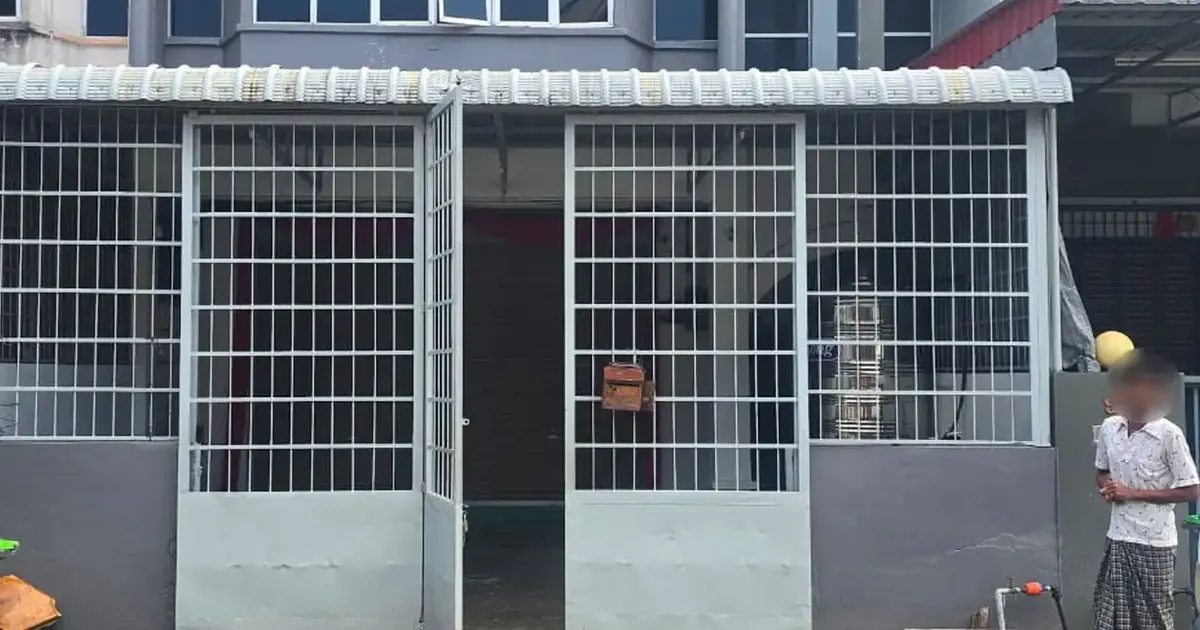
Authorities in Alor Setar have launched enforcement action against a facility operating as an educational institution for Rohingya children from an industrial premises not authorised for such use, marking the latest intervention in the informal schooling arrangements that have proliferated across Malaysia's urban centres. The city council's raid represents a convergence of regulatory concerns spanning municipal zoning laws, occupational safety standards, and the unauthorised provision of educational services without proper licensing or oversight.
The operation discovered at the industrial location underscores the precarious circumstances facing Rohingya families residing in Malaysia, many of whom lack formal schooling options for their children due to their statelessness and uncertain legal status. Rather than attend national schools—a process complicated by documentation requirements and language barriers—vulnerable families have increasingly established informal learning spaces in residential areas, warehouses, and other makeshift venues across major cities including Kuala Lumpur, Petaling Jaya, and now the Kedah state capital.
The investigation will scrutinise two distinct regulatory violations. The first concerns the misuse of industrial zoning classifications; such premises are designated specifically for manufacturing, warehousing, or commercial operations, not residential, social, or educational activities. Allowing schools to operate from industrial spaces creates potential liability issues for property owners and local authorities responsible for code enforcement. The second violation involves operating an unlicensed educational establishment without approval from Malaysia's Ministry of Education, which requires all schools—whether government or private—to meet infrastructure standards, staff qualifications, and curriculum requirements before commencing operations.
For Rohingya communities across Malaysia, informal education arrangements, while resourceful, expose children to environmental hazards including inadequate sanitation, poor ventilation, fire safety risks, and limited learning materials. Yet the shutdown creates an immediate knowledge gap for affected families who depend on these facilities. Many Rohingya children in Malaysia never enter the formal education system, perpetuating intergenerational disadvantage and limiting future employment prospects in an increasingly competitive regional economy. The absence of documented schooling also complicates potential resettlement opportunities, as third countries evaluating refugee applications increasingly consider educational attainment and language proficiency.
Alor Setar's enforcement action reflects heightened municipal scrutiny of informal institutions across Malaysian cities. Local councils, tasked with maintaining zoning compliance and public safety standards, face pressure from residents concerned about unregulated facilities in their neighbourhoods. Industrial premises housing makeshift schools can attract negative attention if ventilation failures, overcrowding incidents, or hygiene breaches occur—creating liability exposure and reputational damage for local government authorities neglecting their enforcement obligations.
The broader context involves Malaysia's complex relationship with the Rohingya crisis. The country hosts approximately 180,000 Rohingya refugees and asylum seekers, second only to Bangladesh globally, yet Malaysia is not a signatory to the 1951 Refugee Convention. This means the government provides no formal status category for refugees; Rohingya residents exist in legal limbo, unable to work legally, access public services, or secure long-term residency. Consequently, they have created parallel economic and social systems, including informal schools, to meet community needs in the absence of state provision.
Education represents a critical intervention point for development organisations and humanitarian agencies working with Rohingya populations. International NGOs have partnered with community leaders to establish learning centres in several Malaysian cities, though these operate under constant scrutiny regarding their legal status and sustainability. Some organisations advocate for temporary education authorisations allowing qualified teachers to deliver basic literacy and numeracy instruction, though Malaysian policymakers have expressed reservations about formalising arrangements that might appear to regularise Rohingya settlement.
The Alor Setar case also illustrates how enforcement approaches to informal institutions vary across Malaysia's states and municipalities. Some local councils adopt proactive closure strategies, while others maintain permissive environments where unregistered schools operate with tacit tolerance. This inconsistency creates uncertainty for humanitarian actors seeking to support refugee children's education while maintaining compliance with local regulations.
Policymakers confronting this challenge face competing imperatives. Closing informal schools protects public safety, maintains zoning standards, and affirms the rule of law. However, enforcement without alternative provision abandons vulnerable children to educational exclusion during formative developmental years. Some jurisdictions have explored intermediate solutions: allowing community-based learning spaces in designated residential areas under community overseer accountability, or facilitating private school scholarships for refugee children meeting academic entry criteria.
The investigation's outcome will likely influence how other Malaysian municipalities handle comparable facilities. Should authorities pursue strict enforcement across jurisdictions, Rohingya communities may respond by relocating operations to even more clandestine venues, reducing transparency and safety oversight. Conversely, if enforcement appears selective or inconsistent, it may invite further institutional expansion without regulatory safeguards.
Moving forward, sustained attention to refugee education requires coordinated action across municipal, state, and federal levels. While Alor Setar's raid addresses immediate regulatory concerns, addressing root causes demands engagement with education policy, refugee status frameworks, and humanitarian coordination mechanisms that currently operate at the margins of Malaysia's institutional landscape. Without comprehensive policy reform, informal schooling arrangements will likely persist across Malaysian cities, creating cyclical enforcement challenges and perpetuating educational deprivation for one of Southeast Asia's most vulnerable populations.

