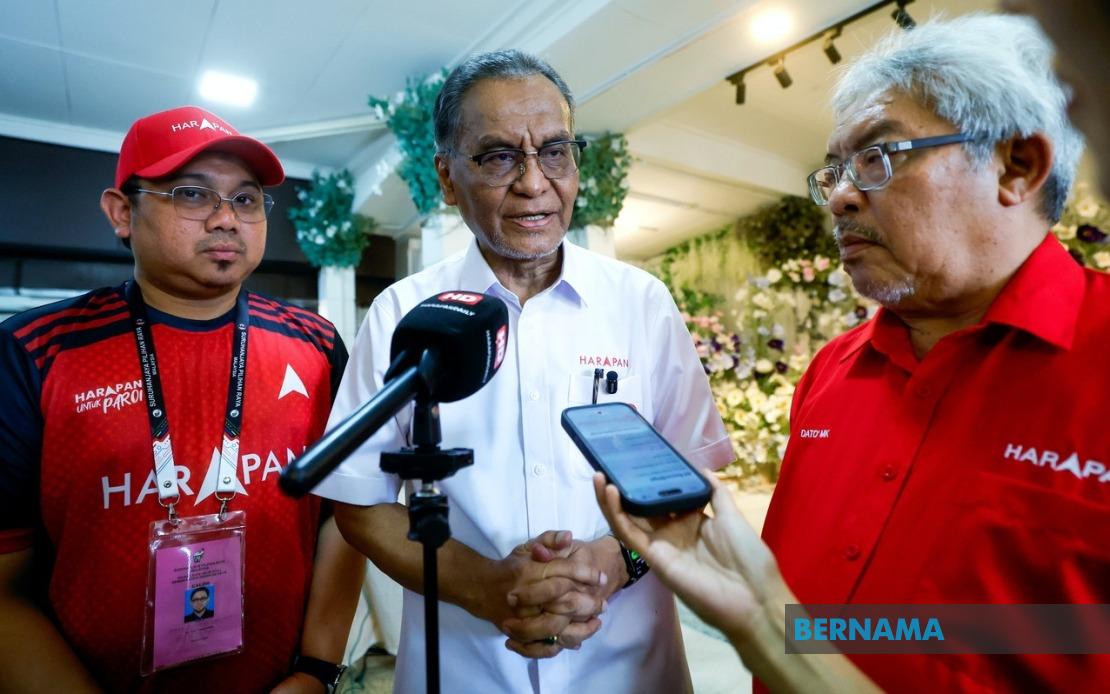
Negeri Sembilan's 16th state election is shaping up as a contest centered on governance competence rather than political theatrics, with Pakatan Harapan's Amanah component explicitly positioning nine candidates around the coalition's track record in the state. The party's leadership is betting that voters will reward tangible delivery over rhetorical flourish, a strategic calculation that reflects broader anxieties within PH about maintaining voter enthusiasm after nearly six years in power at the state level.
Amanah vice-president Datuk Seri Dr Dzulkefly Ahmad articulated this philosophy during a campaign event in Seremban, framing the election as fundamentally a contest between competing visions of representation. Rather than chase headlines with bombastic rallies, he suggested, PH candidates should demonstrate why their experience and problem-solving capacity merit continued voter confidence. This messaging strategy reveals an implicit acknowledgment that charisma-driven politics may no longer suffice in an electorate increasingly concerned with tangible results and effective administration.
The seat allocation within PH's coalition reflects the delicate balance required to maintain unity among three distinct parties with overlapping support bases. Amanah contests nine seats out of the coalition's total 36, while Parti Keadilan Rakyat takes the lion's share with 16 constituencies and DAP rounds out the slate with 11. This distribution suggests careful negotiations to prevent internal competition from undermining the coalition's collective message. For Malaysian political observers, such arithmetic matters because seat allocation often determines which groups within the coalition gain leverage in internal decision-making and resource allocation.
The Amanah slate itself represents a mix of incumbent and fresh candidates, with veteran Datuk Bakri Sawir defending the Klawang seat while Amanah introduces new faces like Ahmad Shahir Mohd Shah in Paroi and Muhammad Allif Ibrahim in Kota. This blend of experience and renewal is calculated to appeal to voters seeking both stability and fresh perspectives. The diversity of the candidate roster—spanning industrial areas, rural constituencies, and mixed economic zones—suggests Amanah's leadership views the party as capable of competing across multiple voter demographics rather than remaining confined to particular socioeconomic niches.
Amanah's campaign methodology departs markedly from traditional mass mobilization tactics. Rather than emphasizing attendance figures at rallies or media coverage volume, the party is prioritizing granular voter engagement through house-to-house visits, small-group discussions, and digital communication. This approach allows candidates to identify specific neighborhood concerns before connecting residents with relevant government agencies for follow-up action. For constituencies like Paroi, which encompasses over 65,000 registered voters spread across a population exceeding 140,000, such targeted engagement potentially yields higher conversion rates than diffuse, message-broadcast campaigns.
The Paroi seat exemplifies contemporary Malaysian electoral dynamics where economic pressures increasingly dominate voter concerns. Ahmad Shahir Mohd Shah's commitment to empowering small traders through streamlined licensing procedures and upgraded business infrastructure directly addresses the squeeze on informal economy participants. This focus on micro-economic enablement rather than grand redistributive promises signals Amanah's recognition that traditional welfare-state rhetoric resonates less powerfully when small traders face immediate cash-flow constraints and rising operational costs.
Negeri Sembilan's political landscape has shifted noticeably since the 2023 state election, when PH secured 17 seats compared to Barisan Nasional's 14 and Perikatan Nasional's five. That PH maintained majority control despite Perikatan's relative success elsewhere in Malaysia reflected the coalition's residual support in the state. Whether that support consolidates or fragments will depend significantly on whether voters perceive delivery against campaign promises from the previous cycle. Amanah's emphasis on governance track record suggests the party believes it can credibly claim credit for state-level achievements.
The timing of this election carries regional implications beyond Negeri Sembilan's borders. A strong PH performance would buttress Anwar Ibrahim's authority within the national coalition, while a disappointing result might embolden skeptics questioning whether the federal government can effectively govern through coalition arrangements. Conversely, this election provides Perikatan and Barisan with an opportunity to demonstrate that their electoral resurgence nationally translates into state-level competitiveness. For Malaysian investors and business observers, the outcome carries signal value regarding political stability and continuity in a state with significant manufacturing and services sectors.
Amanah's explicit rejection of volume-based campaign competition reflects deeper anxieties within PH about authenticity and voter exhaustion. After successive elections marked by intense partisan messaging, the party appears to be wagering that substantive discussion of governance outputs will differentiate its offering. Whether this reflects genuine strategic confidence or defensive positioning remains unclear. Early voting is scheduled for July 28, with the main election on August 1, providing a compressed campaign window that may advantage incumbents with established administrative machinery and name recognition among voters.
The nine Amanah candidates competing across constituencies including Lenggeng, Senaling, Johol, Kota, Bagan Pinang, and Gemencheh represent the party's attempt to expand beyond traditional strongholds. Success would suggest Amanah is consolidating as a cross-sectional centrist force within Malaysia's fragmented coalition landscape. Failure could trigger internal reassessment of whether the party's positioning—neither progressive enough for DAP sympathizers nor culturally populist enough for base-KPK voters—produces durable electoral advantages. The Negeri Sembilan result will offer preliminary guidance on these strategic questions before larger-scale contests potentially reshape Malaysia's political geography.

