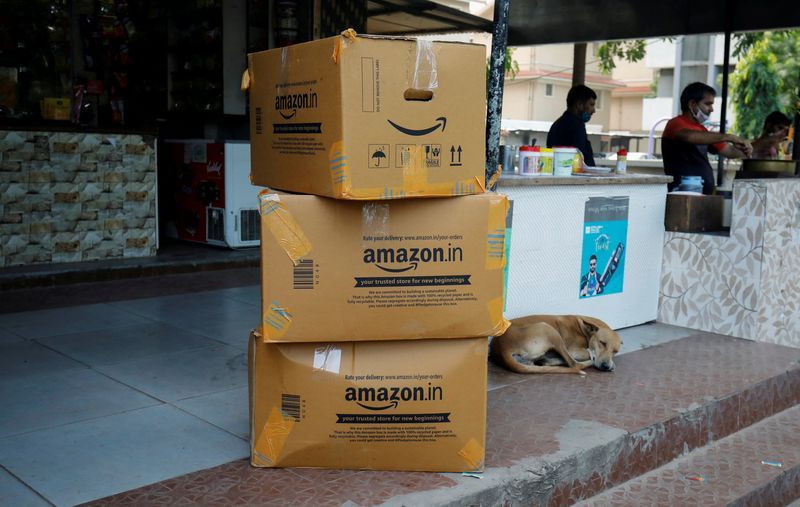
Amazon has promised to take appropriate measures against one of its third-party delivery partners in India once authorities complete their investigation into a deadly warehouse fire that claimed two lives in early June. The e-commerce giant, which operates extensively across the Indian market, issued the statement in response to the incident at M&M Logistics Solutions, a facility located in Uttarakhand in the northern part of the country. The commitment signals the company's intention to enforce accountability through its supplier oversight mechanisms, though the precise nature and timing of any consequences remain contingent on official findings.
The fire at M&M Logistics Solutions occurred on June 5 at a facility that served as a critical distribution hub for Amazon's operations across northern India. According to police documentation examined by international media, the building presented multiple critical safety deficiencies that likely contributed to the severity of the incident. Among the identified failures were the absence of valid fire safety certification, lack of functional fire alarm systems, missing smoke detection equipment, and inadequate emergency exit provisions. These compounding factors suggest systemic negligence in workplace safety standards at the facility.
Beyond its public commitment, Amazon has simultaneously initiated its own independent internal investigation into the circumstances surrounding the fire. Company officials indicated that this parallel inquiry would examine compliance with the organisation's internal standards and supplier codes. The dual investigation approach reflects both the company's need to understand operational vulnerabilities and mounting external pressure to demonstrate genuine accountability for workplace safety across its supply chain in India.
The incident has drawn attention to broader workplace safety concerns within Amazon's Indian operations. Earlier in 2024, the company faced scrutiny from India's National Human Rights Commission regarding alleged labour law violations during an extreme heat event at a warehouse facility near New Delhi. That investigation subsequently prompted state government authorities to initiate legal proceedings under India's labour protection framework, underscoring a pattern of safety-related concerns that has accumulated over recent months.
M&M Logistics Solutions operates a substantial portion of Amazon's delivery infrastructure in northern India, running 45 delivery centres distributed across 21 cities according to the company's own 2023 promotional materials. This extensive operational footprint indicates that the partner organisation plays a critical role in Amazon's last-mile delivery capabilities throughout the region. The scale of the operation amplifies concerns about whether safety standards have been uniformly maintained across such a geographically dispersed network of facilities.
While M&M Logistics Solutions functions as an independent third-party vendor rather than a direct Amazon subsidiary, the e-commerce platform maintains explicit contractual obligations regarding workplace conditions. Amazon's internal code of conduct for suppliers and vendors explicitly prohibits working environments that expose employees to safety hazards, including uncontrolled fire risks. The code establishes a clear enforcement framework whereby third-party contractors who violate safety standards face potential suspension or termination of their partnership arrangements.
The Amazon India Workers Union has raised the incident as evidence of catastrophic failure in workplace protection and dignity standards. The union has formally demanded that judicial authorities conduct an independent investigation specifically into the June 5 deaths, rather than relying solely on police inquiries or Amazon's internal review. This position reflects scepticism about whether existing investigation mechanisms can adequately address the structural workplace safety issues the incident has exposed.
The incident occurs within a broader context of escalating labour and safety concerns across India's rapidly expanding e-commerce sector. As companies like Amazon have dramatically expanded their logistics and delivery operations to compete in one of the world's fastest-growing retail markets, questions about whether adequate safety infrastructure has kept pace with operational expansion have become increasingly pressing. Warehouse fires remain a recurring hazard in South Asian industrial and logistics settings, where older buildings or inadequately maintained facilities can present catastrophic risks to workers.
For Malaysian and Southeast Asian observers, the Amazon situation in India carries relevant implications regarding supply chain accountability and the regulatory frameworks governing platform-based logistics networks. Malaysia's own rapidly developing e-commerce and gig economy sectors operate within different regulatory environments, yet similar questions about third-party contractor safety standards and enforcement mechanisms remain pertinent. The case demonstrates both the challenges multinational e-commerce companies face in maintaining consistent safety standards across dispersed third-party networks and the growing willingness of civil society organisations to demand accountability when incidents occur.
Amazon has consistently maintained public statements asserting that worker safety and wellbeing constitute top priorities within its operational philosophy. However, the accumulation of safety-related incidents and regulatory scrutiny in India suggests tensions between stated commitments and actual implementation across complex, subcontracted supply chains. The company's handling of this incident, including the stringency of any eventual penalties against M&M Logistics Solutions and the comprehensiveness of any systemic safety improvements, will significantly influence perceptions of corporate accountability within the e-commerce sector across Asia.
The investigation outcomes will likely establish important precedents regarding the extent to which e-commerce platforms can be held responsible for safety conditions at third-party facilities. Indian regulatory authorities and labour courts will effectively determine whether contractual relationships provide sufficient insulation for platform companies from liability, or whether operational control and market dominance create responsibilities that extend beyond formal vendor arrangements. Such determinations will reverberate throughout supply chains across South and Southeast Asia where similar outsourced logistics models have become standard.

