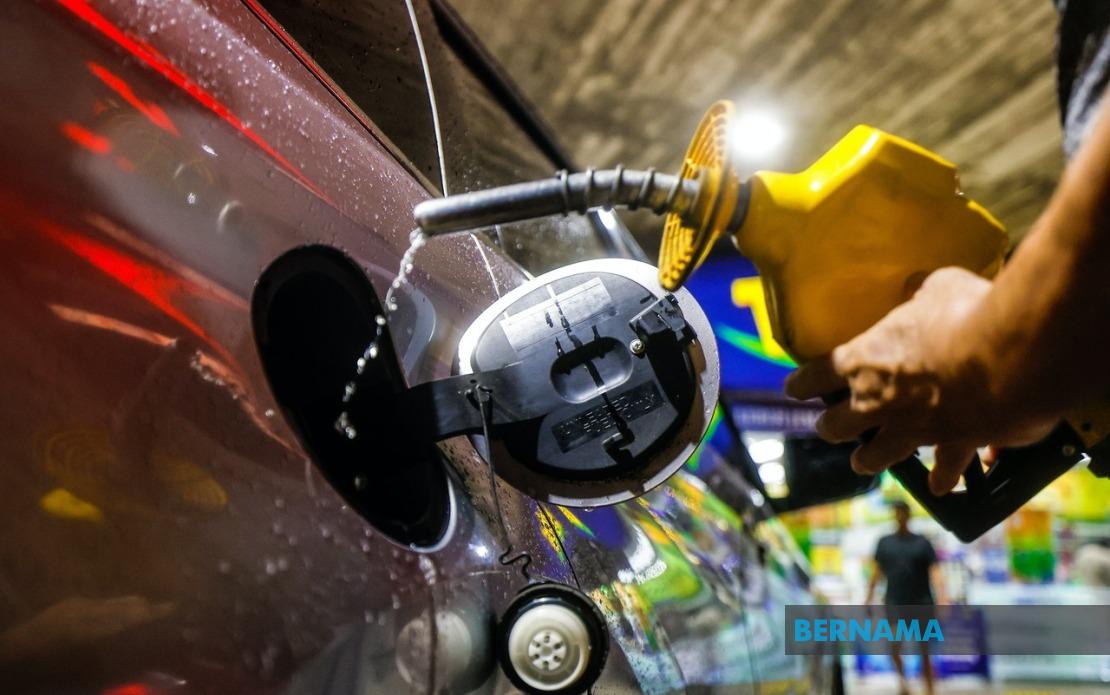
Angkatan Muda Harapan (AMH), the youth wing of the Pakatan Harapan coalition, has pressed the government to expand its fuel subsidy programme by raising the monthly BUDI95 quota from 200 litres to 300 litres, arguing that the additional allowance would meaningfully reduce financial strain on Malaysians dependent on private vehicles for work and family obligations. The proposal emerged from a recent conference and reflects growing pressure within opposition circles to address the escalating cost-of-living crisis that has become a defining political issue ahead of electoral cycles. The youth organisation contends that the current ceiling inadequately serves workers, small-business operators, and those juggling multiple family responsibilities, and that an expansion would provide targeted relief without requiring wholesale reform of the subsidy architecture.
Beyond the fuel subsidy increase, AMH has signalled that the BUDI MADANI Diesel mechanism requires substantive redesign to ensure fairness and administrative clarity. The group emphasises that the existing framework risks excluding genuine beneficiaries due to procedural bottlenecks, opaque eligibility criteria, and cumbersome registration processes. This criticism reflects a broader concern within Malaysian civil society that well-intentioned assistance schemes often fail to reach their intended populations when implementation suffers from bureaucratic rigidity or unclear guidelines. By calling for mechanism transparency and streamlined access, AMH is positioning itself as an advocate for improved service delivery—a theme likely to resonate with voters frustrated by government inefficiency.
The joint statement, signed by AMH chief Woo Kah Leong alongside Angkatan Muda Keadilan chief Muhammad Kamil Abdul Munim and Amanah Youth chief Hasbie Muda, demonstrates coalition cohesion on socioeconomic policy. This unified messaging suggests that Pakatan Harapan's youth apparatus sees fuel and cost-of-living issues as core electoral battlegrounds. For Malaysian readers, the alignment among different youth wings underscores the importance of such populist-leaning policies within opposition strategy, even as government defenders argue that blanket subsidy expansion strains public finances and distorts market mechanisms.
A second major pillar of AMH's agenda targets corruption and institutional weakness within government-linked companies (GLCs). The youth wing has demanded comprehensive investigations into allegations of scandal, abuse of authority, misappropriation, and governance failures across GLCs and government-owned entities, irrespective of the political affiliations of those implicated. This neutrality language is significant: by pledging to pursue wrongdoing across the political spectrum, AMH attempts to frame itself as principled rather than partisan, though sceptics may note that opposition calls for GLC accountability often intensify when different administrations hold power. The sentiment reflects a genuine governance gap in Malaysia, where some GLCs have faced criticism for weak boards, connected procurement, and insufficient external oversight.
To bolster governance architecture, AMH proposes stronger structural safeguards including mandatory contract transparency, competitive bidding processes, binding conflict-of-interest disclosures, rigorous audits, and unambiguous accountability frameworks. These recommendations echo international best-practice standards and align with recommendations from Malaysian civil-society organisations and international transparency bodies. Implementation would require sustained political will and potentially legislative amendments, making the proposals aspirational rather than immediately realisable—yet they signal the opposition's ambition to reshape institutional behaviour if returned to power.
The coalition's third agenda addresses democratic freedoms and civil liberties, specifically urging the MADANI Government to deepen reforms to the Peaceful Assembly Act 2012. AMH contends that Malaysia requires a political culture in which citizens feel empowered to express dissent without fear, and where government officials remain receptive to criticism rather than defensive. The group's statement directly challenges the notion of a compliant citizenry: "We do not want a country where people are allowed to speak only when their views align with those of the government." For Southeast Asian observers, this rhetoric reflects broader tensions across the region between governments seeking stability and civil-society actors demanding expanded space for political expression and protest.
Education and youth advancement constitutes the fourth area of focus, with AMH proposing preferential admission pathways for high-achieving Sijil Tinggi Persekolahan Malaysia (STPM) students with perfect 4.0 cumulative grade point averages, as well as Sijil Tinggi Agama Malaysia (STAM) students achieving Mumtaz results. Under the proposal, qualifying students would nominate three preferred public higher education institutions and receive consideration across all three, contingent on programme availability and disciplinary fit. The mechanism aims to translate academic excellence into guaranteed tertiary access while implicitly acknowledging that current university admission procedures may not always reward top performers fairly. By emphasising Islamic educational achievement alongside secular academic credentials, AMH signals recognition of Malaysia's dual education pathways and the constituency of Islamic schooling proponents.
The education component also carries a cultural undertone: by ensuring that exceptional Islamic scholars gain recognition equivalent to their secular counterparts, AMH seeks to validate religious education within Malaysia's meritocratic framework. This move resonates within constituencies that view excessive focus on secular credentials as marginalising Islamic scholarship, even as it complicates university planning by creating new admission categories. Implementation would require coordination among Malaysia's public universities and potentially modification of their current selection algorithms.
Collectively, AMH's five-agenda platform reflects strategic positioning ahead of potential electoral contests. The proposals blend populist economic measures (fuel subsidy increases) with governance-reform rhetoric and targeted education policy, appealing to working-class constituencies, civil-society advocates, and Islamic stakeholders simultaneously. The emphasis on fairness, transparency, and inclusivity suggests the opposition is attempting to transcend narrow partisan divisions and present itself as a vehicle for systemic improvement. However, the proposals also reveal underlying tensions: expanding fuel subsidies contradicts fiscal discipline, while mandatory disclosure and competitive procurement may slow business cycles and favour smaller enterprises over established GLCs.
For Malaysian policymakers and voters, these proposals warrant careful scrutiny regarding implementation costs, administrative feasibility, and unintended consequences. While AMH's rhetoric emphasises broad-based benefit and institutional strengthening, translating such agendas into effective policy requires legislative capacity, civil-service expertise, and sustained commitment beyond election cycles. The group's confidence that "the MADANI Government still had room to strengthen its mandate" suggests opposition willingness to engage constructively with the current administration on specific issues, even as broader political rivalry continues. Whether these proposals gain traction will depend partly on their resonance with voters facing genuine economic pressures and partly on the government's willingness to adopt or adapt recommendations from its political competitors.

