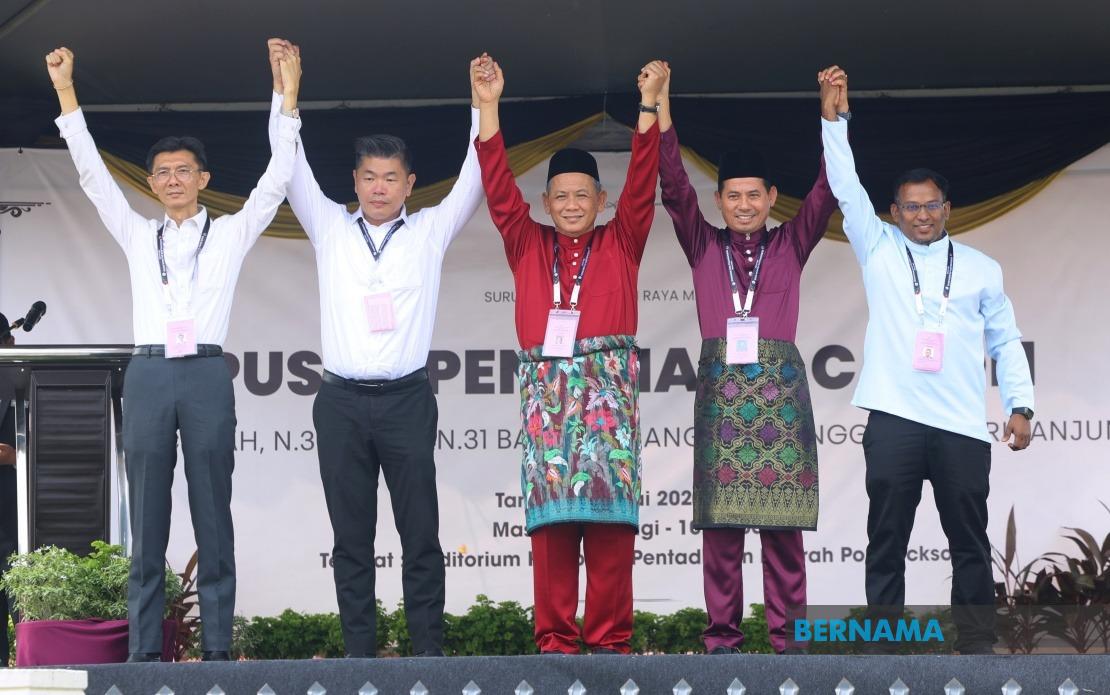
Negeri Sembilan Menteri Besar Datuk Seri Aminuddin Harun is banking on major infrastructure investment to break Barisan Nasional's grip on the Linggi state constituency, announcing plans for a port development and industrial park that would reshape the economic landscape of the area. Speaking after the nomination process in Port Dickson on July 18, Aminuddin outlined the twin projects as cornerstones of a comprehensive development strategy designed to generate jobs and modernize infrastructure for residents currently underserved by such facilities.
The announcement represents a significant gambit by the Pakatan Harapan leadership, which selected Aminuddin to contest Linggi despite its entrenched reputation as a coalition stronghold. By proposing major capital investments rather than incremental improvements, the Menteri Besar is attempting to reframe voter expectations and demonstrate that change can deliver tangible economic benefits. The port facility in particular would address a long-standing gap in Negeri Sembilan's industrial capacity, potentially positioning the state as a more competitive manufacturing and logistics hub within the Klang Valley economic corridor.
Aminuddin's candidacy puts him directly against incumbent Datuk Mohd Faizal Ramli of Barisan Nasional and Datuk Zamri Md Said representing Bersatu in a three-way contest for the seat. The configuration reflects the fractured opposition landscape that has emerged in Malaysian state politics, where traditional two-cornered fights now often involve splinter parties. For Pakatan Harapan, securing Linggi would be a symbolic breakthrough in a region where Barisan has maintained dominance through networks of patronage and established administrative control.
The Menteri Besar was candid about the difficulty of his undertaking, acknowledging that challenging a long-standing stronghold requires more than conventional campaign tactics. He emphasized that he personally championed these development proposals to the party leadership before being selected as the candidate, suggesting that the projects represent genuine policy commitments rather than campaign rhetoric hastily assembled for electoral advantage. This framing—positioning infrastructure as the outcome of serious policy work rather than electoral promises—aims to build credibility among voters skeptical of politician pledges.
Industrial development carries particular weight in Negeri Sembilan's political economy. The state has historically lagged behind Selangor and other neighbors in attracting manufacturing investment, partly due to infrastructure limitations. A new industrial area could catalyze employment growth in a constituency that has seen younger residents migrate to urban centers for job opportunities. For workers currently commuting to Kuala Lumpur or the Klang Valley, localized industrial activity would reduce travel time and strengthen community economic independence—benefits that transcend typical campaign messaging.
Port development in Linggi would represent an even bolder transformation. Negeri Sembilan currently lacks deep-water port facilities, forcing businesses to route cargo through Port Klang or Port of Tanjung Pelepas. A Linggi port could serve southern Selangor and central Negeri Sembilan, reducing logistics costs for manufacturers and potentially attracting maritime-dependent industries. However, such a project would require substantial federal investment and coordination with multiple agencies, raising questions about feasibility and implementation timelines that voters will inevitably assess.
Mohd Faizal's response to Aminuddin's candidacy reflected both confidence and caution. The incumbent stated that Barisan Nasional cannot take the contest for granted despite Linggi's historical support, signaling that his party views the race as genuinely competitive. His call for a campaign conducted without excessive provocation or baseless allegations suggests awareness that three-cornered contests can turn unexpectedly volatile, particularly when opposition candidates coordinate messaging or when Bersatu's role becomes unclear to swing voters.
The timing of the announcement matters within Malaysia's electoral calendar. The 16th Negeri Sembilan state election is scheduled for August 1, providing a two-week campaign window. Major infrastructure announcements early in this period allow voters time to process and discuss the proposals, whereas late-stage announcements can appear opportunistic. Aminuddin's pre-campaign announcement of the port and industrial plans signals that Pakatan Harapan intends to make development the centerpiece of its Linggi strategy rather than attacks on the incumbent.
The strategic calculus underlying this approach reflects broader repositioning within Malaysian opposition politics. Rather than solely emphasizing corruption narratives or governance failures, Pakatan Harapan increasingly competes on delivering specific economic outcomes and infrastructure investment. This shift acknowledges voter demand for tangible improvements in services and employment opportunities, particularly in constituencies outside the Klang Valley and Penang where opposition parties hold power.
For regional observers, the Linggi contest exemplifies how state elections in Malaysia are becoming genuine battlegrounds rather than predetermined outcomes. Barisan Nasional's dominance in Negeri Sembilan has long been taken as settled, yet determined opposition campaigns backed by clear development mandates are testing that assumption. The result in Linggi will signal whether voters in BN strongholds can be persuaded by concrete infrastructure promises delivered through state-level partnerships.
The feasibility of constructing a functioning port facility in Linggi remains subject to technical, environmental, and budgetary scrutiny that will likely emerge during the campaign. Voters will weigh Aminuddin's development promises against implementation realities, including land acquisition challenges, maritime authority approvals, and long-term financial viability. How effectively the Menteri Besar addresses these practical questions could determine whether the port proposal enhances Pakatan Harapan's credibility or becomes a liability if perceived as unrealistic.
Ultimately, Aminuddin's strategy reflects a calculated decision to compete for Linggi not through organizational superiority alone but through a compelling economic vision. Whether this approach succeeds will depend on voter confidence in Pakatan Harapan's ability to deliver major investments if given state-level mandate, as well as incumbent Barisan Nasional's capacity to retain support despite internal Bersatu competition splitting the conservative vote. The August 1 polling will provide the definitive verdict on whether infrastructure-focused opposition messaging can overcome entrenched political alignments in traditionally safe constituencies.

